
Lawana
Lawana
Description
How to identify
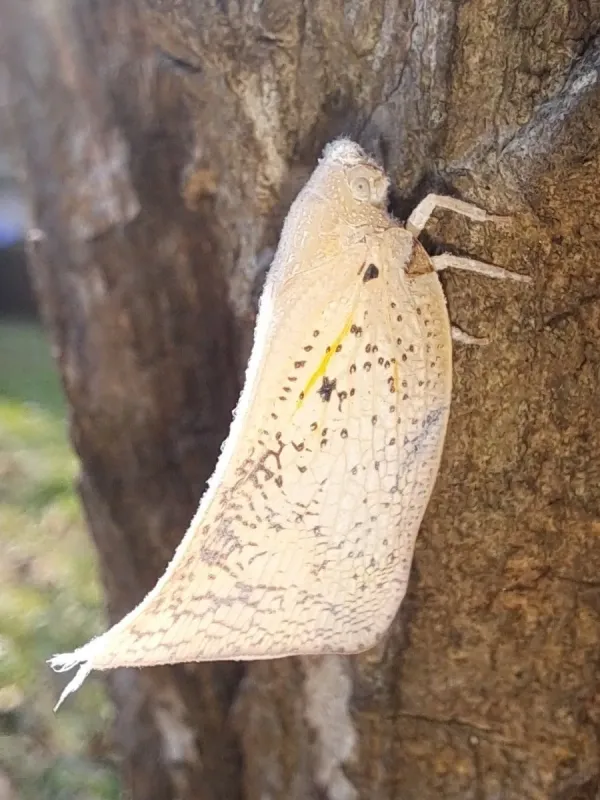
Lawana is a genus of insects belonging to the family Flatidae (commonly known as flat planthoppers). In their adult stage, these insects resemble small moths, as their broad wings fold roof-like over their bodies when they are at rest.
Their coloration ranges from white to light brown, often featuring a characteristic mealy, waxy coating on their wings and bodies. The head is relatively short, equipped with well-developed compound eyes, and their antennae possess a structure typical of the suborder Cicadomorpha.
Nymphs of the Lawana genus are distinguished by the presence of long waxy filaments protruding from the posterior part of their abdomen. These structures serve as camouflage, mimicking plant debris or moisture droplets to evade natural predators.
Systematically, these pests are classified under the order Hemiptera. Their mouthparts consist of a piercing-sucking proboscis, which is specifically evolved to feed on plant sap directly from the vascular bundles of the host plant.
Identifying an infestation can be done by carefully inspecting the undersides of leaves and young shoots. When physically disturbed or approached, the adults exhibit sudden jumping movements, which serves as a primary diagnostic indicator for field observation.
What it damages
Lawana impacts a wide spectrum of plant species, including fruit trees, citrus, ornamental shrubs, and vegetable crops. As a polyphagous pest, it can quickly adapt to new food sources across various geographical and climatic zones.
During feeding, the insects extract vital cell sap from the plant tissue. This process leads to nutrient deficiency, disruption of photosynthesis, and compromised metabolic functions, which are critical for the plant's survival and growth during the active season.
Beyond direct mechanical damage, these planthoppers excrete honeydew—a sugary liquid that serves as a substrate for sooty mold fungi. The development of this mold on foliage further suppresses plant growth and drastically reduces the aesthetic and market value of the produce.
There is a potential risk of transmission for phytopathogenic viruses and phytoplasmas. While the role of specific Lawana species as vectors remains a subject of study, the general biology of the Flatidae family suggests a high probability of disease transmission during feeding.
Severe infestations often result in deformed young shoots, curled leaves, and premature flower or fruit drop. Without intervention, affected plants become weakened and increasingly susceptible to secondary pest attacks and environmental stressors.
When it appears
The life cycle of Lawana is closely linked to the local temperature regime. In temperate regions, the primary period of activity occurs during the spring and summer, when daily average temperatures consistently exceed the 15-18 degrees Celsius threshold.
They typically overwinter in the egg stage, with females laying eggs in crevices within tree bark or directly inside plant tissues. As temperatures rise in the spring, nymphs hatch and begin feeding on the fresh, emerging green growth.
Multiple generations of Lawana may overlap throughout the summer season. In warmer climates, favorable moisture and temperature conditions can facilitate the development of several generations in a single growing season, complicating pest control efforts.
The highest population densities are typically observed in the second half of summer, as young nymphs transition into the adult stage. This period coincides with the most significant migration of individuals between neighboring plots and fields.
Activity gradually declines in the autumn as females begin searching for suitable sites for oviposition. Preparing for the winter dormant phase makes them less accessible, rendering control measures significantly less effective compared to the active growth period.
Signs of infestation
The first sign of infestation is the appearance of a specific "cottony" coating on the foliage. This is actually waxy secretion from the nymphs, which visually resembles patches of cotton or fluff covering colonies on the underside of leaves.
The presence of sticky honeydew on the upper surface of leaves located below insect clusters is a warning sign. The accumulation of honeydew inevitably attracts ants, which frequently protect planthopper colonies from natural enemies like ladybirds or lacewings.
The emergence of black sooty mold on leaves indicates an advanced stage of infestation. While the fungus does not penetrate the plant tissue directly, it creates a dense layer that blocks sunlight and severely impairs the plant's ability to breathe and perform photosynthesis.
Characteristic deformation of young leaves and shoot tips points to localized depletion of sap flow. Foliage may appear chlorotic, turn yellow at the edges, and become prematurely misshapen, losing its natural form and turgor pressure.
The presence of numerous jumping insects when shaking branches is direct proof of an adult population. This remains the fastest and most reliable way to verify the presence of the pest in the garden during the early morning or late evening hours.
Control measures
A comprehensive approach is recommended for Lawana management, starting with cultural practices. Pruning and removing damaged plant parts, as well as cleaning tree bark, helps eliminate potential egg-laying sites and reduces the overwintering population.
Biological control is highly effective through the introduction or conservation of predatory bugs, lacewings, and ladybirds, which actively feed on planthopper nymphs. Creating habitats for these beneficial insects can significantly suppress pest populations.
In cases of mass outbreaks, the use of systemic insecticides is justified. Products based on neonicotinoids are particularly effective as they can reach pests feeding within the plant tissues, providing prolonged protection.
Contact-based treatments, such as horticultural oils or insecticidal soap solutions, are effective against early-instar nymphs. These coatings physically obstruct the insects' respiratory systems, causing rapid mortality without leaving harmful toxic residues in the environment.
Consistent monitoring and timely application are key to long-term success. It is advised to rotate different classes of active ingredients to prevent the development of pesticide resistance and to strictly adhere to pre-harvest intervals to ensure food safety.
Taxonomy
- Latin name
- Lawana
- Order
- Hemiptera (bugs, aphids, leafhoppers)
- Family
- Flatidae
- EPPO code
- LAWASP
Discussion
No discussions yet — be the first.