
Lasiochilus
Lasiochilus
Description
How to identify
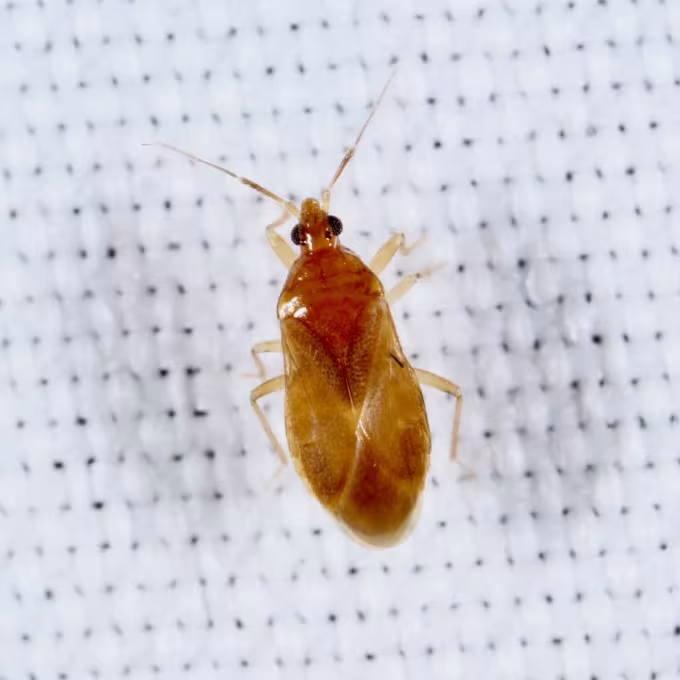
The genus Lasiochilus belongs to the family Anthocoridae (minute pirate bugs) within the order Hemiptera. These are extremely small insects, typically ranging from 2 to 3 millimeters in length.
The adults are characterized by an oval, flattened body with a dark or brownish hue. Their well-developed wings enable them to travel efficiently across agricultural landscapes.
Their head features a short rostrum adapted for piercing tissues, allowing them to feed on plant juices or the fluids of other small arthropods, showing a flexible dietary strategy.
The life cycle undergoes incomplete metamorphosis, consisting of the egg stage, five nymphal instars, and the adult stage. Nymphs often resemble adults but lack functional wings.
Accurate identification of Lasiochilus requires specialized entomological training to examine delicate features like antenna structure and wing venation patterns.
What it damages
While many Anthocorids are beneficial predators, some Lasiochilus species can cause damage when their populations exceed control thresholds, especially in greenhouse crops.
Feeding involves piercing the epidermis of leaves and young stems to extract sap, which creates necrotic spots and localized lesions on the plant surface.
High levels of infestation during early growth stages lead to stunted development, leaf curling, and a general decline in the plant's vigor and photosynthetic capacity.
The wounds created by these bugs serve as entry points for pathogens, facilitating the secondary spread of fungal and bacterial diseases throughout the crop.
Continuous feeding on buds and flowers can lead to poor fruit set or flower drop, causing significant economic losses in fruit and vegetable production.
When it appears
The activity of these pests begins in early spring, as rising temperatures trigger the emergence of overwintering adults from their dormant sites.
Population levels usually peak during the mid-summer months, aligning with the periods of active plant growth, flowering, and fruit development.
Under favorable climatic conditions, multiple generations can occur within a single growing season, leading to persistent pressure on the crop throughout the summer.
As autumn approaches, the bugs begin to search for suitable overwintering habitats, such as crop debris, bark crevices, or protected soil surfaces.
Extended, warm seasons can exacerbate the problem by allowing for extra generations, which poses a greater risk to late-season horticultural crops.
Signs of infestation
Initial signs of infestation appear as small, chlorotic, or bleached spots on the foliage where the bugs have pierced the tissue to feed.
Distorted or withered young leaves and buds are common indicators, resulting from the physical stress and sap loss caused by a colony of pests.
- Stippled appearance of leaves.
- Presence of discarded nymphal skins (exuviae).
- Localized wilting of blossoms or tender shoot tips.
Careful inspection of the leaf undersides, especially near the veins and leaf junctions, often reveals the presence of mobile nymphs and adults.
A general lack of plant vitality despite adequate watering and fertilization is a warning sign that requires a closer look at the foliage for pest activity.
Control measures
Integrated pest management (IPM) is the best approach, starting with rigorous field sanitation to remove weeds that harbor the pests during the off-season.
Maintaining a balanced ecosystem by protecting natural predators, including spiders and lacewings, helps to suppress Lasiochilus populations naturally.
Monitoring using yellow sticky traps is an essential strategy for early detection, allowing growers to intervene before a full-blown infestation occurs.
When population levels become unmanageable, selective insecticides should be applied, focusing on products that minimize harm to non-target beneficial species.
Spatial management, such as implementing crop rotation and buffer zones, reduces the likelihood of pest migration and buildup across the agricultural area.
Taxonomy
- Latin name
- Lasiochilus
- Order
- Hemiptera (bugs, aphids, leafhoppers)
- Family
- Anthocoridae
- EPPO code
- LASKSP
Discussion
No discussions yet — be the first.