
Larinioides orb-weaver spiders
Larinioides
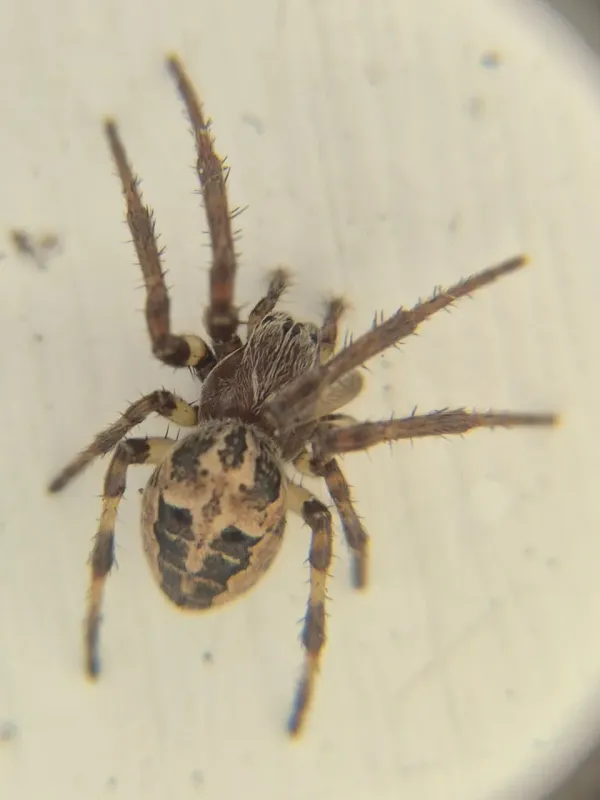
Description
How to identify
Spiders of the genus Larinioides belong to the Araneidae family. These orb-weavers are characterized by a flattened body, often marked with distinct, light-colored patterns on the abdomen against a darker base.
Females are typically larger than males. They are most easily identified by the symmetrical, circular webs they construct, which are often found near water sources, building crevices, and dense vegetation.
Taxonomically part of the Araneae order, these spiders are active predators. They rely on their webs to catch flying prey, showing high adaptability to various human-altered environments.
They are primarily nocturnal, spending daylight hours hiding in retreats made of leaves or within structure gaps. This behavior makes them less visible during the day despite their large population.
Recognizing these spiders is straightforward due to their classic orb-web construction, which is highly consistent in shape and design across the different species in the genus.
What it damages
Larinioides spiders do not feed on plant tissues, meaning they cause no direct physiological damage to crops. However, their presence can create significant operational problems in farming.
The accumulation of thick webs can clog automated irrigation systems, particularly micro-sprinklers and drip emitters, leading to irrigation inefficiency and plant stress.
In greenhouses, webs can interfere with automated climate sensors and ventilation equipment, potentially causing mechanical failures and inaccuracies in environmental monitoring.
For ornamental plant producers, the presence of webbing on flowers or foliage is aesthetically undesirable, often rendering the products unsalable in commercial markets.
Additionally, they may prey on beneficial pollinators or natural predators of crop pests, causing a slight disruption in the biological balance within the agricultural system.
When it appears
The activity cycle of Larinioides begins in early spring, as temperatures rise, allowing for the maturation of spiderlings and the initiation of web construction.
Peak populations are usually reached during mid-to-late summer, coinciding with the highest density of flying insects, which serves as the primary food source for these predators.
As autumn approaches, spiders increase their hunting intensity to accumulate fat reserves before they deposit their egg sacs in protected overwintering sites.
Seasonal patterns are heavily dictated by local climate conditions and available moisture, as these spiders prefer environments with sufficient humidity to maintain their webs.
In climate-controlled agricultural facilities, these seasonal cycles can be significantly altered, often resulting in year-round spider activity and higher cumulative populations.
Signs of infestation
The most prominent sign of infestation is the appearance of large, circular spiderwebs spanning between crop stems or greenhouse structural elements.
Leaves tied together with silk threads are a common indicator of their daytime retreats, where the spiders hide to avoid heat and direct sunlight.
Early morning dew often highlights the webs, making them clearly visible throughout the field or growing area, which allows for quick population assessment.
The presence of dried insect carcasses trapped in the webs acts as a clear indicator of active feeding sites and high-traffic areas for the spiders.
Shed exoskeletons found on plant surfaces or near structural joints indicate active molting and a thriving, growing population of spiders in the immediate vicinity.
Control measures
Control measures for Larinioides are usually targeted at mechanical removal rather than chemical extermination, as they are not primary targets for standard insecticides.
- Regular mechanical cleaning of webs using high-pressure air or water jets.
- Maintaining a clean greenhouse environment to remove potential nesting and retreat sites for the spiders.
- Installing physical barriers like fine mesh on greenhouse vents to prevent spider entry.
- Strategic monitoring to identify high-density areas that require localized cleaning during the peak season.
Since these spiders also contribute to the suppression of general insect populations, total eradication is rarely recommended unless they directly interfere with critical farm infrastructure.
Taxonomy
- Latin name
- Larinioides
- Family
- Araneidae
- EPPO code
- LARNSP
Discussion
No discussions yet — be the first.