
Hemlock looper
Lambdina fiscellaria
Description
How to identify
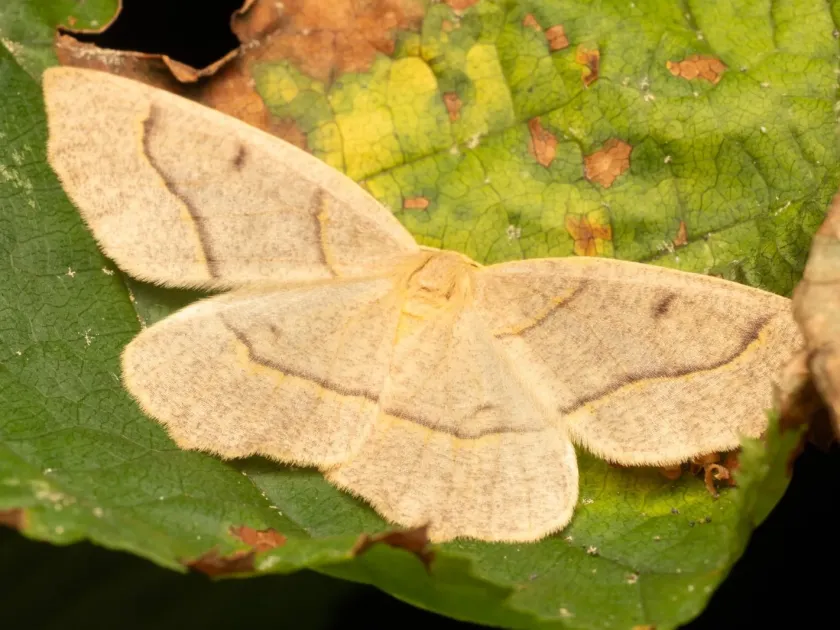
The hemlock looper (Lambdina fiscellaria) is a member of the Geometridae family, known for its destructive impact on coniferous forests. The adult moth has a wingspan of approximately 30-40 mm and displays cryptic coloration, typically shades of tan or brown with distinct wavy lines across the wings.
The larvae, or caterpillars, are recognized by their looping movement. They possess a variable coloration, ranging from light green to dark brown, which provides excellent camouflage against needles and branches of host trees.
The life cycle is univoltine, meaning there is one generation per year. Eggs are laid in late summer or autumn and overwinter in bark crevices or among lichens. This strategic placement ensures the survival of the species through harsh winter conditions.
Larval emergence occurs in the spring, coinciding with the flushing of new needles. The larvae progress through several instars, feeding voraciously and growing significantly in size as they mature through the season.
Pupation typically occurs in sheltered areas such as bark crevices, foliage clusters, or the forest floor. After the pupal stage, adult moths emerge to mate and initiate the next cycle, effectively continuing the population chain.
What it damages
The hemlock looper is a defoliator that feeds on a wide range of host plants, preferring western hemlock, balsam fir, and spruce. In outbreak conditions, they can cause widespread mortality by stripping trees of their needles.
Damage begins at the top of the tree canopy, where the larvae feed on both new and old needles. This top-down defoliation is a classic indicator of a hemlock looper infestation, making it visible even from aerial surveys.
Heavy defoliation causes the tree to deplete its stored energy reserves. If a tree loses more than 50-75% of its foliage in a single year, it may die within the next season, even without further feeding, due to the physiological stress.
In addition to direct mortality, infested stands are highly susceptible to secondary attacks by wood-boring beetles, which exploit the weakened trees and accelerate the decline of the forest stand.
Economic damage is severe, particularly for the forestry industry, as widespread tree death leads to significant timber loss and disruption of local ecosystems, affecting wildlife habitats and watershed stability.
Control measures
Integrated Pest Management (IPM) is essential for controlling hemlock looper populations. Monitoring programs, including egg mass surveys and pheromone trapping, are critical to predict outbreaks before significant damage occurs.
Biological control agents, specifically Bacillus thuringiensis (Bt), are highly effective when applied correctly. This naturally occurring bacterium targets the larvae specifically while preserving the integrity of non-target insect species.
Chemical control is generally reserved for high-value stands or when biological interventions are insufficient to prevent widespread defoliation. Strict adherence to environmental regulations is mandatory to mitigate risks to aquatic and terrestrial environments.
Natural enemies, including parasitic wasps, tachinid flies, and avian predators, play a significant role in population regulation. Protecting these populations is a cornerstone of sustainable forest management practices.
Silvicultural strategies, such as thinning or diversifying stand composition, can reduce the vulnerability of a forest to outbreaks. By creating a more resilient forest structure, foresters can mitigate the potential scale of future hemlock looper infestations.
Taxonomy
- Latin name
- Lambdina fiscellaria
- Order
- Lepidoptera (butterflies)
- Family
- Geometridae
- EPPO code
- LAMBFI
Discussion
No discussions yet — be the first.