
Birch catkin bug
Kleidocerys obovatus
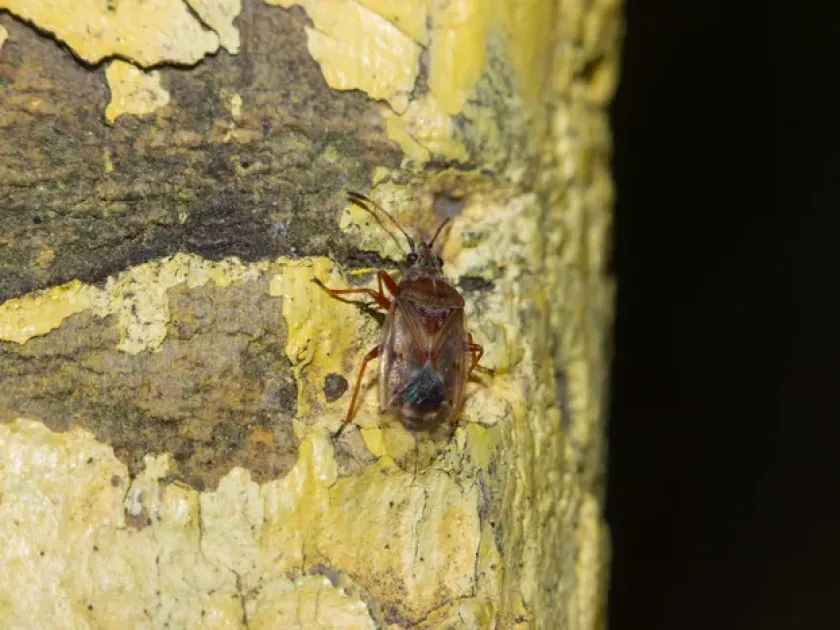
Description
How to identify
The birch catkin bug (Kleidocerys obovatus) is a member of the Lygaeidae family within the order Hemiptera, often found on various deciduous tree species.
Adult bugs typically measure between 3 and 5 mm in length and are recognized by their brownish coloration and distinct dark markings on the hemelytra.
The most reliable identifying feature is the antennae, which possess noticeable club-like swellings at the tips, distinguishing them from other similar-looking species.
Nymphs are smaller and lack fully developed wings, generally exhibiting a lighter tan or yellow-brown color as they progress through several instars.
This insect is a specialized feeder that relies on the phloem sap of specific trees, primarily birch, for its survival and reproductive processes.
What it damages
While the birch catkin bug prefers birch trees, it is also frequently recorded on alder and other related broad-leaved trees in temperate forests.
Both nymphs and adults pierce the plant tissues with their piercing-sucking mouthparts to extract vital cell sap from leaves, buds, and developing catkins.
This feeding activity often results in chlorotic spotting, leaf deformation, and, in cases of severe infestation, the premature drop of foliage.
Young, rapidly growing shoots are particularly vulnerable, and persistent feeding by the bugs can lead to stunted growth and branch dieback.
Furthermore, the accumulation of their excrement on the leaf surface creates a substrate for sooty mold, which can further reduce the tree's photosynthetic capacity.
When it appears
These bugs overwinter as adults, finding shelter in leaf litter, bark crevices, or protected areas near their host plants during the colder months.
They emerge in the spring as temperatures rise, with the main reproductive activity and egg-laying occurring from May through early summer.
The life cycle is relatively rapid, allowing for multiple generations to occur in a single growing season if the climate remains warm and favorable.
By late summer and early autumn, the population reaches its peak before the adults seek suitable hibernation sites to survive the winter period.
Environmental factors, specifically long, warm springs, significantly accelerate the development of nymphs and increase the risk of widespread infestation.
Signs of infestation
The first signs of infestation include small, pale yellow or brown spots on leaves where the bugs have inserted their stylets to feed on sap.
Observing the bugs themselves, especially when clustered on the underside of leaves or within the ripening catkins, confirms their presence in the tree.
Deformed or twisted new growth is a common indicator of sap-sucking activity during the critical early stages of leaf and shoot expansion.
Premature shedding of catkins or seeds may be observed if the bugs have targeted these reproductive organs during the critical pollination period.
A sticky or black fungal film on the leaves indicates the presence of honeydew and subsequent sooty mold, which is a classic secondary symptom of sap-sucking pest damage.
Control measures
Cultural control involves thorough sanitation, such as raking and disposing of leaf litter in late autumn to remove the bugs' overwintering sites.
For significant infestations, systemic insecticides can be applied to provide long-term protection, especially if the tree health is severely compromised.
Biological control using natural predators or entomopathogenic fungi is a sustainable way to manage population numbers without harmful chemicals.
Monitoring using sticky traps can help assess population density and timing for interventions before the damage becomes irreversible.
- Prune away heavily infested or dead branches
- Ensure trees receive adequate water and nutrients to improve vigor
- Encourage beneficial predatory insects like lacewings or ladybugs
Taxonomy
- Latin name
- Kleidocerys obovatus
- Order
- Hemiptera (bugs, aphids, leafhoppers)
- Family
- Lygaeidae
- EPPO code
- KLEIOB
Discussion
No discussions yet — be the first.