
Birch seed bug
Kleidocerys
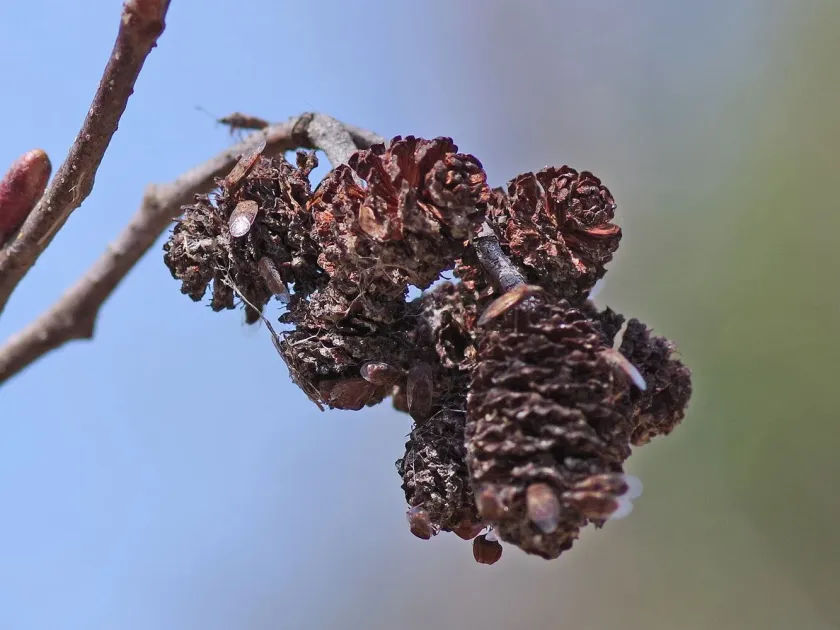
Description
How to identify
The birch seed bug (Kleidocerys resedae) is a member of the Lygaeidae family within the order Hemiptera. Adult insects typically measure between 4 to 6 millimeters in length and feature a distinctive yellowish-brown to reddish-brown coloration with dark markings on their wings.
A key diagnostic feature is the prominent punctation observed on the pronotum and the scutellum. The antennae are composed of four distinct segments, a characteristic that aids in identifying this specific species among other common bugs.
The nymphs go through several developmental stages (instars), transitioning from light yellow to an intense red or brownish hue. While they lack fully developed wings during early stages, their body structure is very similar to the adults.
These insects overwinter as adults, seeking shelter under the bark of trees, in crevices of wooden structures, or within leaf litter and other organic debris located near their host plants.
When temperatures rise in the spring, the overwintered adults emerge from their hiding spots to begin their search for suitable host trees, particularly birches, to start their reproductive cycle.
What it damages
The primary food source for the birch seed bug consists of the seeds and catkins of birch trees. However, during periods of high population density, they are known to feed on other tree and shrub species.
The bugs use their piercing-sucking mouthparts to penetrate the catkins and developing seeds, draining nutrients. This feeding behavior often causes the seeds to lose viability and leads to the premature shedding of catkins.
Beyond birch trees, these bugs have been documented feeding on alders, willows, and various fruit trees, including apples and pears, where they may damage young fruit buds and developing ovaries.
The feeding punctures also serve as entry points for pathogens, such as fungi and bacteria, which can cause secondary infections, further weakening the tree's health and vitality.
In forest nurseries, high infestations can cause significant economic losses by destroying the seed crop, which is crucial for natural forest regeneration and tree production projects.
When it appears
Activity begins in early spring, typically around April, once the ambient temperature remains consistently warm enough to support insect metabolic functions.
The peak of their activity occurs during May and June, coinciding perfectly with the flowering phase of birch trees and the subsequent development of their seed-bearing catkins.
Reproduction takes place throughout the summer, with the potential for one or two generations annually depending on regional climate conditions and the length of the warm season.
As autumn approaches and temperatures begin to decline, the population of active adults starts to decrease due to natural causes and the onset of the transition into winter dormancy.
By October, most individuals find suitable overwintering sites, marking the end of their active lifecycle for the year in temperate climate zones.
Signs of infestation
One of the most noticeable signs of an infestation is the premature falling of birch catkins, which often appear shriveled or display tiny puncture marks from the bugs' feeding activity.
A visual inspection of the bark and branches often reveals clusters of these small bugs, which are easily disturbed and may fly or drop when approached, sometimes emitting a distinct odor.
Small chlorotic or necrotic spots may appear on the foliage near the areas where the bugs have been feeding, resulting from the injection of saliva during the feeding process.
The presence of empty or partially eaten seeds within the catkins, scattered on the ground beneath the canopy, is a clear indicator of significant insect pressure.
- Premature dropping of catkins.
- Aggregations of bugs on tree trunks.
- Visible feeding marks on seeds.
Control measures
The primary management strategy involves sanitation: removing leaf litter, fallen twigs, and debris from around the base of trees in autumn to eliminate overwintering sites.
For smaller ornamental trees, mechanical removal is effective; shaking branches early in the morning, when the bugs are sluggish, onto a collection sheet allows for their easy disposal.
In cases of severe infestation in nurseries or large gardens, the use of contact or systemic insecticides approved for ornamental use may be required during the peak activity period.
Promoting tree health through proper irrigation and balanced fertilization helps trees recover more effectively from the stress caused by sap-feeding insects.
Monitoring the population early in the season is vital to determine if intervention is necessary, as preventative measures are significantly more effective than curative ones.
Taxonomy
- Latin name
- Kleidocerys
- Order
- Hemiptera (bugs, aphids, leafhoppers)
- Family
- Lygaeidae
- EPPO code
- KLEISP
Discussion
No discussions yet — be the first.