
Tea leaf miner
Ketumala thea
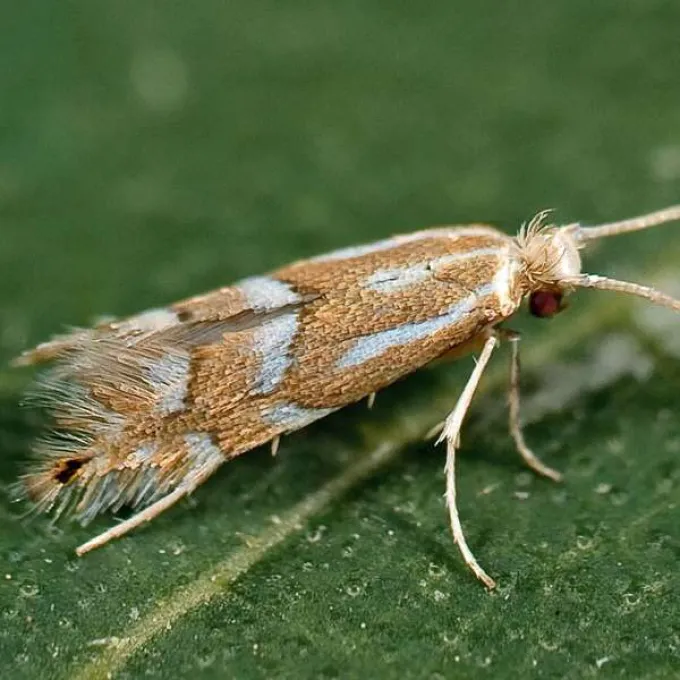
Description
How to identify
The tea leaf miner, scientifically known as Ketumala thea, is a member of the Gracillariidae family (leaf miner moths) within the order Lepidoptera. This small moth is a significant pest primarily affecting tea plantations in warm climates.
The life cycle of the moth involves complete metamorphosis. The larval stage is the most active and damaging phase, as the larvae feed specifically on the internal leaf tissue of the tea plant.
Adult moths are characterized by their small size and cryptic coloration, which helps them blend into the foliage and bark of tea bushes. Their nocturnal habits make them difficult to spot during daylight hours.
The species has evolved specifically to thrive on tea leaves, utilizing the plant's nutritional profile to support its rapid development through several larval instars.
Environmental conditions, particularly temperature and humidity, play a crucial role in the speed of the moth's reproduction, often allowing for multiple generations within a single growing season.
What it damages
Damage is primarily caused by larvae that mine the internal parenchyma of tea leaves. This feeding activity creates visible galleries or "mines," which are characteristic of the species' impact on the host plant.
By consuming the internal layers of the leaf, the larvae disrupt the plant's photosynthetic capability. This leads to a reduction in leaf vitality, decreased overall plant vigor, and potentially lower yields of high-quality tea leaves.
Severe infestations cause leaves to wither, curl, and eventually drop prematurely. The loss of foliage stresses the tea bushes, making them more susceptible to other diseases and environmental stressors.
The damage affects the quality of the raw tea material, as scarred or mined leaves are unsuitable for standard processing, resulting in economic losses for the plantation owner.
If left unmanaged, the pest can stunt the growth of young shoots, affecting the structure and productivity of the tea bushes for the subsequent harvests.
Signs of infestation
The earliest signs of infestation are light-colored patches or tunnels appearing on the tea leaves. As the larvae feed, these mines may turn brown and necrotic, becoming highly visible on the foliage.
Looking at the underside of the leaves, one can often find small, silk-like cocoons where pupation occurs. Accumulations of frass (larval waste) are also typical indicators of active feeding within the leaf tissue.
The visual condition of the bush often becomes chlorotic, with leaves losing their deep green color and healthy luster. Widespread infestation leads to canopy thinning, which is easily observable from a distance.
Nocturnal activity can be detected by using light traps, which attract adult moths, allowing growers to estimate the population size and timing of the next generation.
Distorted growth patterns in new leaves and early leaf drop are definitive indicators that a tea leaf miner population has become established in the area.
Control measures
Integrated Pest Management (IPM) is the most effective approach for controlling Ketumala thea. This involves combining cultural, biological, and chemical methods to keep population levels below the economic injury threshold.
Cultural practices, such as proper pruning and canopy management, help improve airflow and light penetration, making the plantation environment less favorable for the moths to hide and breed.
Biological control, focusing on the use of naturally occurring parasitoids and predators, is highly recommended to suppress pest numbers without relying solely on synthetic pesticides.
Chemical intervention should be reserved for periods of high infestation, utilizing pesticides that are selective and safe for the end-user, ensuring that residues do not contaminate the harvest.
- Regular monitoring with pheromone or light traps to predict outbreaks.
- Manual removal and destruction of heavily infested leaves.
- Maintaining healthy soil fertility to enhance the tea plant's natural resistance.
Taxonomy
- Latin name
- Ketumala thea
- Order
- Hemiptera (bugs, aphids, leafhoppers)
- Family
- Flatidae
- EPPO code
- KETUTH
Discussion
No discussions yet — be the first.