
Dark-eyed Junco
Junco hyemalis
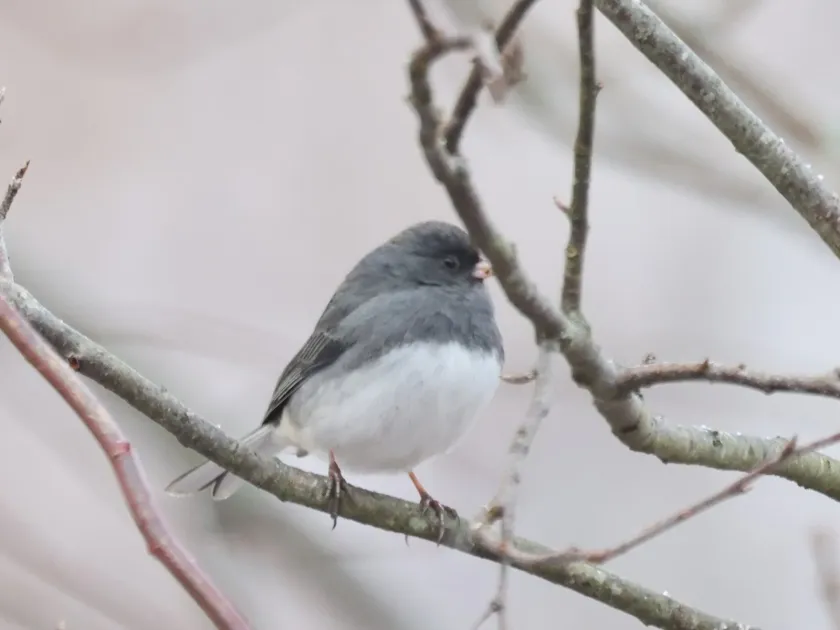
Description
How to identify
The Dark-eyed Junco (Junco hyemalis) is a member of the Passeriformes order and the Emberizidae family. While commonly known as a songbird, in agricultural settings, it is often categorized as a bird pest.
These birds are small, typically measuring 15-16 cm in length, with a distinct gray plumage, a white belly, and a pale, pinkish-white beak that is well-adapted for cracking seeds.
The species exhibits remarkable adaptability to human-altered landscapes, making agricultural fields a frequent target for foraging throughout their seasonal migration cycles.
Their biological behavior is closely linked to flocking, which can lead to significant localized pressure on crops when large groups congregate in fields to feed on available seeds.
They are particularly prevalent in areas where agricultural land meets forest edges, providing them with both abundant food sources and necessary cover for safety.
##damage##The primary agricultural damage caused by the Dark-eyed Junco involves the consumption of sown seeds, particularly during the early stages of crop development in the spring.
They target grains such as wheat, millet, and oats, digging into the soil to retrieve seeds, which results in poor germination rates and patchy crop stands.
During the ripening stage, these birds focus on the grain heads, causing direct yield losses and potentially compromising the quality of the harvest through mechanical damage.
Young vegetable seedlings are also susceptible to damage, as the birds may pluck tender leaves and stems while foraging, leading to stunted plant growth or plant death.
The cumulative effect of foraging in large flocks can lead to measurable economic losses, especially in high-density seeding areas where the cost of replanting is significant.
##season##The most intense foraging pressure from the Dark-eyed Junco typically occurs during the early spring, when natural seed sources are scarce and newly sown crops are available.
Autumn also marks a period of increased bird activity, as flocks prepare for migration and prioritize calorie-dense sources such as maturing grain crops and agricultural waste.
Winter activity can pose a threat to winter wheat and other late-season crops if the fields are not properly managed or if there is accessible residue from previous harvests.
The timing and duration of their presence on farms are highly dependent on annual weather conditions, which dictate the speed of seed germination and the availability of alternative food sources.
Agronomists must monitor migration patterns to predict potential influxes, as the arrival of large flocks can coincide with critical stages of crop vulnerability.
##signs##Evidence of infestation is often first detected by small, crater-like holes in the soil where the birds have systematically excavated seeds from shallow depths.
Visible footprints in the soil and the presence of bird droppings along field margins are common indicators that a flock has been feeding in the immediate area.
Plants damaged by juncos exhibit torn edges on their leaves and stems, distinct from the precision damage often inflicted by insect pests or small rodents.
Empty husks and seed debris left behind in the furrows are clear signs that the birds have successfully targeted the sown crops, confirming the pest's presence.
Monitoring the frequency of bird vocalizations and sighting large groups in adjacent tree lines can serve as an early warning for potential field damage.
##control##Effective control measures include the use of acoustic repellents, such as propane cannons or broadcast systems that simulate the sounds of predatory birds.
Visual deterrents, including hawk decoys and holographic tape, can be deployed effectively in smaller plots to discourage birds from landing on vulnerable crops.
Deep sowing techniques and the use of chemical seed treatments that alter the taste or scent of the seed can significantly reduce its appeal to foraging birds.
Maintaining clean fields by removing harvest residue promptly helps reduce the overall attractiveness of the site to the Dark-eyed Junco during the off-season.
- Use netting to protect high-value vegetable crops in small plots
- Implement mechanical cultivation to disrupt foraging patterns
- Regular scouting during early spring to identify and deter early arrivals
Taxonomy
- Latin name
- Junco hyemalis
- Family
- Emberizidae
- EPPO code
- JUNCHY
Discussion
No discussions yet — be the first.