
Flagfish
Jordanella floridae
Description
How to identify
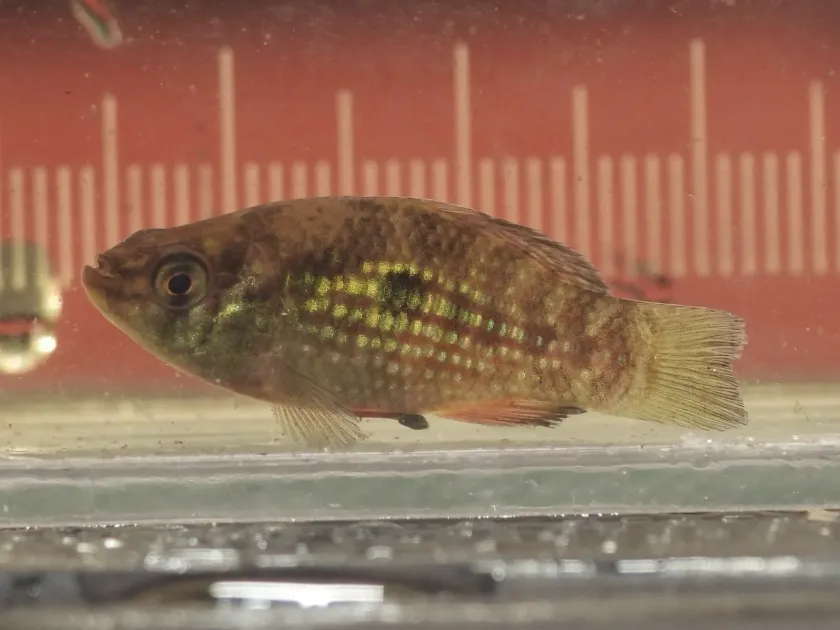
The Flagfish (Jordanella floridae) is a freshwater fish species belonging to the family Cyprinodontidae within the order Cyprinodontiformes.
Adult specimens typically reach a size of 5–6 centimeters. The species is characterized by a deep, compressed body shape, often appearing quite robust and stocky.
Males are known for their striking coloration, which features a mix of red, green, and blue scales, along with a prominent dark spot on the dorsal fin.
Females have a more subdued, brownish-grey appearance with dark lateral stripes. The body is covered in distinct, relatively large scales that provide a firm profile.
Native to Florida, these fish inhabit still or slow-moving waters with abundant aquatic vegetation, which is their natural habitat.
What it damages
While the Flagfish is not a traditional agricultural pest, it is recognized as an algivore that can cause damage in aquaponic and aquatic gardening systems.
When natural algae growth is insufficient to satisfy their diet, these fish tend to consume soft aquatic plant tissues, including leaves and young shoots.
They are known to nibble on delicate flora such as Elodea, Riccia, and other soft-leaved submerged plants, often leading to stunted growth or total foliage destruction.
The economic impact is generally confined to decorative aquatic plant nurseries and research systems where specific plant varieties are maintained.
The severity of the damage is proportional to the stocking density of the fish and the availability of preferred algal food sources within the tank.
When it appears
The activity and metabolic rate of the Flagfish are highly dependent on water temperature, with an optimal range between 20°C and 25°C.
During colder months, when temperatures drop below 15°C, their metabolic processes slow down significantly, leading to reduced foraging behavior.
Reproduction can occur throughout the year in controlled environments, which maintains a stable population and constant grazing pressure on plants.
Periods of high temperature often coincide with peak activity, leading to increased potential for plant damage during summer or in heated greenhouse conditions.
Monitoring seasonal temperature fluctuations allows aquarists and aquaponics operators to predict and mitigate high-risk periods for their vegetation.
Signs of infestation
The primary sign of infestation or damage is the appearance of shredded or uneven edges on submerged leaf blades.
Small holes or skeletal remains of leaves are clear indicators that the plant tissue is being consumed by the fish.
A rapid decrease in plant biomass without clear environmental stress signs suggests that fish are grazing on the vegetation.
Yellowing or necrosis around the margins of nibbled areas can indicate secondary decay due to the constant stress applied by the fish.
Visual confirmation of the fish congregating and grazing near specific plant species is the most reliable sign of the source of the damage.
Control measures
Physical separation of the fish from valuable plant species using mesh dividers is the most effective method for preventing damage.
Providing a high-quality, plant-based supplement or artificial food diet significantly reduces the inclination of the fish to graze on live aquarium plants.
Managing the fish population density within the system ensures that there is enough food to prevent the need for foraging on crops.
Regular maintenance, including the removal of damaged leaves, prevents water quality deterioration and encourages faster plant recovery.
In cases of severe infestation, relocating the fish to a non-planted holding tank is recommended to allow the vegetation time to regenerate.
Taxonomy
- Latin name
- Jordanella floridae
- Family
- Cyprinodontidae
- EPPO code
- JORDFL
Discussion
No discussions yet — be the first.