
Blueberry moth
Jodis putata
Description
How to identify
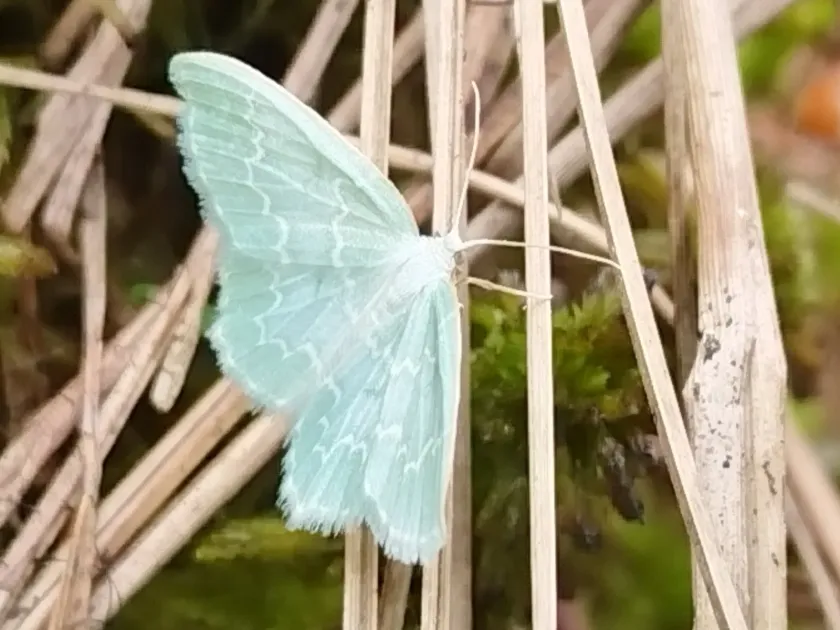
The blueberry moth (Jodis putata) is a member of the order Lepidoptera and the family Geometridae. Adult moths are relatively small, with wingspans typically ranging between 20 and 25 millimeters.
The wings exhibit a soft green color, which often fades to a yellowish-white as the insect ages. This coloration provides excellent camouflage against leaves and twigs, making them difficult to spot.
The larvae, known as inchworms, move by looping their bodies. This distinct gait is a key identification feature of the family Geometridae, differentiating them from other leaf-feeding caterpillars.
Eggs are deposited singly or in small clusters on the underside of host leaves. Their minuscule size and color blend perfectly with the plant tissue, masking them from natural predators.
Pupation occurs within a silken cocoon constructed among leaves or within the leaf litter. The pupal stage is the primary overwintering phase, allowing the species to survive colder months.
What it damages
The primary host plants for Jodis putata are members of the Ericaceae family, particularly cultivated blueberries and wild bilberries. Larvae feed exclusively on the foliage of these shrubs.
Infestation typically manifests as irregular, ragged holes along the leaf margins. As larvae mature, their feeding capacity increases, potentially leading to total defoliation of specific branches.
Severe leaf damage directly inhibits photosynthesis, reducing the plant's ability to produce energy. This reduction leads to lower sugar content in berries and impaired overall fruit quality and yield.
Stunted growth is commonly observed in infested plants, particularly when young shoots are attacked. Persistent feeding stress can cause the plant to become woody and less productive over time.
Weakened shrubs become increasingly susceptible to secondary infections, such as fungal pathogens. Defoliation in late summer significantly reduces the plant's nutrient reserves needed for winter survival.
When it appears
Adult moths are typically active during the summer months, with peaks occurring in June and July. This period is critical for mating and egg-laying for the next generation.
Larval development takes place throughout late summer, feeding intensely during August. Growers should focus scouting efforts during this timeframe to prevent significant foliage loss.
By early autumn, the larvae retreat to pupate, marking the end of the active feeding season. They remain in this dormant state throughout the winter until the next spring's warmth.
Environmental factors like temperature and humidity levels influence the duration of each lifecycle stage. Warmer, more humid summers generally lead to faster larval maturation and higher survival rates.
Adult activity occurs primarily at night, meaning light traps are the most reliable tool for monitoring population density and timing potential intervention strategies.
Signs of infestation
The most reliable sign of an infestation is the presence of uneven, chewed leaf edges. These unique feeding patterns distinguish the blueberry moth from other common berry pests.
Frass (larval droppings) left on the foliage is a telltale sign of active feeding. Finding frass near the base of leaves is often the first indicator of an early-stage outbreak.
Larvae often tie leaves together with thin silk to create a shelter for daytime protection. Inspecting these tied or folded leaf clusters can reveal hidden caterpillars during the day.
General yellowing or necrosis of the leaf margins can indicate stress from heavy feeding. When damage is widespread, the entire shrub may appear sickly and lack vigor.
Adult moths fluttering near the plantation at dusk are a clear warning sign. Their presence indicates that egg-laying is likely underway, requiring a re-evaluation of plant protection needs.
Control measures
Good agricultural practices, such as removing leaf litter and weeds from the orchard floor, help eliminate overwintering sites for the pupae. Sanitation is the first line of defense.
Biological control using Bacillus thuringiensis (Bt) is highly effective against young larvae. These treatments provide excellent control while maintaining the safety of beneficial insects and the environment.
Chemical intervention should be reserved for periods of high infestation where economic thresholds are exceeded. Always choose systemic or contact insecticides approved for berry crops.
- Manual removal of caterpillars in small gardens.
- Encouraging natural predators like birds and parasitic wasps.
- Use of light or pheromone traps for monitoring.
- Regular pruning of heavily infested shoots to reduce local populations.
Integrated Pest Management (IPM) is essential for maintaining healthy blueberry bushes. By combining monitoring, sanitation, and targeted control, growers can minimize damage efficiently.
Taxonomy
- Latin name
- Jodis putata
- Order
- Lepidoptera (butterflies)
- Family
- Geometridae
- EPPO code
- JODIPU
Discussion
No discussions yet — be the first.