
Green carpet moth
Jodis
Description
How to identify
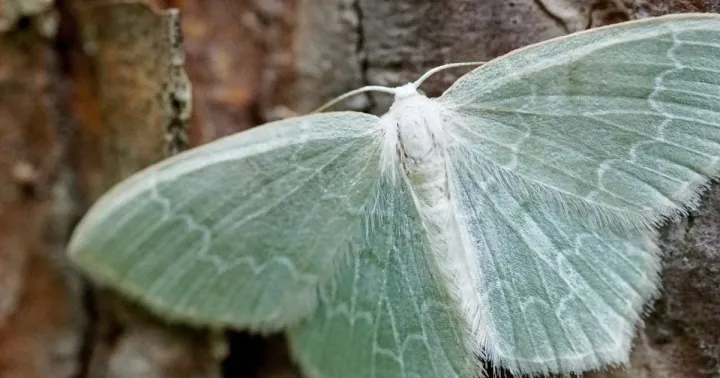
The green carpet moth (genus Jodis) belongs to the Geometridae family, known for their distinct appearance and behavior. Adult moths typically have a wingspan of 20–30 mm and a delicate light-green coloration that provides excellent camouflage against leaves and vegetation.
The larvae, commonly known as inchworms, move by arching their bodies in a looping fashion. Their color often matches the green hues of their host plants, making them difficult to detect during daylight hours when they remain stationary on twigs or stems.
The life cycle consists of four stages: egg, larva (caterpillar), pupa, and adult. They generally pupate in silken cocoons attached to twigs or hidden within the leaf litter beneath host trees, which serves as a protective mechanism against extreme weather.
Identifying the adults involves observing the thin, white, wavy lines traversing their wings. These markings are essential for distinguishing Jodis species from other similar-looking green geometrids found in the same habitat.
Monitoring for this pest is often conducted using light traps at night, which helps agriculturalists assess population levels before the larvae stage causes significant damage to the canopy of the plants.
What it damages
The larvae are polyphagous and target a wide variety of deciduous trees and shrubs. Common host plants include apple, pear, oak, and various ornamental species, which may suffer significant leaf loss during heavy infestations.
The primary damage is caused by the caterpillars feeding on leaves. They start by skeletonizing the foliage, consuming the soft tissues between the veins, and may eventually consume entire leaves, significantly reducing the plant's photosynthetic capability.
Early-season feeding on buds is particularly damaging, as it can ruin the growth potential of shoots and lead to poor fruit development in agricultural settings. This stress can reduce the overall vigor of the host plant.
In addition to direct tissue loss, the presence of these caterpillars makes trees more susceptible to secondary stressors, including fungal infections and environmental drought, due to the loss of protective leaf cover.
In nurseries and young orchards, persistent infestation can lead to stunted growth, distorted shoots, and a higher risk of tree mortality, making early detection and intervention crucial for maintaining health.
When it appears
Adult moths are typically active during the warm summer months, from June through August. During this window, they mate and lay eggs, usually on the underside of leaves or in crevices on the bark of host plants.
The development time of the larvae is heavily influenced by ambient temperatures. Warmer summers typically accelerate the growth cycle, potentially leading to more intense grazing periods for the caterpillars.
Most species in this genus overwinter as pupae. The success of the population is often determined by winter conditions; deep freezes or sudden thaws can impact the survival rates of the pupae sheltered in the ground or bark.
The emergence of larvae is highly synchronized with the leaf-out phase of the host trees. This ensures that the newly hatched caterpillars have access to the most nutritious, succulent parts of the foliage immediately upon emergence.
Climate patterns can shift these phenological events. A warmer spring may trigger an earlier emergence of larvae, requiring growers to adjust their monitoring schedules accordingly to ensure timely protection of the plants.
Signs of infestation
The most immediate sign of an infestation is the presence of irregular, notched holes on the leaf edges. As the larvae grow, they may consume large portions of the leaf, leaving only the primary veins intact.
Small, dark, pellet-like frass (droppings) on the leaves or the ground beneath the tree canopy are strong indicators that caterpillars are feeding nearby and should be searched for manually.
Leaves that are tied together with thin silk webbing are a classic sign of older caterpillar activity, as they use the silk to protect themselves while feeding or resting during the day.
If you carefully inspect branches in the early morning or evening, you might spot the larvae resting in a stiff, twig-like posture, an evolutionary adaptation to avoid being seen by avian or insect predators.
Buds that fail to open or show signs of internal hollowing are early indicators of infestation before the foliage has even fully expanded, suggesting that the pest has been present since early spring.
Control measures
Management should begin with good horticultural practices. Removing debris and leaf litter from around the base of the trees helps eliminate overwintering sites for the pupae, reducing the local pest pressure for the following season.
Biological control methods are highly effective and preferred. Products containing Bacillus thuringiensis are specific to caterpillars and provide safe, targeted control without harming beneficial pollinators or predatory insects.
If chemical intervention becomes necessary due to high population thresholds, contact and systemic insecticides can be used, provided they are applied according to the manufacturer’s instructions and local safety regulations.
Encouraging natural predators, such as insectivorous birds and parasitic wasps, is a sustainable way to keep Jodis populations in check over the long term, reducing the need for intensive chemical applications.
- Manual collection and removal of larvae from small plants.
- Installation of sticky bands on trunks to trap crawling larvae.
- Proper pruning to improve air circulation and sunlight exposure in the canopy.
Taxonomy
- Latin name
- Jodis
- Order
- Lepidoptera (butterflies)
- Family
- Geometridae
- EPPO code
- JODISP
Discussion
No discussions yet — be the first.