
Jamides elpis
Jamides elpis
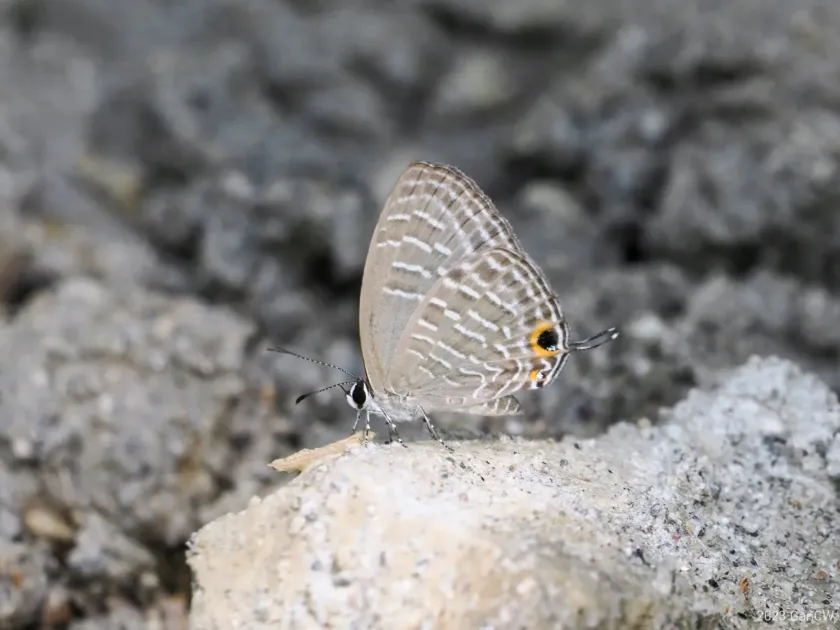
Description
How to identify
Jamides elpis is a species of butterfly belonging to the family Lycaenidae (gossamer-winged butterflies), within the order Lepidoptera.
The adults are small butterflies, with a wingspan typically ranging between 30 and 35 mm, displaying iridescent blue colors in males.
These insects are primarily found in tropical and subtropical regions of Southeast Asia, where they thrive in warm and humid environments.
The larvae, or caterpillars, are the destructive stage of the life cycle and are specifically adapted to feed on reproductive plant organs.
Identification of the adult stage is possible by observing the specific wing patterns, while the larval stage requires careful inspection of flower buds.
What it damages
The pest primarily targets leguminous plants (Fabaceae), causing direct economic damage to flowering crops and reducing total yield.
Caterpillars bore into flower buds, blossoms, and young developing pods, consuming the internal structures necessary for fruit formation.
This feeding behavior causes the abortion of flowers, leading to significant yield loss and the development of distorted or empty pods.
The damage is particularly severe during the peak flowering stage, when the plant is most vulnerable to reproductive tissue loss.
Heavy infestations can lead to a complete failure of pod set, creating substantial gaps in harvest projections for affected agricultural sectors.
When it appears
The life cycle of Jamides elpis is strictly synchronized with the phenological stages of its host plants, especially the flowering period.
Multiple generations can occur throughout the year, with population density increasing rapidly under favorable temperature and humidity conditions.
The insects are most active during warm seasons, which typically align with the peak vegetative and reproductive phases of legume crops.
Egg-laying activity is concentrated on the buds and tender tissues, ensuring that newly hatched larvae have immediate access to food.
In regions with distinct seasons, the pest may overwinter as pupae hidden in soil debris or protected areas near host plants.
Signs of infestation
One of the earliest signs of infestation is the presence of small entry holes on the exterior of developing flower buds.
Frass (larval excrement) accumulates around the base of the buds or on the leaves directly beneath the feeding sites.
Premature wilting and yellowing of unopened buds are common indicators that a larva has compromised the internal reproductive organs.
Inspection of pods often reveals internal damage despite an otherwise healthy-looking outer appearance of the plant structure.
A sudden, unexplained drop of unopened flowers or young pods is a hallmark of this pest's activity within a crop field.
Control measures
Integrated Pest Management (IPM) is essential to control Jamides elpis while minimizing the ecological footprint of interventions.
Biological control using microbial insecticides, such as Bacillus thuringiensis, is highly effective against young larval instars.
Monitoring adult butterfly populations using pheromone traps allows for precise timing of chemical applications before damage becomes extensive.
When using chemical insecticides, choose selective products that target Lepidoptera larvae while sparing natural predators and pollinators.
- Implement crop rotation to disrupt the insect's life cycle.
- Remove alternative host weeds from the field borders.
- Practice post-harvest tillage to destroy pupae residing in the soil.
Taxonomy
- Latin name
- Jamides elpis
- Order
- Lepidoptera (butterflies)
- Family
- Lycaenidae
- EPPO code
- LAMDEL
Discussion
No discussions yet — be the first.