
Jamides alecto
Jamides alecto
Description
How to identify
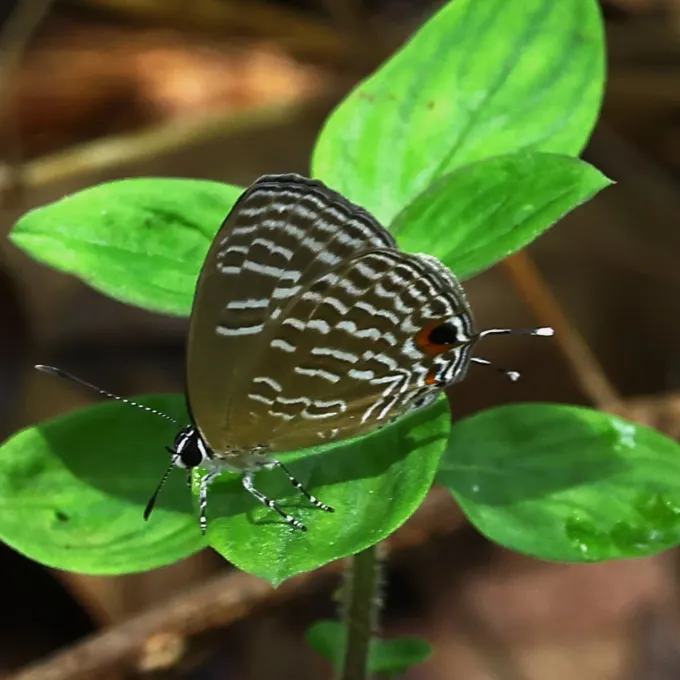
Jamides alecto is a butterfly belonging to the family Lycaenidae (blues). It is a relatively small insect, typically measuring 25–35 mm in wingspan.
Males are characterized by brilliant blue or purplish-blue wing surfaces, while females display more muted brown tones with blue basal suffusion.
A diagnostic feature for identifying the species is the presence of slender tails on the hindwings, which is typical for many members of the genus Jamides.
The larvae are typically slug-like and vary in color, often showing green or pinkish hues that provide excellent camouflage against the host plant's tissues.
The pupae are often found attached to stems or the undersides of leaves, mimicking the appearance of dry plant debris or buds, which makes them difficult to spot.
What it damages
The species primarily affects plants within the Fabaceae family, causing significant economic damage to beans and other leguminous vegetable crops.
Larvae behave as internal feeders, specializing in consuming reproductive structures such as flower buds, developing flowers, and young, tender pods.
By boring into the buds, the larvae destroy the plant's potential for fruit set, resulting in flower abortion and significant yield reductions.
In addition to direct feeding, the damage caused by larvae facilitates the entry of various secondary pathogens, leading to rotting of the pods.
The impact is most severe during the peak flowering stage, where even low larval density can compromise a large percentage of the harvest.
Signs of infestation
The most reliable sign of an infestation is the presence of tiny entry holes in the buds or young pods, often surrounded by accumulation of larval frass.
Wilted or fallen flower buds beneath the plant canopy are strong indicators that larvae are actively feeding inside the reproductive structures.
Plants may show signs of stunted pod development, where the pods appear empty or malformed due to seeds being partially or fully consumed by the larva.
Fine silk webbing between buds or leaflets indicates the activity of larvae preparing to pupate or seeking protection while feeding.
Regular monitoring of flower clusters during the blooming period is necessary to detect the presence of larvae before they cause widespread damage.
Control measures
Effective management begins with regular crop scouting to monitor butterfly flight activity and early signs of larval entry into the buds.
Cultural practices such as crop rotation and the removal of wild host plants from field margins help to reduce the overall population pressure.
Insecticide applications should be timed to coincide with the larval stage, targeting them before they bore deep into the buds where they are protected.
- Utilizing biological control agents, such as parasitic wasps, to manage the population naturally.
- Applying specific bio-insecticides based on Bacillus thuringiensis during the early larval development phase.
- Timely harvesting to remove affected plant parts before the next generation of pests emerges.
Maintaining balanced nutrient management in crops can sometimes help plants recover more quickly from minor levels of herbivory caused by the pest.
Taxonomy
- Latin name
- Jamides alecto
- Order
- Lepidoptera (butterflies)
- Family
- Lycaenidae
- EPPO code
- JAMIAL
Discussion
No discussions yet — be the first.