
White-striped itame
Itame pustularia
Description
How to identify
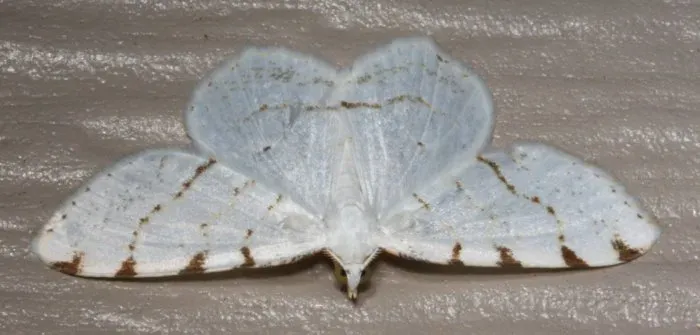
The white-striped itame (Itame pustularia) is a moth belonging to the Geometridae family. These moths are characterized by their white or pale-colored wings, which often feature subtle markings that allow them to blend into the bark of their host trees.
The larvae, known as loopers or inchworms, have the characteristic appearance of geometrid caterpillars. They possess a long, slender body with a limited number of prolegs, requiring a distinctive looping movement for locomotion.
The life cycle of Itame pustularia consists of four stages: egg, larva, pupa, and adult. They typically overwinter in the pupal stage, buried in the leaf litter or hidden within the crevices of the tree bark.
Adult moths emerge during the late spring or early summer, depending on local environmental conditions and the phenology of their primary host plants, the maple species.
This species is classified under the order Lepidoptera, and its biological patterns are tightly coupled with the seasonal growth cycles of the Acer genus, making it a specialized forest and garden pest.
What it damages
The primary host plants for the white-striped itame are maples (Acer), including both native and ornamental varieties. The larvae feed on the foliage, consuming the leaf tissue and causing significant aesthetic and physiological damage.
In cases of high population density, the larvae can cause widespread defoliation, leaving only the veins of the leaves intact. This heavy feeding pressure forces the tree to expend significant energy reserves to regrow foliage.
Young trees and nursery saplings are particularly vulnerable to infestation. The loss of leaf area during the growing season significantly stunts their growth and reduces their overall vigor.
Repeated or severe defoliation events can weaken mature maples, making them more susceptible to drought stress, secondary infections, and attacks by wood-boring insects.
While often considered a minor pest in balanced ecosystems, the white-striped itame can reach outbreak levels where natural biological controls are insufficient, leading to notable economic and environmental impact.
Signs of infestation
Early signs of an infestation include the presence of small, irregular holes in the maple leaves. These holes expand as the caterpillars mature and increase their food intake.
The accumulation of frass (caterpillar droppings) on the leaves or the ground beneath the canopy is a clear indicator that a colony of larvae is actively feeding above.
Visible defoliation of the crown, where sections of the tree appear sparse or ragged, confirms that the population has grown to a level requiring intervention.
Caterpillars may use silk webbing to fold or roll leaves, providing themselves with shelter from predators and environmental stressors during the daytime.
Careful inspection of the undersides of the leaves during the early morning hours can reveal the presence of the larvae, as they are often more active feeders at lower light levels.
Control measures
Integrated Pest Management (IPM) strategies for this species involve monitoring the moth flight periods and targeting the vulnerable larval stages with appropriate treatments.
Chemical control, using insecticides with low impact on beneficial insects, can be applied if the infestation threshold is exceeded to prevent irreversible damage to the trees.
Biological control methods, such as the application of Bacillus thuringiensis (Bt), offer an effective and eco-friendly way to reduce caterpillar populations without harming non-target organisms.
Maintaining tree health through proper irrigation, mulching, and fertilization increases the tree's natural resilience to herbivory, helping it recover faster from minor defoliation.
- Monitor adult moth activity using light traps in late spring.
- Encourage local bird populations, which are major predators of geometrid larvae.
- Prune and destroy heavily infested branches in smaller residential landscapes.
Taxonomy
- Latin name
- Itame pustularia
- Order
- Lepidoptera (butterflies)
- Family
- Geometridae
- EPPO code
- ITAMPU
Discussion
No discussions yet — be the first.