
Itame moth
Itame
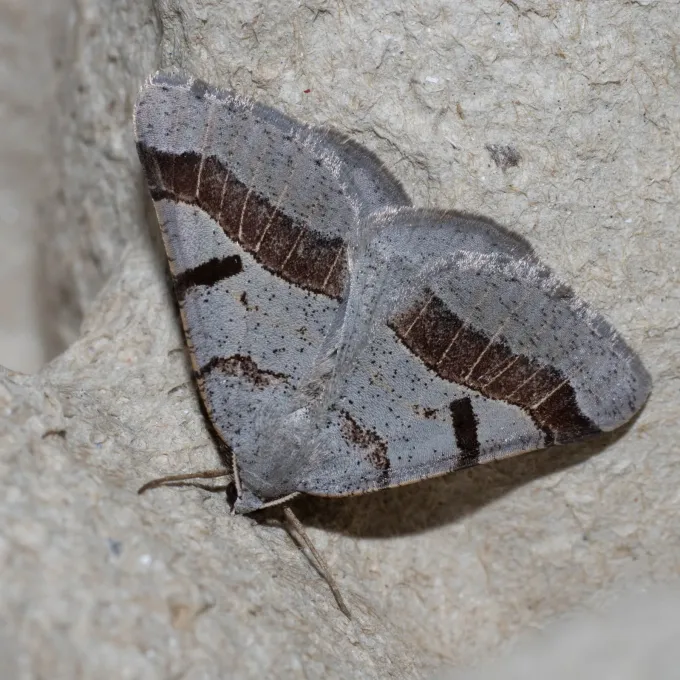
Description
How to identify
The genus Itame belongs to the Geometridae family, known as geometer moths or loopers. These insects belong to the order Lepidoptera and are characterized by their unique physical traits during their larval stage.
Adult moths are generally small to medium-sized and possess protective coloration, allowing them to remain camouflaged against tree bark or foliage during the daytime hours when they are typically resting.
The larvae, commonly known as inchworms, move by extending the front of their body forward and then drawing their hind legs up, creating a characteristic loop shape, which is a diagnostic feature of this family.
Pupae are usually found in the soil or within the plant debris at the base of the host plant. They possess a durable cuticle that protects them against environmental stressors during the dormant phase.
The moths are primarily nocturnal or crepuscular, meaning they are most active at night or during twilight, which often makes them difficult for growers to spot during the day.
What it damages
Members of the Itame genus are polyphagous, meaning they feed on a variety of hosts, including deciduous trees, various shrubs, and even certain herbaceous plants within agricultural fields.
The primary damage is caused by the caterpillars, which consume the leaf tissues. They typically start by chewing the edges of the leaves and may progress to skeletonizing the foliage if the infestation is severe.
In cases of high pest density, significant defoliation can occur. This loss of leaf area reduces the photosynthetic capacity of the plant, potentially weakening it and slowing its growth rate.
Spring feeding on buds and developing leaves is particularly harmful, as it can disrupt the plant's development early in the growing season, potentially reducing the yield of fruit-bearing crops.
Chronic damage leaves plants susceptible to secondary infections from pathogens or infestation by wood-boring insects, further compromising the plant's long-term health.
When it appears
The life cycle of the Itame moth is closely linked to the phenology of its host plants, typically resulting in one or two generations per growing season depending on the regional climate.
Overwintering usually occurs as a pupa in the soil, although in some species, the egg stage is the preferred method for surviving cold winter temperatures on the bark or branches.
Adult emergence typically begins in the spring or early summer, aligning with the availability of fresh foliage, which provides a high-quality food source for the newly hatched larvae.
Larval activity peaks in late spring and early summer, coinciding with the most rapid growth phase of the host plants, which provides the larvae with an abundant supply of nutrients.
After completing their development, the caterpillars move down to the soil to pupate, effectively disappearing from the plant surfaces for the remainder of the summer and autumn.
Signs of infestation
The most visible sign of an Itame infestation is the presence of irregular, chewed areas on leaves, often accompanied by droppings, known as frass, on the leaves or the ground beneath the plant.
Careful inspection of the branches may reveal the larvae themselves, which often mimic the appearance of twigs, making them very difficult to distinguish from the plant structure.
Rolled or tied leaves held together by light silk webbing are another indication of larval activity, as caterpillars use these structures for protection against predators and extreme weather.
Stunted growth or a lack of vigor in young saplings, when compared to healthy trees, can serve as a long-term indicator of persistent larval pressure over several growing seasons.
- Irregular leaf margin damage.
- Skeletonized foliage patterns.
- Presence of larval frass on leaves.
- Visual detection of looping larvae.
Control measures
Cultural control practices include maintaining a clean garden environment by removing weeds that may serve as alternative hosts and performing selective pruning to improve airflow and reduce pest niches.
Manual removal of caterpillars is a feasible and environmentally friendly strategy for home gardens or small-scale landscapes where the population density remains low.
Biological control agents, such as formulations of Bacillus thuringiensis, offer a targeted approach that effectively eliminates the larvae while preserving populations of beneficial predatory insects.
Chemical control should be limited to instances of high pest pressure. When necessary, insecticides should be applied during the early larval stages when the caterpillars are most vulnerable to treatment.
Monitoring programs using pheromone traps allow growers to accurately track the emergence of adults and target their control measures precisely, reducing the need for broad-spectrum pesticide applications.
Taxonomy
- Latin name
- Itame
- Order
- Lepidoptera (butterflies)
- Family
- Geometridae
- EPPO code
- ITAMSP
Discussion
No discussions yet — be the first.