
Issus
Issus
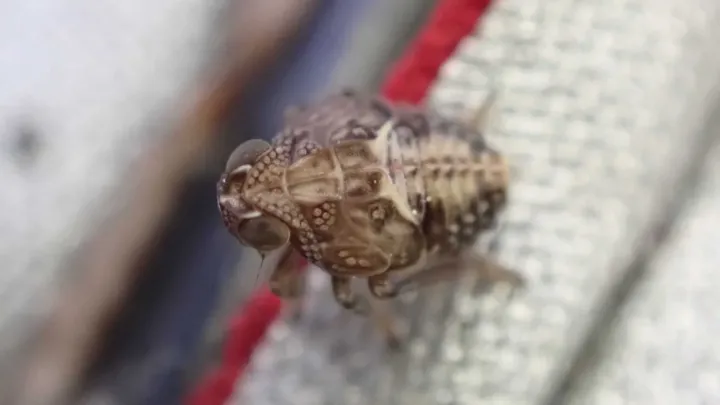
Description
How to identify
Issus is a genus of planthoppers belonging to the family Issidae within the order Hemiptera. These insects are easily recognized by their distinct, stout body shape and wings that rest in a roof-like position over the abdomen.
Adult insects typically measure between 5 to 8 millimeters in length. Their head features a prominent vertex, and the pronotum has specific ridges that are essential for accurate taxonomical identification.
The coloration of Issus species is generally cryptical, ranging from greyish-brown to dark brown. This adaptation allows them to blend in perfectly with the bark or stems of host plants.
Nymphs of the genus are similar in structure to adults but are wingless. They are often characterized by tufts of waxy filaments on the end of their abdomen, which serve to protect them and regulate microclimatic conditions.
They are highly mobile insects, utilizing powerful hind legs to jump away when disturbed, though they also crawl actively across plant surfaces to locate the most nutrient-rich tissues.
What it damages
Issus insects are polyphagous feeders, meaning they attack a wide range of host plants, including trees, shrubs, and herbaceous vegetation, causing significant stress to the host.
Fruit-bearing trees such as apples, pears, and plums are among the primary targets. The pests concentrate on young shoots and leaf petioles, draining the plant of vital sap.
Vineyards can also be significantly impacted by Issus populations, as they feed on succulent vines and young inflorescences, which can result in reduced fruit set and vigor.
Ornamental shrubs and trees in nurseries and public parks are also susceptible. Constant feeding leads to a decline in plant health and reduced aesthetic value.
Infested plants often exhibit signs of stunting, leaf curling, and overall weakening, which makes them more vulnerable to subsequent environmental stress or secondary infections.
When it appears
The life cycle of the Issus genus typically involves one generation per year. They overwinter as eggs, which are deposited by the females under the bark or within plant tissues.
Nymphs usually hatch in the spring, coinciding with the onset of sap flow in host plants. This timing ensures that the offspring have immediate access to high-quality nutrition.
Adult activity peaks during the summer months, specifically June and July, when conditions are optimal for both intensive feeding and reproductive behavior.
As autumn approaches, the number of active adults declines as their lifespan concludes and females finalize the egg-laying process to ensure the survival of the next generation.
Monitoring for this pest should be conducted throughout the growing season, starting from bud burst, to detect the presence of nymphs early before they reach adulthood.
Signs of infestation
The first signs of an infestation include the visible slowing of shoot growth and the loss of turgor in leaves, which may start to yellow or deform as the season progresses.
The presence of honeydew is a diagnostic symptom of Issus activity. This sticky substance often hosts sooty mold, appearing as black patches on the foliage and reducing photosynthetic capacity.
Visual inspection of the underside of leaves and the junction of branches often reveals the presence of nymphs or adults. Their white waxy filaments are also a clear indicator of colonization.
In addition to these signs, minor lesions on the bark or stems may appear where females have laid their eggs or where insects have been feeding continuously.
High infestation levels may lead to premature leaf drop and the overall decline of the host plant's health, making the tree or shrub appear visibly thin and sickly.
Control measures
Cultural practices represent the first line of defense. Pruning and removing infested branches can significantly reduce the overwintering population of eggs within the orchard or garden.
Biological control, including the encouragement of natural predators such as ladybirds or parasitic wasps, can help maintain Issus populations below damaging thresholds.
In cases of severe outbreaks, systemic or contact insecticides may be necessary. It is crucial to choose products that are registered for use on the specific crops being treated.
Always adhere strictly to pre-harvest intervals when using chemical agents to ensure that the produce remains safe for consumption and to minimize ecological impact.
Maintaining high plant vigor through proper fertilization and irrigation is essential, as healthy, well-nourished plants are better able to withstand and recover from pest attacks.
Taxonomy
- Latin name
- Issus
- Order
- Hemiptera (bugs, aphids, leafhoppers)
- Family
- Issidae
- EPPO code
- ISSUSP
Discussion
No discussions yet — be the first.