
Agalmatium flavescens
Agalmatium flavescens
Description
How to identify
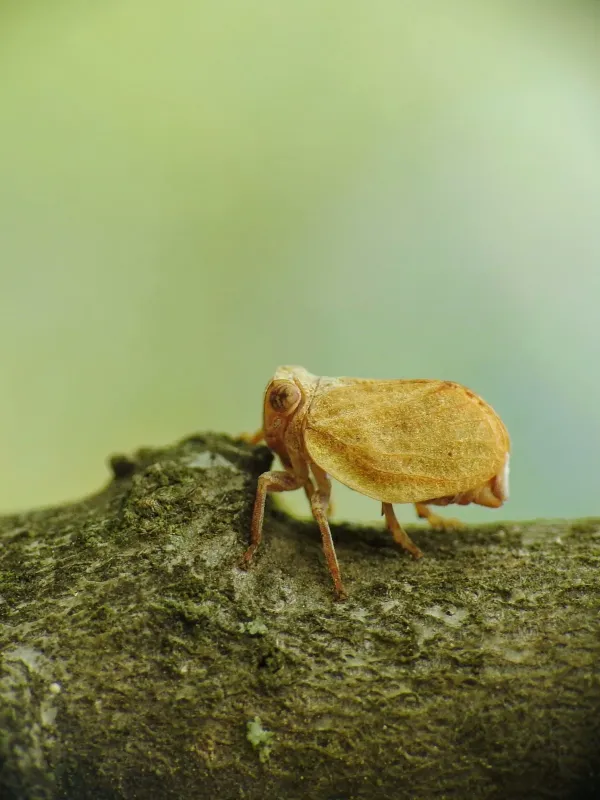
Agalmatium flavescens is a species of planthopper belonging to the family Dictyopharidae, often found in Mediterranean and warm temperate regions.
Adult insects are characterized by a yellowish-brown coloration, which provides excellent camouflage against the bark of trees and dry vegetation.
They possess a distinct, elongated head projection typical for the family, and their body structure is well-adapted for hopping when threatened.
These insects are primarily active during the warmer parts of the year, spending most of their time in sheltered areas of the host plant.
The life cycle involves multiple nymphal stages that resemble adults in shape but lack fully developed wings and reproductive organs.
What it damages
The pest primarily targets woody plants, including grapevines, shrubs, and certain fruit trees, by feeding on their sap.
By piercing the stems and leaf stalks, Agalmatium flavescens extracts vital fluids, which can lead to localized cell death and overall plant weakening.
Chronic feeding by these insects can reduce the vigor of the plant, making it more susceptible to other diseases or environmental stressors like drought.
In cases of high infestation, the damage can impede the flow of nutrients to young shoots, potentially resulting in stunted growth or foliage loss.
The cumulative damage often goes unnoticed initially, but long-term infestations can lead to decreased agricultural yields in orchards and vineyards.
Signs of infestation
Key signs include small, pinpoint marks on the stems and leaf bases where the insect has inserted its proboscis to feed.
Early-stage foliage yellowing (chlorosis) often appears, as the plant struggles to transport necessary minerals through the damaged vascular tissue.
The presence of honeydew — a sticky substance excreted by the insects — is a common sign that often attracts ants to the site of infestation.
The development of sooty mold, which grows on the honeydew, can further block sunlight from reaching the leaves, compounding the damage.
Physical presence of the insects during dusk or dawn, when they are most active and visible on the stems, confirms an active infestation.
Control measures
Cultural control measures, such as pruning away heavily infested branches, are highly effective in reducing the number of overwintering eggs.
The application of contact insecticides during the nymphal stage, before adults emerge, is the most successful chemical control strategy.
Promoting the population of natural predators, such as lady beetles, lacewings, and parasitic wasps, can help keep the pest population in check.
Maintaining strong plant health through proper irrigation and balanced fertilization helps the host plant withstand minor feeding damage.
- Monitor fields for increased ant activity on plants.
- Perform dormant season pruning to remove egg-laying sites.
- Use selective insecticides targeting early nymph stages.
- Maintain weed-free orchard floors to eliminate alternative hosts.
Taxonomy
- Latin name
- Agalmatium flavescens
- Order
- Hemiptera (bugs, aphids, leafhoppers)
- Family
- Issidae
- EPPO code
- HYSEGR
Discussion
No discussions yet — be the first.