
Hysteropterum
Hysteropterum
Description
How to identify
Hysteropterum is a genus of insects belonging to the family Issidae, order Hemiptera, commonly known as planthoppers or cicada-like insects.
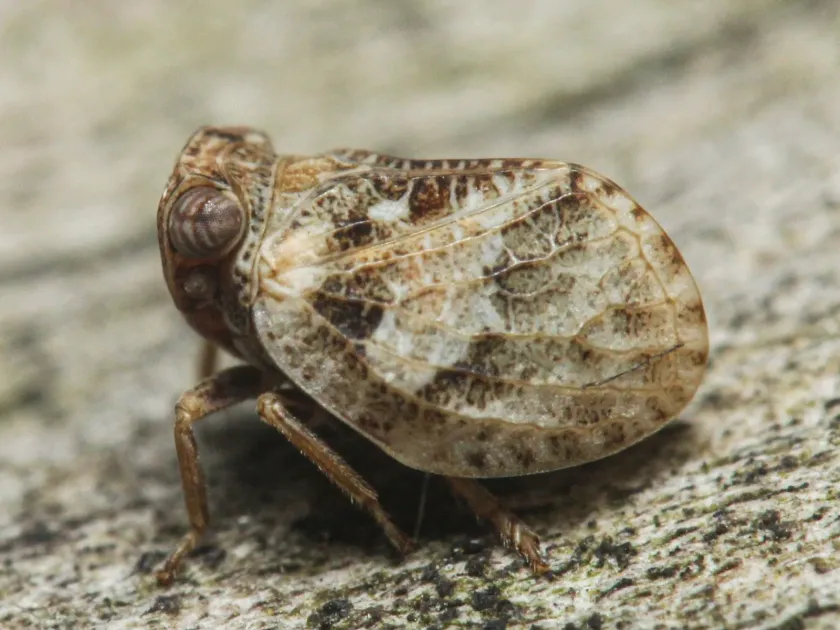
The adult Hysteropterum has a distinct morphology characterized by a short, globular body and wings that are held roof-like over the abdomen with intricate venation.
Their coloration is typically cryptic, ranging from dusty grey to brownish, which allows them to blend in perfectly with tree bark, dry stems, or leaf litter.
Nymphs of this genus are often distinguished by a waxy or fluffy white secretion covering their bodies, which acts as a protective shield against predators and chemicals.
These insects are relatively small, usually measuring between 5 and 7 millimeters, making them easy to overlook during the initial stages of infestation.
What it damages
Hysteropterum is a polyphagous pest, meaning it feeds on a wide range of host plants including grapevines, various fruit trees, shrubs, and vegetable crops.
By piercing the plant tissues and extracting cell sap, the pest causes significant stress to the host, particularly during hot and dry weather conditions.
The feeding process results in the development of chlorotic spots on the leaves, which disrupts the plant's ability to photosynthesize effectively.
Heavy infestations can lead to severe stunting of growth, deformation of new shoots, and a reduction in both the quality and quantity of the harvest.
Furthermore, these insects are known vectors for various plant pathogens, potentially spreading viruses that cause foliage yellowing and leaf curling.
When it appears
The biological cycle of Hysteropterum is typically univoltine or bivoltine, depending on the local climate and temperature gradients.
Overwintering occurs primarily at the egg stage; females deposit their eggs in sheltered areas such as bark crevices, woody stems, or soil debris.
Nymphs emerge in the spring, coinciding with the start of the vegetative season when new, nutrient-rich plant growth becomes available.
The peak activity of adult planthoppers is generally observed during mid-to-late summer, when they reach maturity and begin their reproductive phase.
As autumn approaches, activity tapers off, and the insects complete their cycle by laying eggs for the following year's generation.
Signs of infestation
Early identification is crucial for managing Hysteropterum, as they tend to hide in the less accessible parts of the plant, such as leaf axils.
Visible signs often include the presence of honeydew on the leaves, which is a sticky secretion that attracts other pests and promotes mold growth.
- Chlorotic or yellowing patches on leaf surfaces.
- Presence of white waxy filaments or fluffy masses on stems.
- Distorted and curled leaves, especially on younger shoots.
- Premature dropping of blossoms and young fruit clusters.
- Sooty mold accumulation due to honeydew contamination.
In addition to these symptoms, gardeners may observe small puncture marks on the leaves, indicating the feeding sites of the planthoppers.
Control measures
Effective control of Hysteropterum requires an integrated approach that includes good horticultural practices and targeted chemical interventions.
Sanitation is a primary defense; clearing away dry weeds, dead leaves, and pruning debris reduces the available sites for egg-laying.
For chemical control, apply registered systemic insecticides when nymphs are in their early stages, as they are most vulnerable before developing thick waxy shields.
The inclusion of a surfactant or wetting agent in the spray tank is essential to ensure the solution penetrates the insect's protective waxy layer.
Monitoring for ant activity is also recommended, as ants often protect planthoppers from natural predators in exchange for the sugary honeydew they produce.
Taxonomy
- Latin name
- Hysteropterum
- Order
- Hemiptera (bugs, aphids, leafhoppers)
- Family
- Issidae
- EPPO code
- HYSESP
Discussion
No discussions yet — be the first.