
Euroxenus
Euroxenus
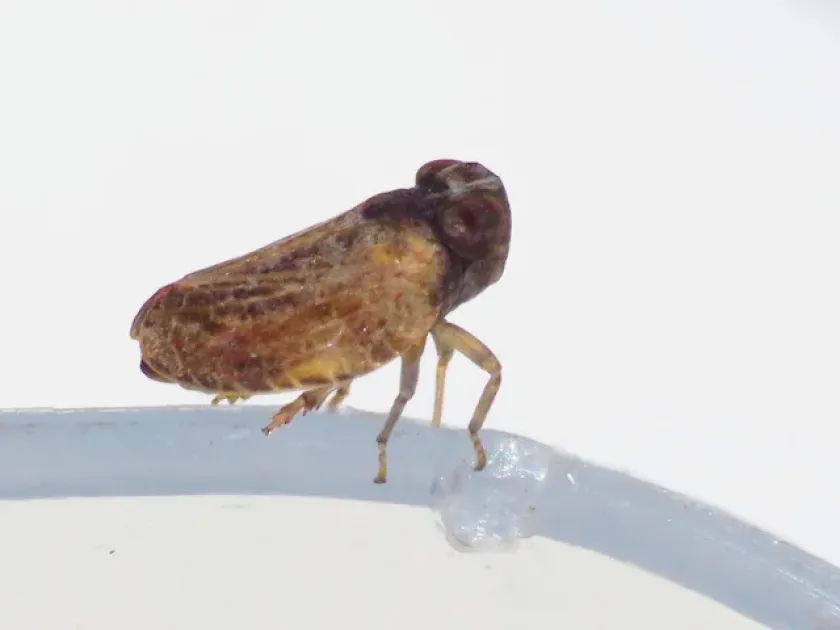
Description
How to identify
Euroxenus is a genus of insects from the order Coleoptera, belonging to the family Curculionidae (weevils). Members of this genus are characterized by a specific structure of the rostrum and unique coloration patterns that provide excellent camouflage on plant surfaces.
Adult beetles are small, typically ranging from 3 to 6 millimeters in body length. Their chitinous exoskeleton is often covered with tiny scales that mimic the texture and color of the bark or leaves of their host plants.
For precise species identification, specialists often require microscopic examination of the male genitalia. In field conditions, identification is difficult due to the adults' agility and their defensive behavior of dropping to the ground and feigning death when threatened.
Euroxenus larvae are legless, whitish grubs with a prominent dark head capsule. They live a cryptic lifestyle, tunneling through plant tissues, which makes early detection by agronomists quite challenging.
The insect's life cycle is closely linked to the phenology of its host plants. Proper diagnosis requires regular entomological surveys of crops using sweep netting or careful visual inspection of growing points.
What it damages
This pest primarily affects woody and shrubby species, as well as certain perennial herbaceous plants. Notably, it causes significant damage to nursery stock, fruit trees, and ornamental plantings.
Adult beetles feed on the soft tissues of young leaves and buds, creating irregular holes. This feeding damage reduces the plant's photosynthetic efficiency and weakens its overall systemic health.
The primary damage is caused by larvae that burrow into the pith of shoots or root tissues. This activity disrupts the vascular system, leading to stunted growth, deformation of vegetative organs, and the eventual dieback of infested branches.
Mass outbreaks of Euroxenus in neglected plantations can ruin the marketability of ornamental crops. In fruit orchards, bud damage directly reduces the potential yield for the current season.
Damaged tissues serve as entry points for secondary infections, including fungal pathogens and bacterial rots. Consequently, the pest's impact is multifaceted, combining direct tissue consumption with indirect systemic weakening of the host plant.
When it appears
Euroxenus activity commences in early spring as soon as stable positive mean daily temperatures are reached. Adult beetles emerge from their overwintering sites, which typically include forest litter, plant debris, or the top layer of soil.
The mating and oviposition period coincides with the phase of active sap flow and bud break in most host plants. This is a critical period that requires increased vigilance from farm agronomic teams.
Larval development occurs throughout the summer season. Depending on the climatic conditions of a specific region, the insect may produce one generation per year or a partial second generation if the summer is long and warm.
The second half of summer sees the emergence of new-generation adults, which feed actively before entering diapause. During this time, a local increase in pest density can be observed on young shoots.
As temperatures drop in autumn, the insects migrate to the base of plants and retreat into the soil or sheltered crevices for dormancy. Overwintering occurs at the adult stage, which enhances population survival through harsh winters.
Signs of infestation
The first sign of Euroxenus presence is the appearance of characteristically perforated leaves with uneven margins. During inspection of shrubs or trees, one may notice the wilting of terminal shoots without any apparent cause.
The presence of larval excrement, appearing as fine brownish frass at the base of damaged branches or near larval entry points on shoots, is a reliable diagnostic symptom. Such areas often appear as slight swellings or galls.
- Perforated leaves and young shoots.
- Yellowing and deformation of new foliage.
- Premature abscission of buds or fruit sets.
- Presence of brownish wood dust (frass) on the bark.
Visual inspection of the underside of leaves early in the morning can reveal adult beetles. They often align themselves along leaf veins, making them nearly invisible to an untrained observer.
In cases of severe infestation, uneven canopy development becomes apparent: certain branches lag in growth, and their bark may lose its healthy luster due to the disruption of internal nutrient transport.
Control measures
Effective management of Euroxenus relies on strict adherence to agronomic practices. Regular sanitary pruning of infested shoots followed by their burning is a critical step to drastically reduce the larval population.
The application of systemic insecticides is recommended during the peak period of adult emergence following winter. It is crucial to perform these treatments during early morning or late evening hours when the pests are most active on the plant surface.
The use of pheromone or sticky traps assists in monitoring pest density. This allows for precisely timed protective treatments and minimizes the overall chemical load applied to the agroecosystem.
Biological control methods include the use of entomopathogenic fungi and nematodes that effectively target larvae within the soil or inside shoot galleries. This provides an environmentally friendly alternative to harsh synthetic pesticides.
Maintaining crop rotation and high-level agronomy, including optimal irrigation and timely fertilization, makes plants more resilient to Euroxenus colonization. A strong, healthy plant is capable of compensating for minor tissue damage.
Taxonomy
- Latin name
- Euroxenus
- Order
- Hemiptera (bugs, aphids, leafhoppers)
- Family
- Issidae
- EPPO code
- EURXSP
Discussion
No discussions yet — be the first.