
Hysteropterum sepulchralis
Hysteropterum sepulchralis
Description
How to identify
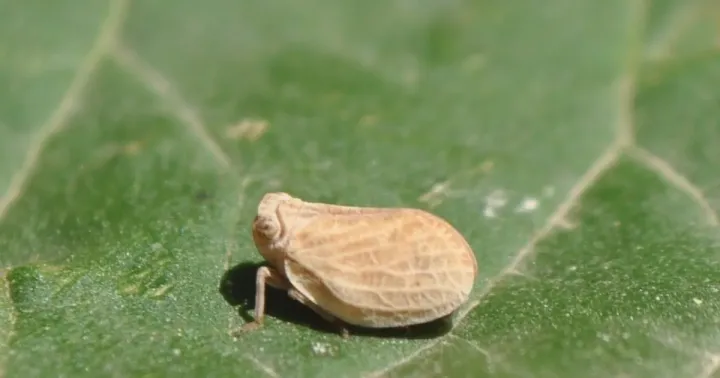
Hysteropterum sepulchralis belongs to the order Hemiptera and the family Issidae. These insects are characterized by a robust, humpbacked body shape and thickened forewings that protect their dorsal side. Their coloration typically mimics the bark and dry stems of plants, providing excellent camouflage.
The adults are small, generally greyish-brown, which allows them to blend perfectly into the woody parts of vines or fruit trees. Their head is short with a broad forehead, and the pronotum is well-developed, contributing to their distinctive hunchback appearance.
The nymphs resemble smaller, wingless versions of the adults. They lead a secretive lifestyle, hiding in crevices or at the base of leaves, which makes early-stage detection challenging during routine field surveys.
These insects are highly adapted to warm, dry climates, which influences their distribution patterns across Mediterranean and southern European landscapes. They are agile jumpers, using this ability to escape when disturbed by predators or human activity.
For accurate identification, agronomists should focus on the underside of leaves and branch bifurcations, particularly during the early morning hours when these insects are less prone to active jumping or flying.
What it damages
Damage is caused by both nymphs and adults using their piercing-sucking mouthparts to feed on plant sap. This direct feeding leads to a loss of vigor in host plants, which is particularly detrimental to young, establishing vines.
Besides the mechanical impact, feeding sites often become entry points for secondary infections. These can include fungal pathogens and phytoplasmas that significantly weaken the plant, leading to stunted growth and reduced fruit quality.
The physiological stress caused by persistent feeding results in chlorosis, leaf deformation, and, in severe infestations, premature leaf drop. This disrupts photosynthesis, directly reducing the sugar content and overall yield of the grapes or fruits.
Young orchards and new vineyard plantations are at the highest risk, as they lack the resilience of mature plants. Economic losses can be substantial if the infestation is not monitored and managed during the early stages of the growing season.
The presence of honey-dew excreted by the insects promotes the growth of sooty mold. This layer blocks light and further impairs the plant's photosynthetic capacity, creating a cascading negative effect on the plant's health.
When it appears
The life cycle of Hysteropterum sepulchralis typically starts with overwintering eggs deposited in the cracks of bark or within woody stems. As spring temperatures rise, the nymphs emerge to begin their feeding cycle.
The highest population density and adult activity levels occur during the peak of summer. During this period, the insects move through different parts of the canopy, spreading the infestation across the entire orchard or vineyard.
The speed of development is highly dependent on ambient temperature. In exceptionally hot years, the life cycle accelerates, potentially allowing for increased pressure and a larger number of insects by the late summer months.
As autumn approaches and temperatures drop, the insects' activity wanes. This transition phase is when the females prepare for egg-laying, securing the survival of the next generation through the winter dormancy period.
Weather conditions significantly impact the survival of nymphs. However, their ability to find sheltered micro-habitats ensures that they remain a persistent pest throughout their geographical range, regardless of minor climatic fluctuations.
Signs of infestation
The initial signs of an infestation include the appearance of tiny yellowish spots on the leaves at the feeding sites. These eventually expand, causing extensive chlorosis across the leaf blade, which can look like a nutrient deficiency at first glance.
A major diagnostic sign is the presence of sticky honeydew on the leaves and stems. This substance often turns dark or black due to the rapid colonization by sooty mold fungi, making the plant look dirty or diseased.
Agronomists can identify the insects by shaking the foliage; the sudden movement of the insects away from the branches is a classic indicator of their presence. They are most commonly found nestled in the protected areas of the plant canopy.
Stunted growth of apical shoots and leaf curling are classic signs of a high pest density. If these symptoms are widespread, it indicates that the plant's vascular system is under significant stress from sap-sucking activity.
- Chlorotic spots on leaf surfaces.
- Black sooty mold on stems and leaves.
- Presence of honeydew secretions.
- Deformed growth of young shoots.
Control measures
Effective control starts with good agricultural practices, such as removing weeds and unwanted vegetation that can act as a refuge for the nymphs. Keeping the canopy well-ventilated through pruning also reduces the insect's preferred habitat.
Biological control methods involve supporting natural predators, including predatory bugs and parasitic wasps. These natural enemies can play a vital role in keeping pest populations below the economic threshold without resorting to heavy chemical use.
When chemical intervention is required, systemic insecticides are most effective during the early nymphal stages. Applying treatments correctly ensures that the chemical reaches the target areas before significant damage is done to the developing fruit.
Monitoring using yellow sticky traps is a recommended strategy to track the emergence of adults and determine the precise timing for protective sprays, ensuring that control measures are as targeted and efficient as possible.
Sustainable pest management requires a combination of monitoring, cultural practices, and selective chemical use, aimed at preserving the balance of the ecosystem while ensuring the health and productivity of the crop.
Taxonomy
- Latin name
- Hysteropterum sepulchralis
- Order
- Hemiptera (bugs, aphids, leafhoppers)
- Family
- Issidae
- EPPO code
- HYSESE
Discussion
No discussions yet — be the first.