
Scarce swallowtail
Iphiclides podalirius
Description
How to identify
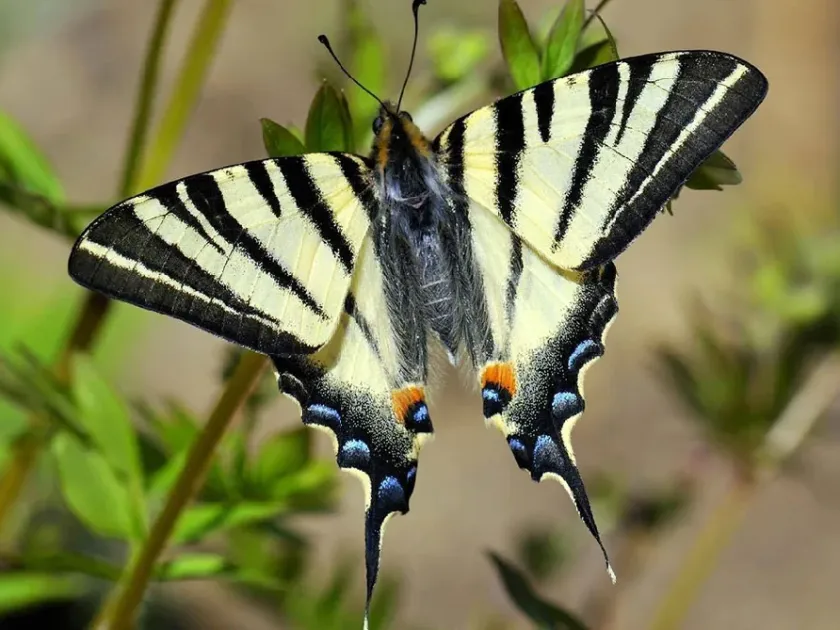
The scarce swallowtail (Iphiclides podalirius) is a large butterfly belonging to the Papilionidae family. Its wingspan ranges from 65 to 80 mm, featuring creamy yellow wings with distinct black stripes and prominent tails on the hindwings.
The larvae are bright green with yellowish spots and stripes. Their camouflage makes them difficult to detect among the green foliage of fruit trees, which is why infestations often go unnoticed until significant leaf damage occurs.
What it damages
This species primarily impacts fruit trees within the Rosaceae family. The larvae consume leaves, which reduces the photosynthetic capacity of the trees, leading to stress and potential yield loss.
Major host plants include apple, pear, cherry, plum, and apricot trees. Although they are often considered a natural part of the ecosystem, large populations can become a nuisance in home orchards.
When it appears
The life cycle of this butterfly typically involves two generations per year. Adults of the first generation emerge in spring, while the second generation appears mid-summer.
The species overwinters as a pupa, which is attached to the branches of the host tree using a silk girdle. Development is heavily dependent on weather conditions, with warmer springs leading to earlier and more intense larval activity.
Signs of infestation
The most common sign of infestation is damaged foliage, specifically leaves that have been skeletonized or eaten from the edges. Unlike many other caterpillars, these larvae do not build webs or nests.
Because they are solitary feeders, they tend to move from leaf to leaf. Gardeners should inspect the underside of leaves on the periphery of the canopy to identify the presence of these caterpillars during the late spring and summer months.
Control measures
Control measures should be targeted based on the scale of the infestation. Manual removal is often sufficient for small numbers of caterpillars in home gardens, especially on young trees.
For more significant outbreaks, chemical control with appropriate insecticides can be implemented during the larval stage. It is crucial to monitor the population and apply treatments before extensive defoliation occurs.
Maintaining healthy tree growth through regular fertilization and pruning can help plants withstand minor damage, while biological control agents can also be effective in integrated pest management programs.
Taxonomy
- Latin name
- Iphiclides podalirius
- Order
- Lepidoptera (butterflies)
- Family
- Papilionidae
- EPPO code
- PAPIIP
Discussion
No discussions yet — be the first.