
Southern scarce swallowtail
Iphiclides feisthamelii
Description
How to identify
The Southern scarce swallowtail (Iphiclides feisthamelii) is a large, charismatic butterfly belonging to the Papilionidae family. This species is morphologically similar to the common scarce swallowtail but possesses distinct wing patterns and a specific geographical range.
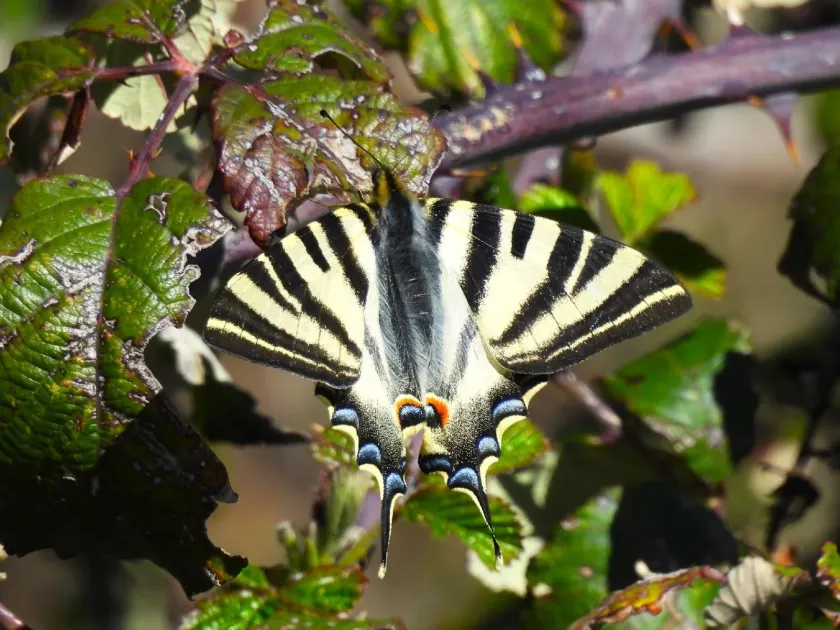
Adult butterflies have a wingspan of 60 to 80 mm. Their wings feature a pale yellow or whitish background crossed by bold black stripes, complemented by long tails on the hindwings and striking blue spots along the outer edges.
The larva (caterpillar) goes through several instars. Mature caterpillars reach 40–50 mm in length and display a vibrant green coloration with fine yellow or pinkish stripes, providing excellent camouflage among foliage.
Eggs are laid singly by the females on the undersides of host plant leaves. They are spherical and have a greenish tint, darkening as the embryo inside develops.
Pupae are attached to tree branches with a silken girdle. They exhibit cryptic coloration, ranging from green to brown, which allows them to blend in perfectly with the bark or twigs of the host tree.
What it damages
The primary agricultural damage is caused by the caterpillars, which feed aggressively on the leaves of fruit-bearing trees. Adult butterflies feed on flower nectar and do not pose a threat to crops.
The species primarily affects plants within the Rosaceae family. Common hosts include apple, pear, plum, cherry, almond, as well as wild species like blackthorn and hawthorn.
In cases of heavy infestation, larvae may skeletonize leaves or consume them entirely, leaving only the primary veins. This process causes significant physiological stress to the tree and reduces photosynthetic capacity.
Severe defoliation negatively impacts flower bud formation for the following season. Repeated attacks can lead to premature leaf drop and overall tree decline, particularly in weaker specimens.
Young nursery stock is particularly vulnerable. Extensive feeding on juvenile foliage can lead to stunted growth and high mortality rates in young trees if the population is not kept in check.
When it appears
Depending on regional climatic conditions, the Southern scarce swallowtail may produce one or two generations per year. Adults typically emerge in late spring.
The first generation of adults is active from May to June. Because the egg-laying period is extended, caterpillars of various developmental stages can be found simultaneously throughout the summer months.
Larval development takes place during the warm summer period (June–August). The final generation of the season eventually enters the pupal stage, where they remain until the following spring.
The overwintering stage is the pupa. It is remarkably resilient to low temperatures, allowing the species to survive the winter securely attached to branches or tree trunks.
Spring emergence of adults is synchronized with the bud break and flowering of host trees, ensuring that emerging larvae have immediate access to fresh, nutrient-rich foliage.
Signs of infestation
The most visible sign of infestation is damaged or skeletonized leaves on the outer parts of the canopy. Caterpillars are often found resting on the underside of leaves along the main vein.
The presence of frass, appearing as small dark pellets on healthy leaves beneath the feeding site, is a reliable indicator of active caterpillar presence in the area.
Leaves tied together with silk threads may indicate the presence of younger caterpillars, which use this technique for protection against predators and harsh weather conditions.
During the dormant season, pupae can be discovered by inspecting twigs and bark crevices. They are well-camouflaged, often resembling dead leaf remnants or bark irregularities.
The bright coloration of older larvae makes them easier to spot during canopy inspections. Morning scouting is recommended, as caterpillars are generally more active and visible during cooler parts of the day.
Control measures
Mechanical control is effective in small orchards and private gardens, involving the hand-picking of larvae and the destruction of visible pupae.
Cultural management practices focus on maintaining overall tree vigor, including proper pruning and the removal of heavily infested branches to reduce local pest pressure.
- Encouraging natural predators, such as parasitic wasps and predatory bugs, is crucial for keeping butterfly populations at manageable levels.
- Biological control using Bacillus thuringiensis-based products is highly effective against larvae and poses minimal risk to beneficial insects and the environment.
- Chemical insecticides should be reserved for severe outbreaks and applied during the early larval stages for maximum efficacy.
Strategic timing of any chemical application is essential to ensure that larvae are exposed to the treatment while they are young and before significant damage occurs.
Additionally, clearing wild host plants from the immediate vicinity of the orchard can help prevent the migration of the pest into the main cultivation area.
Taxonomy
- Latin name
- Iphiclides feisthamelii
- Order
- Lepidoptera (butterflies)
- Family
- Papilionidae
- EPPO code
- IPHIFE
Discussion
No discussions yet — be the first.