
Idaea inquinata
Idaea inquinata
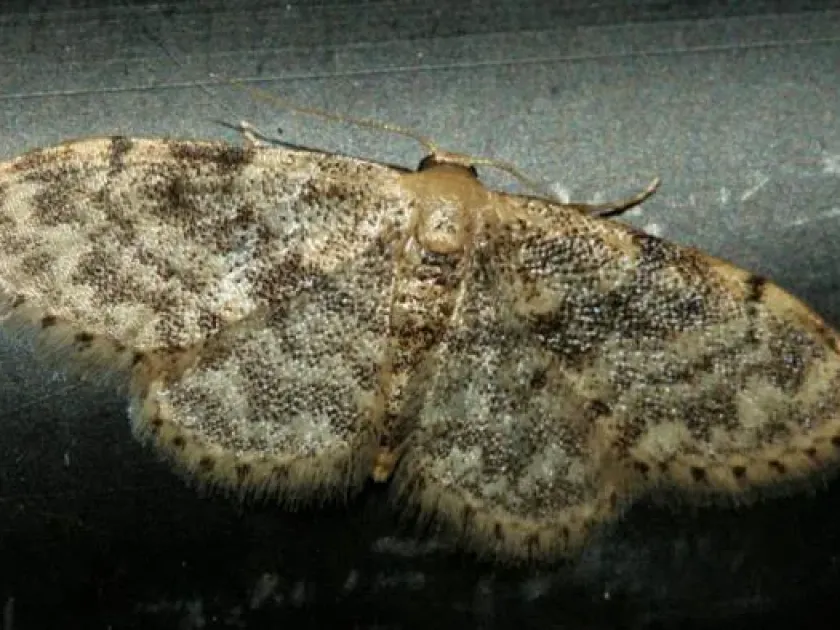
Description
How to identify
Idaea inquinata is a moth belonging to the Geometridae family, known for the unique movement pattern of its larvae, commonly referred to as loopers.
Adult moths are relatively small, with wingspans typically ranging from 15 to 20 mm, featuring cryptic coloration that blends with tree bark.
The larvae possess a cylindrical body that mimics the twigs of their host plants, providing them with effective camouflage against natural predators.
Their head capsule is distinct, and the body exhibits a slight texture that helps them stay hidden when resting on the underside of foliage during the day.
Pupation usually occurs in a silk-spun cocoon hidden within debris or soil, serving as the primary overwintering strategy for the species.
What it damages
The caterpillars of Idaea inquinata are phytophagous and feed primarily on the leaves and sometimes the developing buds of various woody plant species.
Feeding damage is characterized by irregular holes and margin consumption, which reduces the photosynthetic capacity of the affected leaves.
Severe infestations can lead to partial defoliation of the host plant, resulting in reduced vigor and slowed growth rates for the entire season.
In addition to foliage, larvae may target reproductive parts of the plant, potentially decreasing the total yield of flowers or fruits.
Wounds left by the feeding process provide entry points for secondary pathogens, such as bacterial infections or fungal spots.
When it appears
Larval activity generally peaks in the spring following the emergence from overwintering sites, coinciding with the flushing of new plant growth.
Adult moths typically emerge in late spring or summer, with activity patterns heavily influenced by local temperature and humidity levels.
Mating and egg-laying occur shortly after emergence, with females placing eggs on the undersides of leaves or within crevices of host plant bark.
The development time from egg to adult is sensitive to climate, often resulting in synchronized life cycles across the local pest population.
Autumn marks the entry into the pupal stage, where the insect remains dormant until the return of favorable spring conditions.
Signs of infestation
Visible signs of infestation include chewed leaves, missing tissue, and the presence of frass (larval excrement) on the plant surface below feeding sites.
Careful examination of the underside of the foliage often reveals the presence of small, well-camouflaged caterpillars that remain motionless during the day.
The presence of fine webbing or silk strands attached to the plant surface may indicate larval activity or preparation for pupation.
A sudden decline in plant health, characterized by wilting or thinning foliage, often warrants a close inspection for early-stage larvae.
Monitoring the adult population using light traps can provide an early warning of potential infestation waves before larval damage becomes significant.
Control measures
Integrated Pest Management strategies involve monitoring the population levels and using targeted control measures only when damage thresholds are met.
Mechanical control, such as manual removal of egg masses or larvae, is effective in small gardens or on low-growing plant varieties.
Biological insecticides, specifically those containing Bt, are highly effective against young larvae while posing minimal risk to beneficial insects.
Environmental management, including the removal of leaf litter where pupae overwinter, can significantly reduce the local population size for the next season.
- Regular inspection of host plants during spring and summer.
- Use of pheromone or light traps for population monitoring.
- Encouraging natural predators such as birds and parasitic wasps.
Taxonomy
- Latin name
- Idaea inquinata
- Order
- Lepidoptera (butterflies)
- Family
- Geometridae
- EPPO code
- IDAAIN
Discussion
No discussions yet — be the first.