
Hyposidra talaca
Hyposidra talaca
Description
How to identify
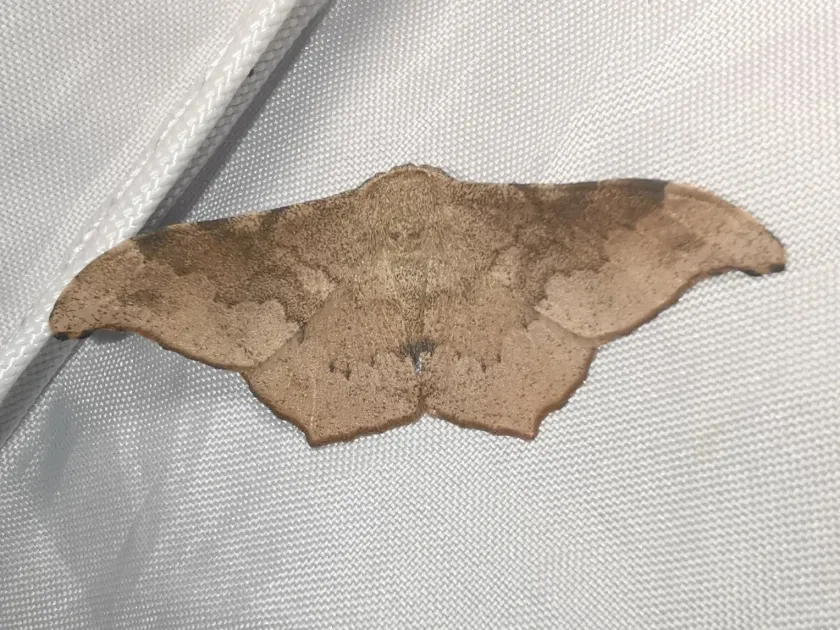
Hyposidra talaca is a species of moth belonging to the family Geometridae. Adult moths are medium-sized with cryptic coloration, usually shades of brown or grey, which allows them to blend perfectly with tree bark.
The larvae, commonly known as loopers, are famous for their mimicry. They often resemble twigs when stationary, making detection during field inspections quite challenging.
The life cycle undergoes complete metamorphosis, including the egg, larva, pupa, and adult stages. Depending on the environment, this cycle can repeat multiple times throughout the year.
The moths are primarily nocturnal, showing high activity around light sources at night, which can be utilized for population monitoring.
Eggs are typically laid in small clusters or singly on the underside of leaves, providing a secure starting point for the neonate larvae to begin feeding.
What it damages
This pest is a major threat to tea plantations (Camellia sinensis), where it causes direct damage by defoliating the bushes and ruining the harvestable leaves.
Aside from tea, Hyposidra talaca acts as a polyphagous pest, damaging a variety of other crops, including coffee, cocoa, and various ornamental tree species.
Young larvae feed on tender tissues, but older caterpillars can consume entire leaf blades, leaving only the midribs intact, leading to severe defoliation.
Mass infestations cause a significant drop in plant vigor, drastically reducing yield and potentially making the plants susceptible to secondary infections.
Economic damage is most severe when the larvae target the actively growing terminal shoots, which are essential for the commercial production of tea.
When it appears
The pest is most active in warm, humid climates, with population explosions often coinciding with the rainy season or periods of vigorous plant growth.
Lifecycle speed is highly temperature-dependent, allowing for multiple overlapping generations per year in tropical regions.
Pupa often overwinter in the soil or leaf litter, emerging as adults once temperatures become favorable and the host plants begin flushing.
Monitoring the intensity of adult flight allows agronomists to predict peak egg-laying periods and time their control measures more effectively.
Extended periods of drought or unusual cold can disrupt the lifecycle, but the pest typically recovers quickly once optimal conditions return.
Signs of infestation
The most evident sign is the presence of jagged or skeletalized leaves, often starting at the tips of the shoots and moving downward.
Fecal pellets (frass) visible on the leaves of lower branches serve as a clear indicator of active larvae feeding high up in the canopy.
Direct sighting of the larvae is possible if you look closely for small twig-like structures that seem out of place on the stem or branch.
General yellowing or stunted growth of shoots suggests that the plant has been under prolonged feeding pressure from the loopers.
Silk webbing may be present where the larvae have tied leaves together to create a sheltered area, providing further evidence of infestation.
Control measures
Integrated Pest Management (IPM) is essential for controlling Hyposidra talaca, emphasizing the need for minimal chemical intervention.
Biological control agents, particularly microbial insecticides like Bacillus thuringiensis, are highly effective against younger larval stages.
Maintaining a healthy, well-pruned canopy helps in early detection and prevents the rapid buildup of pest populations within the plantation.
- Use light traps to monitor and reduce adult moth populations.
- Manual removal of egg clusters during routine canopy maintenance.
- Preservation of natural predators like parasitoid wasps and predatory bugs.
If chemical application is necessary, targeted insecticides should be used to minimize impact on beneficial organisms, keeping the ecological balance intact.
Taxonomy
- Latin name
- Hyposidra talaca
- Order
- Lepidoptera (butterflies)
- Family
- Geometridae
- EPPO code
- HYPITA
Discussion
No discussions yet — be the first.