
Hypomecis moth
Hypomecis
Description
How to identify
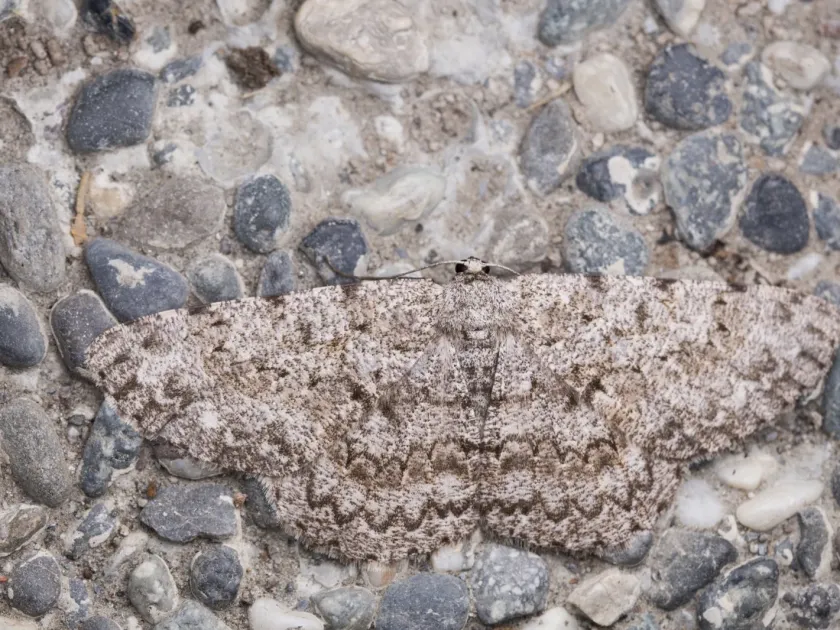
The genus Hypomecis belongs to the family Geometridae, often called geometer moths. These moths are characterized by a cryptic coloration that allows them to blend perfectly into bark, lichen, or dead leaves.
The larvae, known as loopers or inchworms, have a distinctive movement pattern where they draw their hind legs towards their thoracic legs, causing the body to arch in a loop.
Adult moths are generally nocturnal and are highly attracted to light, which makes light trapping a primary method for population monitoring in agricultural or forestry settings.
The life cycle involves complete metamorphosis, moving through egg, larval, pupal, and adult stages. Depending on the species and climate, they may have one or more generations per year.
Morphologically, they are often slender-bodied, with wingspans that can vary significantly depending on the specific species within the complex.
What it damages
The Hypomecis species primarily affect various tree and shrub species, making them significant pests in forestry, nurseries, and ornamental landscapes.
The larvae are foliage feeders. By consuming leaves, needles, and buds, they reduce the tree's photosynthetic capacity, which leads to decreased growth and general weakness.
In cases of severe infestation, the larvae can cause total defoliation of trees, which puts the host under extreme stress and makes it susceptible to secondary pests like wood-boring beetles.
Young plants and saplings are particularly vulnerable; repeated attacks over several seasons can result in the mortality of the host plant or severe deformation of the canopy.
Economic damage is most pronounced in commercial plantations or nurseries where aesthetic or timber value is significantly reduced by the feeding activities of the larvae.
Signs of infestation
The most common sign of infestation is irregular chewing patterns along the margins of leaves or needles, often leaving a skeletonized leaf structure behind.
Frass (larval droppings) appearing as small, dark pellets on the leaves or the forest floor beneath the trees is a clear indicator of active feeding in the canopy.
The presence of fine silk threads, which the larvae use to drop from branches or to tie leaves together for protection, is another diagnostic feature of their presence.
Increased activity of birds, such as tits or warblers, in the upper canopy during the larval feeding season often points to a high population of caterpillars.
Adult moths resting on tree trunks during the day are sometimes visible, although their camouflage makes them exceptionally difficult to spot against the bark.
Control measures
Biological control methods, such as the application of Bacillus thuringiensis, are highly effective against young larvae and are preferred due to their selectivity and low environmental impact.
Chemical control involving systemic or contact insecticides may be necessary during severe outbreaks to prevent significant damage to high-value trees or nursery stock.
Integrated Pest Management (IPM) strategies, including the preservation of natural predators and parasitoids, play a crucial role in maintaining populations below the economic threshold.
Cultural practices, such as maintaining healthy tree vigor and removing severely infested branches, can help prevent the buildup of pest populations in managed areas.
- Monitor populations using light traps and pheromone traps if available.
- Apply targeted bio-insecticides at the early larval stage.
- Encourage local bird populations as natural insect suppressors.
Taxonomy
- Latin name
- Hypomecis
- Order
- Lepidoptera (butterflies)
- Family
- Geometridae
- EPPO code
- HYMKSP
Discussion
No discussions yet — be the first.