
Hypolycaena danis
Hypolycaena danis
Description
How to identify
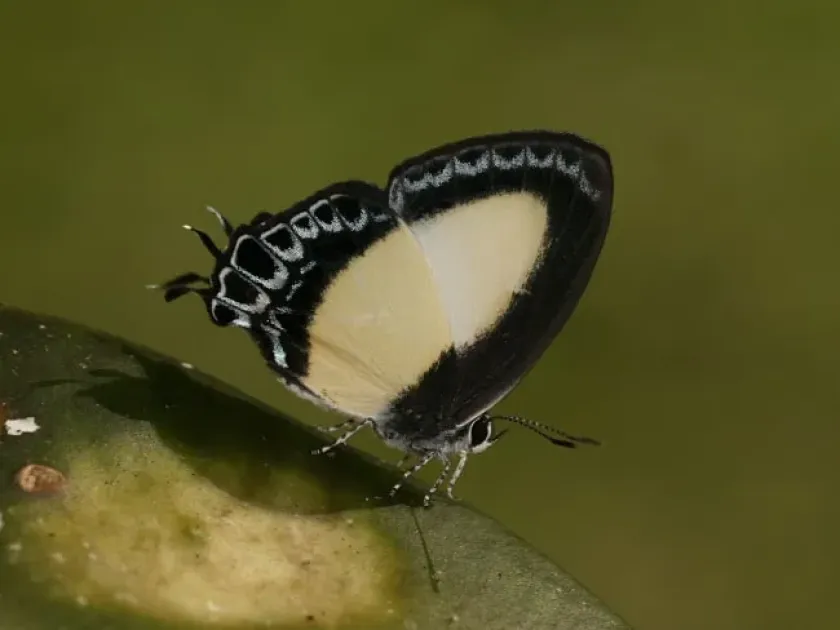
Hypolycaena danis is a species of butterfly belonging to the family Lycaenidae (gossamer-winged butterflies), commonly found in the tropical regions of Southeast Asia and Australia.
The adult butterfly typically features a wingspan of about 30–35 mm. Males often display brilliant blue or violet uppersides with dark margins, while females are more subdued in colour.
The larvae (caterpillars) of this species are notable for their flattened, onisciform (woodlouse-like) body shape, which is typical for many species within the subfamily Theclinae.
Caterpillars usually exhibit green or reddish-brown coloration, which serves as a highly effective camouflage against the leaves and flower buds of their host plants.
Pupae are attached to the host plant by a silk girdle and often mimic the appearance of dried plant material or bark fragments, making them difficult to detect.
What it damages
The larvae are the primary source of damage, as they feed on the generative organs of host plants, specifically targeting flower buds and developing shoots.
The species is known to infest various orchid species (Orchidaceae) and several other tropical ornamental plants, causing significant cosmetic and structural damage.
By consuming the internal tissues of developing flower buds, the larvae prevent the plants from blooming, leading to total loss of floral displays.
Large-scale infestations can be devastating in orchid nurseries, where the loss of developing flower spikes directly impacts the market value of the products.
Feeding wounds created by the larvae provide entry points for secondary bacterial and fungal pathogens, potentially leading to rot and systemic plant disease.
When it appears
Because of its tropical origin, Hypolycaena danis does not follow a strict seasonal cycle and can remain active throughout the year under suitable temperature conditions.
The speed of the life cycle is heavily dependent on ambient temperature and humidity; higher temperatures generally lead to shorter generation times.
In regions with consistent climates or controlled environments like greenhouses, the pest can breed continuously, producing overlapping generations.
Peak damage is most often correlated with the flowering seasons of the host plants, which provide the high-energy nutrients required by the growing larvae.
The absence of a cold winter diapause in their native range makes this pest a persistent threat in any environment that mimics tropical conditions.
Signs of infestation
Initial signs of an infestation include small, irregular feeding holes in flower buds or the complete hollowing out of developing floral structures.
The presence of fine, dark granular frass (excrement) deposited on the leaves directly beneath the flower spikes is a diagnostic indicator of larval activity.
- Wilting or premature yellowing of flower buds.
- Deformed or shredded petals on opening flowers.
- Presence of silken threads near the bud base where pupation may occur.
- Direct observation of larvae hiding on the undersides of leaves or in crevices.
Plants often exhibit stunted growth or fail to produce viable spikes if the larvae target the apical meristem or early-stage buds.
Control measures
Manual removal of larvae is a practical and effective strategy for small-scale operations or amateur collections, especially when performed in the early morning.
Biological control using formulations of Bacillus thuringiensis is highly recommended as it targets the larvae specifically while preserving beneficial predatory insects.
For commercial greenhouse environments, systemic insecticides may be necessary to protect the plant from internal feeders, provided they are safe for the specific orchid variety.
Strict quarantine protocols for all new plant acquisitions are essential to ensure that eggs or larvae are not introduced into the existing collection.
Regular monitoring and the maintenance of a clean growing environment by removing debris and weeds help in reducing the potential breeding sites for the pest.
Taxonomy
- Latin name
- Hypolycaena danis
- Order
- Lepidoptera (butterflies)
- Family
- Lycaenidae
- EPPO code
- HPOYDA
Discussion
No discussions yet — be the first.