
Hypolycaena
Hypolycaena
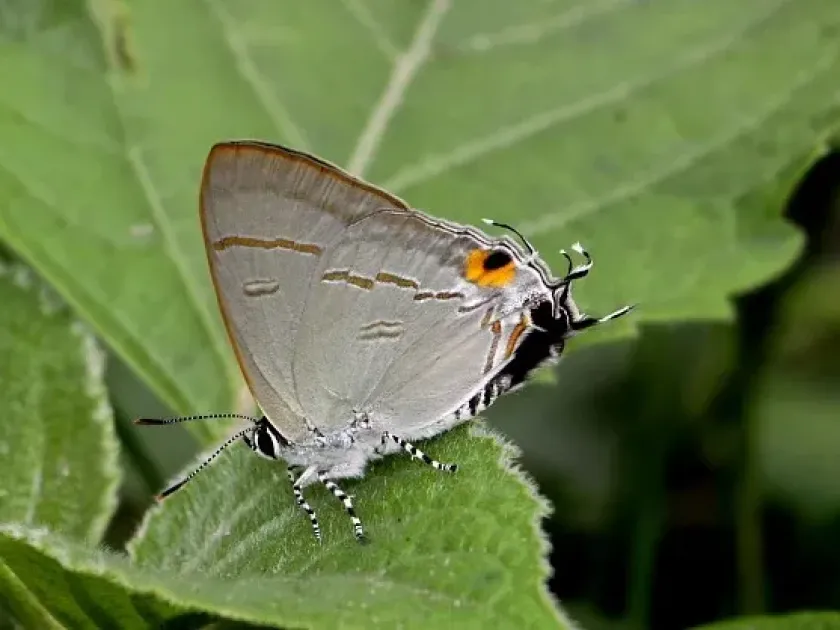
Description
How to identify
The genus Hypolycaena belongs to the order Lepidoptera, family Lycaenidae. These are small butterflies that are primarily distributed throughout the tropical and subtropical regions of the world.
The adults are characterized by brightly colored wings, often exhibiting a metallic sheen, and distinctive small tails on the hindwings, which is a classic feature of many lycaenid butterflies.
The larvae, or caterpillars, have a flattened, woodlouse-like body shape that allows them to remain concealed on the surface of host plants. This morphology is an adaptation for a stealthy lifestyle.
Taxonomically, the genus is complex due to the high species diversity and narrow food specialization, often requiring expert analysis of morphological features for accurate identification.
A key ecological trait of the larvae is myrmecophily, where they produce secretions that attract ants. These ants provide protection for the larvae against predators and parasites.
What it damages
The main damage is caused by the caterpillars, which feed on the generative parts of plants. They primarily target tropical fruits, legumes, and certain ornamental species, including orchids.
Larvae bore into buds, ovaries, and developing fruits. They consume the internal tissues, often destroying the seeds and pulp, which leads to premature fruit drop or decay of the crops.
On flowering plants, the caterpillars feed on buds, preventing normal bloom and fruit set. This results in significant yield loss for farmers and reduces the commercial value of the plants.
In ornamental cultivation, caterpillars may attack growth points and tender shoots, causing malformation, stunted growth, and weakening of the plant's overall health.
Secondary infections by fungi and bacteria often occur at the site of the larvae's feeding, which exacerbates the damage and leads to further loss of product quality and shelf life.
When it appears
The life cycle of Hypolycaena is closely linked to the phenology of its host plants. In tropical environments, breeding can occur throughout the year, provided there is a continuous supply of food.
Females lay eggs either singly or in small clusters on buds, flowers, or young fruits. The incubation period is highly dependent on ambient temperature and humidity levels.
The larval stage is the most prolonged and destructive period. Caterpillars undergo several molts, consuming increasing amounts of plant tissue as they progress toward pupation.
Pupation typically occurs in sheltered areas, such as the underside of leaves or within plant debris. The pupae are often cryptically colored to blend into their surroundings, making them difficult to detect.
Population peaks are generally observed during periods of heavy flowering or fruit production, ensuring a stable food supply for the developing larvae during their most vulnerable stages.
Signs of infestation
A primary indicator of infestation is the presence of entry holes in buds or fruit, often surrounded by small, dark-colored frass (larval excrement).
Premature yellowing or shedding of developing fruit, while the fruit remains attached to the tree, is a common symptom of internal damage caused by larval feeding.
High ant activity around inflorescences or young fruits is often a clear sign of the presence of larvae, as ants are attracted to the secretions produced by the caterpillars.
Distorted fruit shapes and irregular holes on the skin indicate internal structural damage caused by the larvae, which compromises the integrity of the plant tissues.
Careful inspection of the plant during the early growth stages can reveal silken threads or excrement piles near the base of buds, which are key diagnostic signs of an active infestation.
Control measures
Regular monitoring of crops and the manual removal of infested fruits and buds are highly effective methods for keeping the population under control at the early stages of infestation.
Cultural practices, such as proper crop rotation and the removal of fallen debris, help disrupt the pest's life cycle and limit its ability to spread throughout the plantation.
Biological control methods involving the release of specific parasitoids or the use of microbial pesticides like Bacillus thuringiensis can significantly reduce larval numbers without harming non-target species.
Chemical intervention, using systemic insecticides, is recommended only during the peak egg-laying or early larval emergence phases to ensure optimal protection before the larvae bore into the plant.
Encouraging natural predators, such as birds and beneficial insects, by maintaining a diverse ecosystem can help establish a natural balance and reduce the reliance on chemical control.
Taxonomy
- Latin name
- Hypolycaena
- Order
- Lepidoptera (butterflies)
- Family
- Lycaenidae
- EPPO code
- HPOYSP
Discussion
No discussions yet — be the first.