
Hydrotimetes natans
Hydrotimetes natans
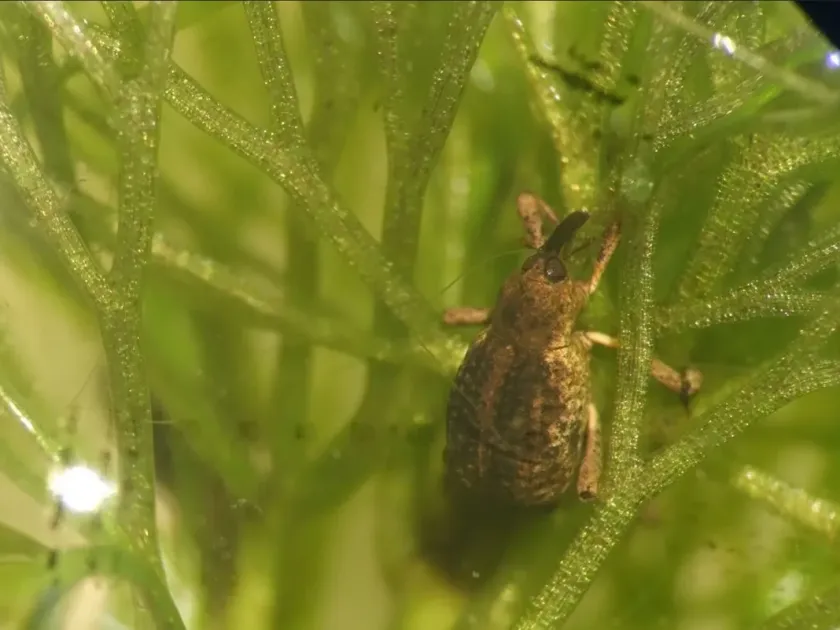
Description
How to identify
Hydrotimetes natans is a species of beetle belonging to the weevil family (Curculionidae) and the subfamily Bagoinae. This species is unique for its aquatic adaptation.
These insects are morphologically specialized to move across the surface of water, which is captured by their specific Latin nomenclature.
The adult weevils are small, requiring careful observation for accurate field identification, typically using a magnifying lens.
Taxonomically, they are classified under the order Coleoptera. Their physiology allows them to thrive in wetland environments, commonly found in rice paddies.
Understanding their structural adaptations is essential for agronomists to identify the presence of this pest early in the growing season.
What it damages
The primary hosts for this species are cereal crops, most notably rice. They are known to cause economic damage in flooded agricultural systems.
Adult beetles feed on the vegetative parts of the plants, creating lesions and eating away leaf tissue, which inhibits plant vigor.
The damage is particularly critical during the seedling stage, as the plants are less capable of compensating for the loss of photosynthetic area.
Larvae are also associated with the aquatic parts of the host plants, contributing to cumulative damage throughout the crop cycle.
Heavy infestation often leads to reduced yields and impaired plant health, affecting the overall productivity of the cultivated area.
Signs of infestation
Visual signs of infestation include irregular feeding holes in the leaves of rice seedlings, visible upon close inspection of the foliage.
One may notice the presence of the beetles themselves moving on the water surface within the rice paddies during the day.
Stunted growth, yellowing of the leaf tips, and a general lack of tillering are symptoms frequently associated with high pest pressure.
In cases of severe infestation, large patches of the crop may show signs of decay or chlorosis due to the impact of the beetles' feeding.
The accumulation of debris and waste products from feeding can also serve as a secondary indicator of the pest's activity.
Control measures
Integrated pest management strategies are crucial, including the maintenance of clean field borders to prevent infestation from nearby weeds.
Water level management in rice paddies can be an effective cultural practice to disrupt the life cycle of this aquatic weevil.
Chemical control using approved insecticides can be employed if threshold levels are exceeded, ensuring minimal environmental impact.
Biological control methods involve fostering populations of natural predators such as aquatic insects and beneficial microbes.
Regular field scouting and monitoring are essential for timely detection of the pest, allowing for targeted intervention before widespread damage occurs.
Taxonomy
- Latin name
- Hydrotimetes natans
- Order
- Coleoptera (beetles)
- Family
- Brachyceridae
- EPPO code
- HYDSNA
Discussion
No discussions yet — be the first.