
Hydrotimetes
Hydrotimetes
Description
How to identify
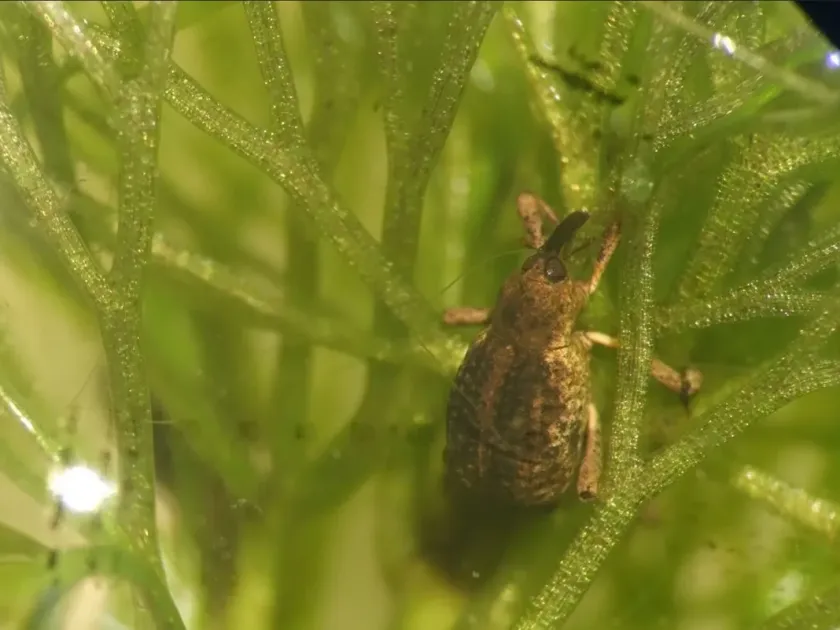
Hydrotimetes is a genus of beetles belonging to the family Curculionidae (true weevils). These insects are recognized by their characteristic elongated snouts, a defining feature of the weevil family.
The adults typically exhibit a dark coloration, ranging from brownish to black, which serves as camouflage against tree bark or soil substrates in their natural habitat.
Morphological analysis reveals a robust chitinous exoskeleton designed to provide protection against environmental stress, allowing these beetles to thrive in diverse conditions.
The antennae are elbowed and clubbed at the tip, a standard anatomical trait that assists field entomologists in identifying this genus during routine monitoring of crops.
Life cycle stages include egg, larva, pupa, and adult. Each stage is adapted to specific ecological niches, ensuring survival and propagation in moist environments.
What it damages
Hydrotimetes primarily feed on various woody plants and shrubs, showing a strong preference for specimens located in riparian zones or high-humidity areas.
The larvae are internal feeders, tunneling into plant tissues. This activity disrupts the vascular system, preventing nutrient flow and causing branches to wither and die prematurely.
Adult beetles inflict significant damage to buds and tender young shoots, especially during the critical spring growth phase, which can lead to substantial biomass loss.
In cases of high infestation levels, the pest can significantly reduce the overall productivity and aesthetic value of affected ornamental or commercial tree species.
Plants that are already under stress from waterlogging or mechanical injury are significantly more susceptible to successful colonization by this pest.
When it appears
The seasonal behavior of Hydrotimetes is intrinsically linked to thermal patterns and moisture levels, as these beetles favor stable, humid microclimates.
Adults emerge from overwintering sites—usually in the soil or leaf litter—in early spring as soon as average daily temperatures begin to rise consistently.
Peak feeding activity occurs during the period of bud burst, which in many temperate regions corresponds to late April and early May, when nutrients are most available.
Summer activity may decrease as temperatures climb and humidity drops, though the larvae continue their development hidden within the woody plant stems.
Preparation for winter begins in late autumn, as adults seek secure shelters in the upper soil layers or under debris to survive the cold, dormant season.
Signs of infestation
The most prominent sign of an infestation is the appearance of jagged holes in buds and young leaves, resulting from the adult beetle's feeding activities.
Accumulations of frass (excrement) and fine sawdust on the bark surface indicate that larvae are actively tunneling within the plant’s internal structures.
Premature wilting of young shoots and localized chlorosis are typical physiological responses of a plant whose transport tissues have been compromised by tunneling larvae.
- Presence of adult beetles on the bark, particularly during dusk hours.
- Distinct entry/exit holes on branches or main stems.
- Noticeable stunting in the growth of new shoots during the spring season.
Close inspection of the root collar and lower branches is recommended, as these areas are frequently selected for shelter and early-season activity.
Control measures
Managing Hydrotimetes effectively requires an integrated pest management strategy that combines cultural practices with targeted chemical applications.
Sanitation is paramount; pruning and disposing of infested branches containing larvae can significantly reduce the local population density in future seasons.
The use of sticky trunk bands in early spring acts as a physical barrier, effectively trapping migrating adults before they can reach the budding foliage.
When infestation thresholds are exceeded, systemic insecticides may be applied during the early spring emergence phase to protect susceptible buds and shoots.
Encouraging natural predators, such as birds or predatory insects, in the vicinity of the planting site can help maintain the beetle population at a non-damaging level.
Taxonomy
- Latin name
- Hydrotimetes
- Order
- Coleoptera (beetles)
- Family
- Brachyceridae
- EPPO code
- HYDSSP
Discussion
No discussions yet — be the first.