
Homorocoryphus lineosus
Homorocoryphus lineosus
Description
How to identify
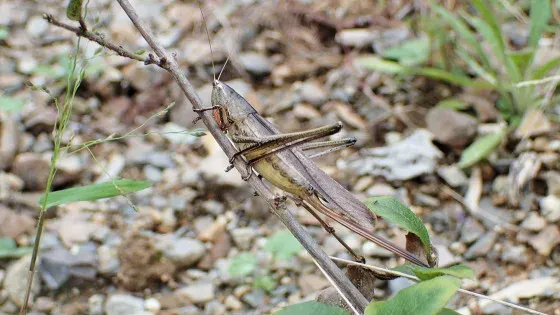
Homorocoryphus lineosus is a species of long-horned grasshopper belonging to the family Tettigoniidae. These insects are characterized by their elongated, slender bodies, which often exhibit green or light brown coloration, providing effective camouflage within dense foliage.
Adult specimens possess well-developed wings, enabling significant movement across agricultural landscapes. The most distinct morphological feature is a thin, pale longitudinal line running along the dorsal side of the body, which serves as a reliable identifier for the species.
The insect follows a hemimetabolous development process, consisting of egg, nymph, and adult stages. They are primarily nocturnal, spending daylight hours hidden within vegetation, which makes visual detection during the day challenging for farmers.
Females are equipped with a prominent, sword-like ovipositor, facilitating the placement of eggs deep within plant tissues or the soil profile. This reproductive strategy ensures protection for the eggs against environmental stressors and predation during the winter or dry periods.
Development is highly influenced by temperature and humidity. An optimal thermal range of 22 to 28 degrees Celsius supports rapid population growth and high activity levels, making them particularly problematic in irrigated or humid crop environments.
What it damages
This pest species primarily targets a variety of cereal crops, including sorghum, millet, and maize. When population densities are high, they may also migrate to nearby legume and vegetable crops, posing a broader threat to farm productivity.
Both nymphs and adults feed aggressively on foliage, creating irregular holes that reduce the photosynthetic capacity of the plant. Such damage leads to weakened stalks and diminished vigor, which is particularly detrimental to young crops.
During the grain-filling stage, the grasshoppers are known to consume developing kernels and damage ears or panicles. This direct interference with reproductive structures significantly lowers yield potential and degrades the quality of the harvested grain.
Heavy infestations can lead to significant biomass loss. Constant mechanical wounding of the plant epidermis also creates entry points for secondary pathogens, such as fungal infections, further damaging the crop health.
Water-stressed plants are especially vulnerable to Homorocoryphus lineosus damage, as they possess lower recovery potential. Therefore, irrigation management can indirectly influence the intensity of the pest impact on the overall crop yield.
Signs of infestation
The most prominent sign of an infestation is the presence of coarse, ragged feeding marks on the leaf margins. Unlike some insects that skeletonize leaves, Homorocoryphus lineosus often removes large portions of leaf tissue.
Night-time activity can be confirmed by the characteristic chirping sounds made by males, which are often audible in areas with high pest concentrations. During the day, farmers can detect them using sweeping nets in tall, dense vegetation.
Presence of frass near the base of the stems or within leaf sheaths is a clear indicator of recent feeding activity. Damaged panicles or ears exhibiting missing grains confirm that the pests are actively feeding on the generative parts of the plant.
Early-stage infestations are often localized. Monitoring edges and adjacent grassy areas helps identify the pest source before it spreads throughout the entire field, allowing for targeted intervention rather than wide-area spraying.
Secondary signs include premature wilting or yellowing of leaves in localized patches, often associated with the breakdown of vascular integrity in heavily damaged zones, which can be further complicated by opportunistic pathogens.
Control measures
Integrated Pest Management (IPM) for this species requires a combination of cultural, mechanical, and chemical approaches to maintain populations below economic thresholds.
- Crop rotation to break the life cycle of the grasshoppers and limit food availability.
- Maintenance of field edges and surrounding buffer zones by controlling weeds where eggs are deposited.
- Deep tillage of the soil after harvest to expose and destroy eggs buried in the soil profile.
- Application of contact or systemic insecticides if monitoring confirms populations exceeding economic damage thresholds.
- Use of biological control agents, such as entomopathogenic fungi, which are effective in humid conditions.
Chemical intervention should be strategically timed to target early nymphal stages, which are more susceptible and less mobile than adults. Localized spraying on the borders of fields can often prevent the pests from migrating into the main crop area.
Cultural control is the cornerstone of sustainable management. Proper soil preparation and the removal of alternative host plants near the fields are highly effective in reducing the long-term pest pressure.
Routine monitoring throughout the growing season is essential for early detection. Maintaining a healthy field ecosystem also encourages natural predators, which can help regulate grasshopper populations without extensive chemical usage.
Taxonomy
- Latin name
- Homorocoryphus lineosus
- Order
- Orthoptera (locusts)
- Family
- Conocephalidae
- EPPO code
- HOMRLI
Discussion
No discussions yet — be the first.