
Palm leaf miner
Homaledra sabalella
Description
How to identify
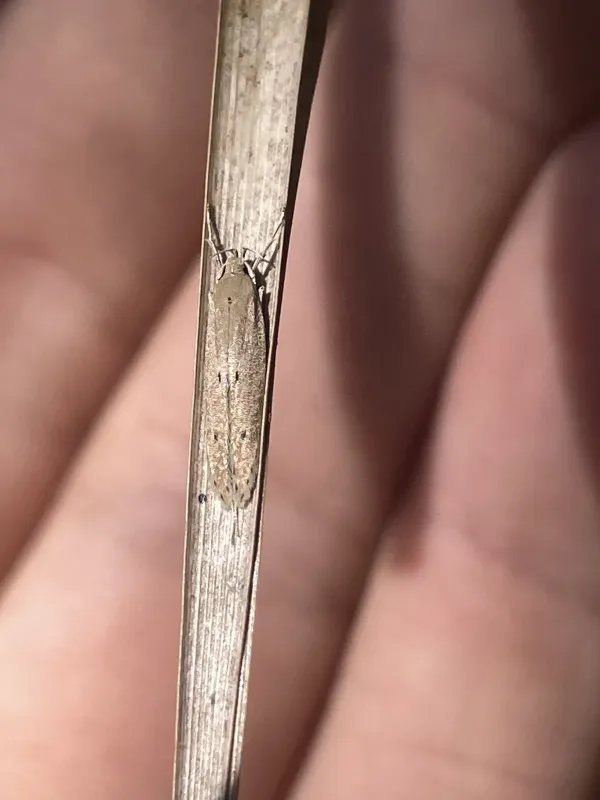
The palm leaf miner (Homaledra sabalella) is a member of the Cosmopterigidae family within the order Lepidoptera. The adult moth is small and slender, with narrow wings typically featuring a brownish color, which provides excellent camouflage against the bark or dry palm foliage.
The life cycle encompasses four distinct stages: egg, larva, pupa, and adult. Females typically deposit eggs near the veins or at the base of palm leaves. The larvae are the primary damaging stage, sheltering beneath silken webs mixed with frass and debris on the leaf surface.
The larvae possess flattened bodies, an adaptation that allows them to move and feed efficiently within the narrow silken galleries they construct. Their development is highly dependent on temperature, with warmer conditions facilitating rapid population growth and multiple generations per season.
Identifying this pest can be challenging due to its nocturnal behavior. Adult moths are rarely seen during the day. The primary diagnostic sign is the presence of distinctive silken galleries and feeding trails on the leaf blades, which serve as the habitat for the developing larvae.
For accurate identification, gardeners should use a magnifying lens to inspect the underside of the leaves and the base of the petioles. If suspected colonies are found, it is crucial to isolate the affected palm immediately to prevent the infestation from spreading to other plants.
What it damages
The primary hosts for this pest include various species within the Arecaceae (palm) family. Common targets include plants in the Sabal, Phoenix, Washingtonia, and Serenoa genera, making this moth a significant threat to ornamental landscaping and plant nurseries.
The pest causes damage by feeding on the epidermis and parenchyma of the leaf. Larvae consume the inner leaf tissues, leaving behind brownish, unsightly patches that eventually coalesce, leading to the necrosis and death of leaf segments.
In young palms, damage to the central growing point or emerging leaves can result in severe weakening or the death of the specimen. Heavy infestations quickly destroy the aesthetic value of the palm by drastically reducing the photosynthetic area of the foliage.
Beyond physical damage, the presence of these moth colonies creates entry points for secondary pathogens. Opportunistic fungi and bacteria frequently colonize the injured tissue, exacerbating the necrosis and causing premature decay of the leaf structure.
Under high-humidity conditions with poor airflow, the damage caused by the larvae intensifies. Infested leaves lose turgor rapidly, turn yellow, and may drop prematurely, significantly impacting the overall health and vitality of the palm tree.
Signs of infestation
The hallmark sign of an infestation is the presence of silk galleries on the leaf surface. These “mines” appear as dense brown tracks or patches covered in a mix of webbing and dark-colored insect excrement, making them easily distinguishable from other leaf damage.
The infested foliage often takes on a dirty, neglected appearance. Close inspection reveals that the areas beneath the webbing are discolored, translucent, or paper-thin, as the interior leaf tissues have been entirely consumed by the larvae.
Heavy infestations are often accompanied by a dark, sooty coating on the leaves. This is caused by sooty mold, which grows on the sugary secretions or debris left by the pest, further masking the natural color and vitality of the palm foliage.
Severe cases often lead to leaf deformation. Emerging leaves may appear stunted, twisted, or broken, which indicates that the palm has been under prolonged attack, affecting its structural integrity as it continues to grow.
Regular monitoring of leaf bases and petiole joints helps catch the pest at an early stage. Additionally, the presence of tiny cast-off larval skins (exuviae) is a clear indicator that the larvae have been actively molting and growing on the plant.
Control measures
Mechanical removal of heavily infested leaves is the first line of defense. By pruning and disposing of these leaves, gardeners can immediately reduce the local population of the moth, removing large numbers of eggs and larvae before they can spread further.
Systemic insecticides are highly effective for managing this pest. Chemicals that are absorbed by the plant tissue are particularly useful, as they target the larvae feeding within their protective silken galleries, which are often difficult for contact sprays to penetrate.
Applications should be performed on a scheduled basis, typically every 7 to 14 days, to ensure that new generations are controlled upon emergence. Thorough coverage of the entire foliage, especially the leaf axils, is critical for successful eradication.
Maintaining optimal cultural conditions improves the natural resistance of the palm. Proper spacing and good air circulation help prevent the buildup of humidity, which is a key environmental factor that encourages the rapid spread of the palm leaf miner.
- Inspect all new plants thoroughly before introducing them to your collection.
- Utilize biological control agents, such as products containing Bacillus thuringiensis.
- Perform regular sanitation by removing dead or dying leaf material.
- Apply systemic insecticides promptly upon confirming an infestation.
- Quarantine affected plants to prevent the spread to healthy specimens.
Taxonomy
- Latin name
- Homaledra sabalella
- Order
- Lepidoptera (butterflies)
- Family
- Coleophoridae
- EPPO code
- HOMDSA
Discussion
No discussions yet — be the first.