
Homaledra
Homaledra
Description
How to identify
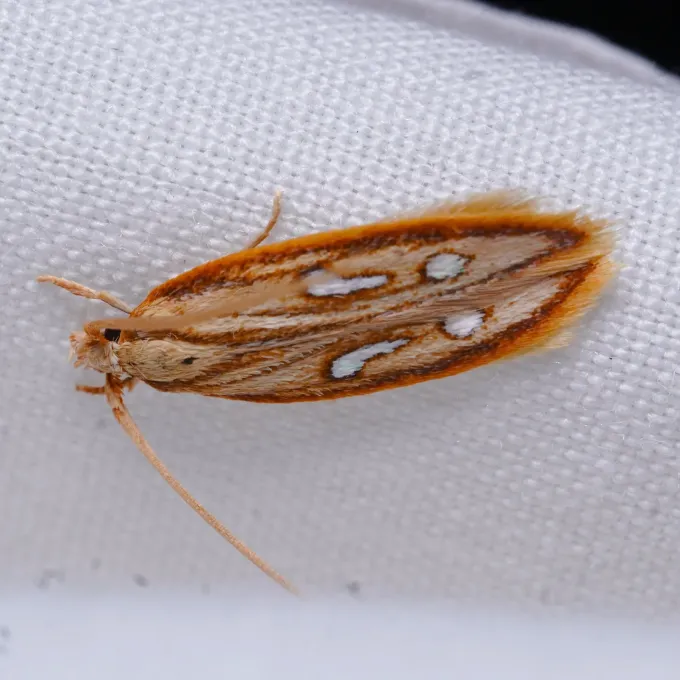
Homaledra (primarily the species Homaledra sabalella) is a small moth belonging to the Coleophoridae family. The adults have an inconspicuous appearance, often grayish-brown, which allows them to effectively camouflage on the trunks and leaves of palm trees.
The larvae of this pest exhibit characteristic behavior. They lead a secretive lifestyle, constructing protective cases out of silky threads, excrement, and plant debris, which serve as their shelter throughout their entire feeding period.
Identifying the pest at early stages is difficult due to the camouflaging properties of their cases. Upon detailed inspection of the underside of a leaf, one can notice small elongated structures attached to the veins.
The life cycle includes complete metamorphosis: egg, larva (caterpillar), pupa, and adult. Females lay their eggs directly on the surface of palm leaves, preferring young, not yet fully expanded foliage.
Species identification often requires entomological examination, as the visual damage can resemble the actions of other leaf-eating insects, so laboratory confirmation is recommended in cases of massive infestation.
What it damages
The main host plants for Homaledra are various species of palm trees, including wild and ornamental palmettos, saw palmettos, and other species growing in tropical and subtropical latitudes.
The caterpillars feed on the epidermis and soft tissues of the leaves, leaving behind characteristic dry spots and necrotic areas. This leads to a significant weakening of the plant's photosynthetic apparatus.
During mass reproduction, the pest can affect up to 50-80% of the canopy's leaf surface. As a result of larval activity, the leaves quickly yellow, dry out, and drop prematurely, which ruins the decorative appearance of the palm.
Damaged tissues become entry points for secondary infections, including fungal diseases and bacterial rots, which can lead to the death of the growth point and the entire plant.
The economic damage lies in the loss of aesthetic value in landscape plantings and the potential death of young seedlings in nurseries, which requires significant expenses for sanitary pruning and chemical treatment.
Signs of infestation
The first sign of infestation is small brown spots or "tracks" on the leaves, which eventually merge into large dry zones. The leaves take on a scorched appearance even with adequate irrigation.
The presence of specific silky webs and cases on the underside of the leaf blade is a definitive sign of a Homaledra colony.
An accumulation of large amounts of brownish "dust"—the larval waste products (frass)—under the palm or on lower branches indicates an active feeding process.
Premature yellowing of young leaves and disruption of their normal unfurling process is often accompanied by leaf edge curling due to tissue deformation.
When shaking or inspecting the branches, one can notice the erratic movement of small larvae inside their protective shelters, which is especially visible during morning or evening hours.
Control measures
The primary protection measure is sanitary pruning and the destruction of heavily damaged leaves, where the majority of the pest population is located.
The use of systemic insecticides containing imidacloprid or similar substances is effective via soil drenching or trunk injections, as the poison is distributed throughout the plant's vascular system.
Biological control methods include the use of entomopathogenic fungi or bacterial preparations, such as Bacillus thuringiensis, which are environmentally safe and effective against caterpillars.
Regular monitoring of plantings during the spring-summer period allows for the detection of the pest before it reaches mass proportions, which simplifies the treatment process and reduces costs.
As a preventive measure, one should avoid overcrowded plantings and ensure good ventilation of the palm canopy, creating less favorable conditions for the development of Homaledra populations.
Taxonomy
- Latin name
- Homaledra
- Order
- Lepidoptera (butterflies)
- Family
- Coleophoridae
- EPPO code
- HOMDSP
Discussion
No discussions yet — be the first.