
Roan antelope
Hippotragus
Description
How to identify
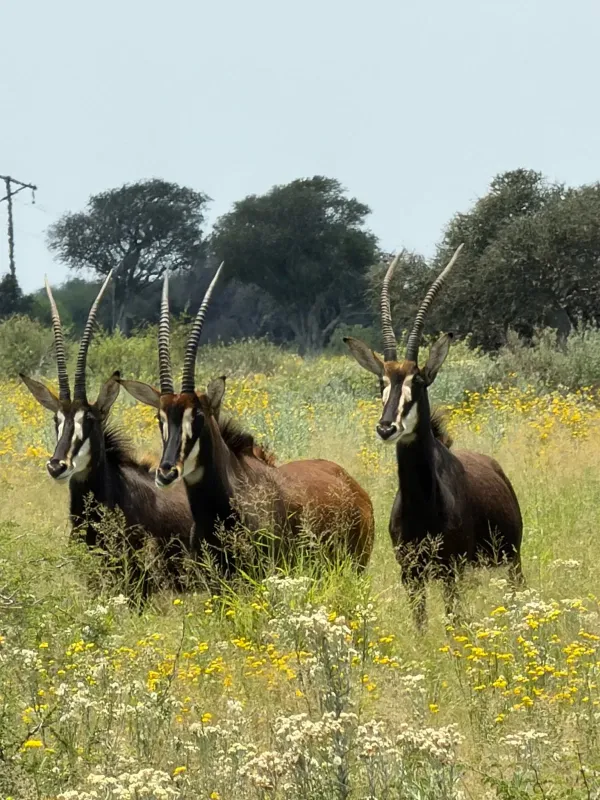
The roan antelope (Hippotragus equinus) is a large hoofed mammal belonging to the family Bovidae. It is characterized by a horse-like appearance, featuring a stiff mane and a tail with a tuft, which makes it distinct among other antelope species.
Adult roan antelopes can stand up to 160 centimeters at the shoulder and weigh up to 300 kilograms. Their coat color ranges from reddish-brown to gray, and the face displays a striking black-and-white mask pattern.
Both sexes possess robust, backward-curving horns with a ringed structure. These morphological traits serve as defensive mechanisms against predators and help the animals assert dominance in their natural habitat.
Taxonomically, this species is classified within the order Artiodactyla, family Bovidae. They exhibit gregarious behavior, living in herds that significantly impact the vegetation cover in areas where they concentrate.
Roan antelopes are primarily diurnal or crepuscular animals, known for their high mobility and constant search for nutrient-rich feeding grounds.
What it damages
As herbivores, roan antelopes can cause significant economic losses to agricultural sectors, particularly when farms are located in close proximity to their natural range.
The primary damage occurs when these animals graze on cereal crops, including sorghum, millet, and maize. Their heavy hooves compact the soil, which negatively impacts crop yield and development.
In addition to consuming foliage, they can damage young shoots of shrubs and trees, hindering the natural regeneration of windbreaks and buffer zones around agricultural fields.
In pasture areas intended for livestock, roan antelopes compete directly for forage resources, consuming the most nutritious grass species and reducing the availability of feed for cattle.
High population densities near farming zones lead to severe degradation of pasturelands, forcing farmers to bear additional costs for supplementary animal feed.
When it appears
Animal activity in agricultural areas is strongly correlated with the rainy season, when vegetation is most succulent and attractive for grazing.
During drought periods, roan antelopes perform migrations in search of water sources and green fodder, frequently leading them into irrigated agricultural territories.
Peak damage usually occurs during the active growth phase of cereal crops, when plants contain the highest levels of moisture and essential nutrients in their green mass.
The species' life cycle is deeply tied to climatic conditions, and the reproductive period can be extended, ensuring the presence of young individuals within the herd throughout the year.
Animal behavioral patterns shift significantly based on resource availability, making ongoing monitoring of their movements vital for effective agronomic planning.
Signs of infestation
The primary indicators of antelope presence on a field are hoof prints, which are significantly larger than those of small ruminants and easily identifiable by experienced farm staff.
A hallmark of their feeding activity is low-level grazing, where grass is consumed almost down to the root crown, leaving very little regrowth potential.
The presence of droppings in grazing areas confirms the long-term stay of a herd on a specific plot, which serves as a signal to implement immediate protection measures.
Damage to maize or sorghum stems during consumption is often accompanied by distinct snapping marks, which differ from the typical damage caused by insects or birds.
Finding broken branches and grazing marks on the bark of young trees indicates that the animals have started utilizing windbreaks as a secondary food source.
Control measures
To prevent agricultural loss, the most effective method involves the construction of robust fences that physically prevent large ungulates from entering crop areas.
The use of acoustic deterrents and motion-sensor technology is highly recommended to discourage antelope herds from entering and lingering on agricultural land.
Agronomic strategies include planting repellent crops along the field perimeter—species that are either unpalatable or unattractive to roan antelopes.
Deploying guardian dogs or organizing night patrols along the perimeter helps maintain a safe distance between the wildlife herds and high-value crops.
Maintaining ecological balance by creating buffer zones with native grasses helps satisfy the dietary needs of these animals away from primary cultivated areas.
Taxonomy
- Latin name
- Hippotragus
- Family
- Bovidae
- EPPO code
- HPPTSP
Discussion
No discussions yet — be the first.