
Grayling butterfly
Hipparchia semele
Description
How to identify
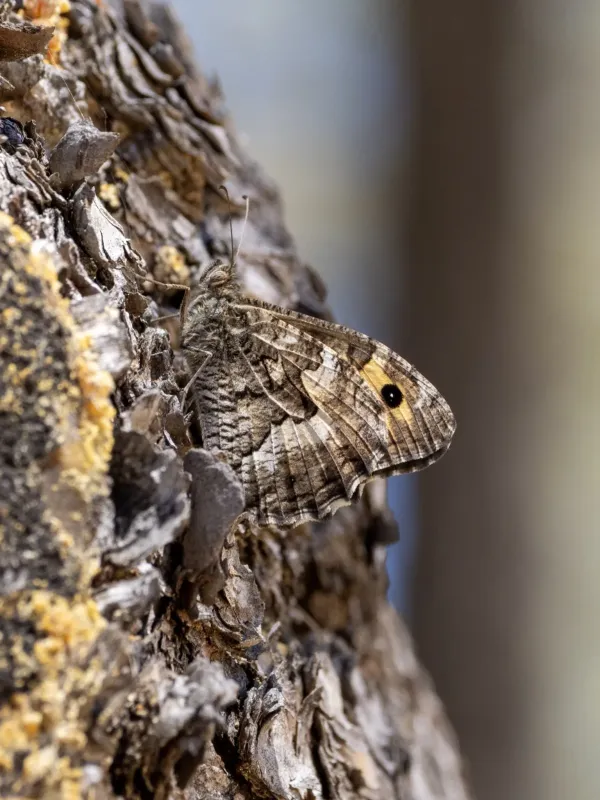
The Grayling butterfly (Hipparchia semele) is a member of the Nymphalidae family and Satyrinae subfamily, well-known for its cryptic coloration.
The butterfly has a wingspan of 45-60 mm, with uppersides that are dark brown with orange-buff patches, perfectly blending into bark or soil.
Its larvae are distinct in appearance, typically yellowish-brown or grey with longitudinal stripes that mimic the texture of dried grass stems.
Adults are known for their erratic flight pattern and the habit of resting on bare patches of ground or stones to bask in the sun.
The species prefers dry, open environments, including heathlands, dunes, and dry grasslands where their host plants are abundant.
What it damages
The primary damage is caused by larvae, which feed on the foliage of various grasses, including those grown as agricultural crops.
Although not a primary economic pest, high densities can lead to significant defoliation of cereal crops, particularly when fields are near wild habitats.
Feeding damage reduces the photosynthetic efficiency of the plants, resulting in stunted growth and weakened stalks that are less resistant to disease.
Young seedlings are particularly vulnerable, as caterpillars can consume the entire leaf blade or damage the apical meristem during early spring.
Infestations are often localized near field margins, where the environment facilitates the lifecycle of the butterfly and provides ample shelter for larvae.
When it appears
Adult butterflies are typically on the wing from July through September, depending on local climatic conditions and regional temperature patterns.
The species completes one generation per year, with females laying individual eggs directly on or near the host plant tissues.
Larvae overwinter in a semi-developed stage, hiding at the base of plants or within the upper layer of the soil to survive cold periods.
Spring activity begins as temperatures rise, leading to rapid feeding and development before the larvae enter the pupal stage.
Pupation takes place either within a silk-lined chamber in the soil or among the debris at the base of the food plant, completing the cycle.
Signs of infestation
Signs of infestation include unevenly chewed leaf margins on cereal plants and the presence of frass (caterpillar droppings) near the plant base.
Caterpillars are highly nocturnal and cryptically colored, making them difficult to spot during routine field inspections conducted during daylight hours.
Affected fields often show irregular patterns of stunted or yellowing plants, particularly in sections bordering non-cultivated meadows or pastures.
A high frequency of adult sightings within the field in late summer serves as a precursor to potential larval activity in the following season.
Damage assessment should include examining the base of grasses and lower leaves, where caterpillars congregate to avoid detection and desiccation.
Control measures
Effective pest management begins with good agricultural practices, such as autumn plowing, which disturbs the soil and destroys overwintering larval sites.
Removing grassy weeds from field margins and ditches is crucial, as these areas act as permanent reservoirs for the butterfly population.
If larval counts exceed economic thresholds, authorized insecticides may be used, targeting the early stages of larval development for maximum efficacy.
Biological control agents, including parasitic wasps and predatory insects, should be encouraged to naturally manage the population of the caterpillars.
Implementing diverse crop rotation strategies helps prevent the buildup of pest populations, ensuring that cereal crops are not continuously available.
Taxonomy
- Latin name
- Hipparchia semele
- Order
- Lepidoptera (butterflies)
- Family
- Nymphalidae
- EPPO code
- HIPRSE
Discussion
No discussions yet — be the first.