
Grayling butterfly
Hipparchia
Description
How to identify
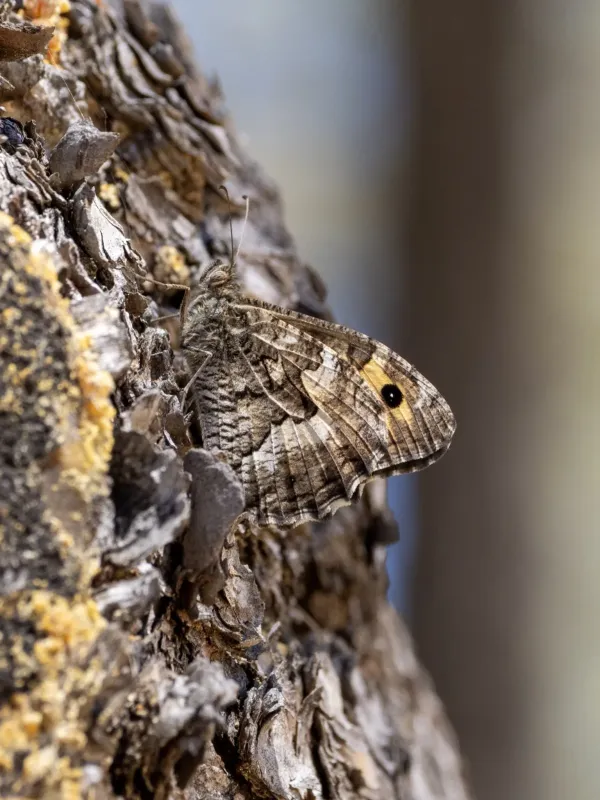
The genus Hipparchia belongs to the family Nymphalidae. These butterflies are known as Graylings, named after their cryptic coloration that mimics their natural environment, such as tree bark or rocky, dry ground.
Adults possess wings with intricate patterns, usually featuring shades of brown, grey, and black, providing excellent camouflage when the insect is at rest with closed wings.
Larvae (caterpillars) are typically spindle-shaped and often exhibit a pale, brownish, or striped appearance, which helps them blend into the grass stems and roots where they reside.
The head of the caterpillar often features distinct horn-like projections, a feature that entomologists use to classify different species within the genus.
Pupation occurs in a soil chamber or amongst the roots of host plants, which protects the developing insect from predators and weather fluctuations during the vulnerable transformation stage.
What it damages
Hipparchia larvae are specialized grass feeders (Poaceae). While often considered non-significant in natural landscapes, they can become problematic in agricultural environments where they target grain crops.
The caterpillars consume the leaf blades of young cereals and grasses, causing significant loss of leaf area and potentially impacting the overall vigor of the host plant.
Damage to the stems or the crown area of the cereal plants during the early spring growth phase can lead to stunted development or reduced grain yield at harvest.
High population densities of this pest can lead to patches of thin vegetation in fields, which may facilitate the spread of secondary pathogens or allow weeds to encroach.
- Winter wheat and barley.
- Wild forage grasses.
- Common cereal pasture grasses.
When it appears
The adult flight period typically occurs during the summer months, during which mating and egg-laying activities take place across suitable habitats.
Winter is generally passed in the larval stage, with caterpillars entering a state of diapause or continuing slow growth hidden within dense grass tufts or the top layer of soil.
Spring emergence and feeding coincide with the onset of the grain growing season, making this the most critical time for monitoring and intervention.
The pupal stage is relatively short, lasting a few weeks, after which the new generation of butterflies emerges to restart the annual cycle.
Depending on the specific region and species, the timing of these stages can vary, which is why local monitoring is essential for accurate pest forecasting.
Signs of infestation
The primary sign of infestation is irregular leaf damage, characterized by notched or chewed edges of leaf blades caused by the caterpillar's mouthparts.
Early season symptoms often include wilting of seedling clusters, which indicates that larvae might be feeding near the base or damaging the crown of the plant.
The accumulation of larval frass (waste) at the base of the plants or within the root zone is a strong indicator of an active pest population.
Adult butterflies seen flying low over the field or settling on the ground are reliable visual signals that a breeding population is present.
Visible patches of thinning or chlorotic vegetation in a field often indicate the location of significant larval feeding activity.
Control measures
Cultural control practices, such as autumn plowing, are highly effective as they disrupt the soil-dwelling stages, including pupae and over-wintering larvae.
Maintaining clean field borders and eliminating grassy weeds are essential for reducing the pest's reservoir and preventing re-infestation of the main crop.
If economic thresholds are exceeded, targeted applications of approved insecticides can be used to manage the population during the peak larval activity period.
Biological control agents, including specialized fungi or bacterial-based sprays, can offer an environmentally sensitive way to manage populations without broad-spectrum chemical use.
Regular field scouting is the cornerstone of successful management; early detection allows for timely and localized actions, minimizing the need for large-scale chemical intervention.
Taxonomy
- Latin name
- Hipparchia
- Order
- Lepidoptera (butterflies)
- Family
- Nymphalidae
- EPPO code
- HIPRSP
Discussion
No discussions yet — be the first.