
Mottled Umber
Hibernia leucophaearia
Description
How to identify
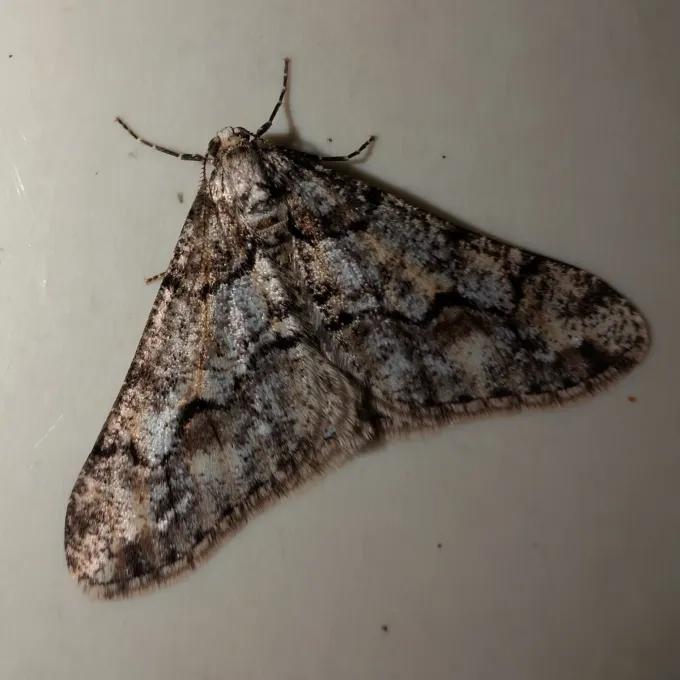
The Mottled Umber (Hibernia leucophaearia) is a moth species belonging to the Geometridae family. It exhibits significant sexual dimorphism, where males are fully winged with a 30–35 mm span, displaying greyish-white patterns with dark transverse lines, while females are wingless and reside on tree trunks.
This species is well-adapted to cold environments, with adults frequently appearing in late winter and early spring. The males' dense hair covering helps retain body heat during cold nights, allowing them to remain active when most other insects are dormant.
The larvae, or caterpillars, reach lengths of 25–30 mm. They possess the characteristic "looper" movement of the geometrid family, where they move by arching their middle sections. Their coloration is typically greenish, which provides excellent camouflage among developing leaves.
Taxonomically, the Mottled Umber is a member of the order Lepidoptera. Their life cycle is synchronized with the phenology of deciduous trees, making them highly dependent on the timing of budburst for larval success.
Population dynamics of this moth are known to fluctuate periodically. While not always a major pest, mass outbreaks can occur during years with early and mild springs, necessitating careful monitoring by orchard managers and forestry professionals.
What it damages
The larvae feed primarily on deciduous tree species. Major hosts include oak (Quercus), birch (Betula), hazel (Corylus), and various fruit trees such as apple and pear, especially when these trees are located adjacent to woodland areas.
Damage is most severe during the early spring as larvae consume developing buds and young leaves. This premature feeding causes substantial leaf loss, which slows the tree's growth rate and hinders its ability to sustain healthy development for the rest of the season.
Heavy defoliation induces significant physiological stress on the tree. By reducing the surface area available for photosynthesis, the larval feeding makes the tree more susceptible to secondary pests, pathogens, and drought conditions.
In nurseries and young plantations, the damage caused by the Mottled Umber can lead to stunted growth or crown malformation. Persistent infestations over several consecutive seasons can weaken older trees, eventually leading to branch dieback or reduced vitality.
Agronomists assess economic damage by counting egg clusters on branches or checking larval density. Proactive management is essential for high-value sites where leaf loss directly correlates with reduced yield or poor plant vigor.
When it appears
Adult moths typically fly from February to March. Their unique ability to survive near-freezing temperatures gives them an early start to the breeding season. After mating, wingless females climb tree trunks to lay their eggs in bark crevices.
Eggs hatch in synchronization with the leaf budburst of the host trees. The larvae emerge and begin feeding immediately on tender leaf tissue. This perfect timing ensures that the caterpillars have access to high-quality food right at the start of their development.
The feeding stage lasts through May and early June. Once the larvae finish developing, they descend to the soil or leaf litter to pupate. They remain in the pupal stage throughout the summer and autumn, effectively bypassing harsh winter conditions as underground pupae.
This life cycle strategy is highly successful, as it avoids most summer-active predators and parasites. Consequently, the Mottled Umber populations can remain stable or grow rapidly in years where weather conditions are favorable for early development.
Monitoring for the appearance of adult males in late winter provides an early warning of potential infestation levels. Using light traps or pheromone monitors allows for the accurate prediction of the larval population pressure in the upcoming spring.
Signs of infestation
The first sign of presence is the appearance of adult moths on tree trunks during winter. Due to their mottled, bark-like coloration, they can be difficult to spot, requiring careful inspection of trunks during the morning hours.
In spring, signs of infestation include damaged buds that fail to open correctly. Young leaves may show irregular holes, frayed edges, or missing sections, which are indicative of early larval feeding activity.
Caterpillars can be identified by their distinctive behavior; when disturbed, they often drop from branches and hang on thin silk threads. This behavior makes them easy to detect if branches are tapped over a white collection tray.
The accumulation of frass (caterpillar droppings) on the ground or on lower leaves is a clear indicator of a high-density infestation. Large amounts of dark granular waste beneath the tree canopy signify active feeding.
A thinning or "lacy" appearance of the tree crown is a classic symptom of significant defoliation. In severe cases, trees may appear entirely bare, signaling an urgent need for intervention to prevent further physiological exhaustion.
Control measures
Mechanical control is highly effective for the Mottled Umber. Sticky bands applied to tree trunks in February act as a barrier, preventing the wingless females from climbing the trunk to lay eggs, thereby disrupting the lifecycle before it begins.
Chemical control should be implemented during the leaf-burst phase if larval populations exceed the economic injury level. Contact or systemic insecticides applied at the first sign of hatching can prevent extensive damage to the foliage.
Biological control using bacterial-based pesticides is a preferred method for sustainable management. These products specifically target younger larvae and have minimal impact on beneficial predatory insects, making them ideal for integrated pest management (IPM) programs.
Enhancing natural biodiversity, particularly by encouraging insectivorous birds, is a key long-term strategy. Bird boxes for titmice and other insect-eating species can provide significant suppression of moth caterpillars during the feeding season.
Autumn and spring cultivation of the soil around the base of the trees helps disturb and destroy pupating moths. This cultural practice reduces the number of emerging adults for the next season and is a fundamental component of effective garden and orchard maintenance.
Taxonomy
- Latin name
- Hibernia leucophaearia
- Order
- Lepidoptera (butterflies)
- Family
- Geometridae
- EPPO code
- HIBELE
Discussion
No discussions yet — be the first.