
Winter moth
Hibernia indocilis
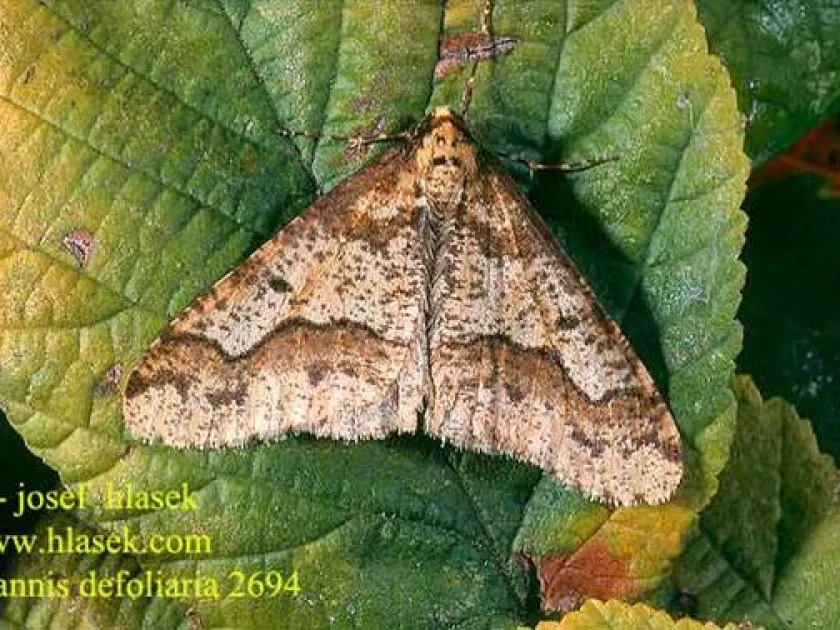
Description
How to identify
The Winter moth (Hibernia indocilis) is a member of the Geometridae family, known for its distinct life cycle and adaptation to cold-season activity in forests and woodland areas.
Adults exhibit significant sexual dimorphism: males are fully winged and capable of flight, while females are wingless or possess only vestigial wings, limiting their movement to climbing tree trunks.
The larvae, commonly known as inchworms, display cryptic coloration ranging from light green to brownish, which allows them to blend seamlessly with budding foliage.
The pupae reside in the soil during the summer months, providing a protected stage within the underground layer against harsh environmental fluctuations.
This species is highly synchronized with the phenology of deciduous trees, ensuring the larvae emerge precisely when the primary food source becomes available in early spring.
What it damages
The pest primarily targets deciduous tree species, including oak, birch, lime, and various fruit trees found in orchards adjacent to wooded habitats.
The initial damage is caused by young larvae consuming swelling buds, which often results in the total destruction of potential blossoms and young shoots.
As the season progresses, the larvae feed on the developing leaves, performing skeletonization or complete defoliation, leaving only the primary leaf veins behind.
Mass infestations lead to significant physiological stress for the trees, reducing biomass production and weakening the plants against subsequent attacks by secondary pests.
High population densities can cause severe defoliation, which negatively impacts the tree's photosynthetic capacity, ultimately resulting in diminished yields or growth stagnation.
When it appears
Adult moths typically emerge in late autumn or early winter, with males remaining active even during periods of low positive temperatures.
The overwintering stage consists of eggs laid in the crevices of bark or near the base of the tree, allowing the population to endure freezing conditions successfully.
Larval emergence coincides with the onset of the growing season in early spring, precisely matching the bud-break phase of host trees.
The active feeding phase of the larvae spans several weeks in the spring, after which they descend to the ground to prepare for pupation.
Pupation occurs within the soil, where the insects remain in a state of diapause throughout the summer months until the cycle restarts in the autumn.
Signs of infestation
Early symptoms include damaged or withered buds, which fail to open correctly, indicating larval feeding activity immediately after emergence.
The presence of fine silken webbing, used by caterpillars to tie leaves together for protection, is a clear indicator of their presence within the canopy.
Observation of wingless females crawling up tree trunks during late autumn evenings is a definitive sign of an impending infestation for the following season.
Significant accumulations of frass (caterpillar droppings) on the leaves or ground under the canopy signify an active and high-density infestation.
A noticeable thinning of the canopy and ragged, skeletonized foliage by mid-spring are primary visual markers of an established Winter moth population.
Control measures
Sticky bands or traps applied to tree trunks during autumn are highly effective in preventing wingless females from reaching the canopy to deposit eggs.
Biological control using bacterial-based insecticides is recommended when larval density crosses the economic injury threshold, providing a targeted approach.
Systemic chemical treatments should be applied during the early bud-burst stage to eliminate larvae before they cause widespread structural damage to the foliage.
Encouraging natural predators, such as insectivorous birds and parasitic wasps, helps maintain the population at manageable levels within the local ecosystem.
- Monitor tree trunks regularly during the autumn months.
- Cultivate soil under the canopy to disrupt the pupation process.
- Use pheromone traps to monitor adult male populations and timing.
Taxonomy
- Latin name
- Hibernia indocilis
- Order
- Lepidoptera (butterflies)
- Family
- Geometridae
- EPPO code
- HIBEIN
Discussion
No discussions yet — be the first.