
Winter moth
Hibernia
Description
How to identify
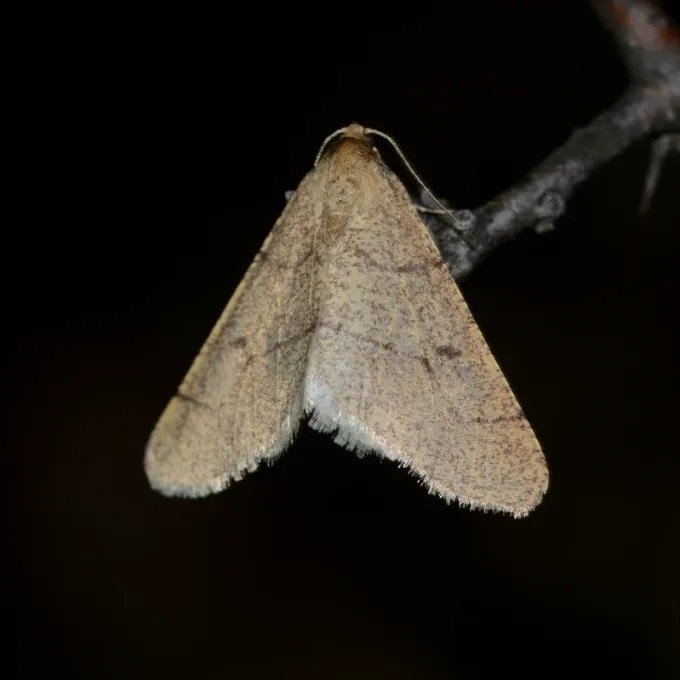
The winter moth (Operophtera brumata) is a member of the Geometridae family, known for its unique lifecycle where adults emerge during the late autumn months. This species exhibits marked sexual dimorphism, with males being winged and females possessing only vestigial wings, rendering them flightless.
Adult moths are typically brownish or grayish in color, blending well with tree bark. Larvae are classic "loopers," characterized by their distinct movement pattern, where they arch their backs to move forward, which is a hallmark of the family Geometridae.
The lifecycle includes complete metamorphosis, passing through the stages of egg, larva, pupa, and adult. Eggs are the overwintering stage, laid by females in bark crevices and near dormant buds, ensuring they remain close to a food source for spring emergence.
Larvae emerge in early spring, synchronized with the budburst of host trees. They feed voraciously on developing tissues until late spring or early summer, after which they drop to the soil to pupate at depths of several centimeters.
The emergence of adults occurs from October to December. During this time, flightless females crawl up the trunks of trees to lay eggs, which creates a specific window for effective preventative management strategies.
What it damages
The winter moth is a polyphagous pest, capable of feeding on a wide variety of deciduous trees and shrubs. Major fruit crops such as apples, pears, cherries, and plums are highly susceptible to its feeding activity.
In spring, larvae begin by mining into swelling buds, often destroying them before they open. Once leaves unfold, the caterpillars feed on foliage, creating irregular holes and eventually skeletonizing the leaf structure.
Heavy infestations can lead to complete defoliation of fruit trees, which severely weakens the tree, reduces its ability to produce starch reserves, and diminishes fruit bud initiation for the subsequent growing season.
Flowers and young fruit are also targeted, leading to direct crop loss. Damage to the reproductive structures of flowers renders them infertile, causing them to drop rather than develop into mature fruit.
Persistent infestations over several years significantly impact tree health, making them more susceptible to other opportunistic pathogens and secondary pests due to the constant stress caused by annual defoliation.
Signs of infestation
Early warning signs include buds that fail to open or appear stunted in early spring. Upon closer inspection, these buds often show small holes where larvae have bored inside.
The presence of silken webbing that binds leaves together into small clusters is a common indicator of larval activity. Caterpillars often hide within these webbed leaves to protect themselves from environmental stress.
Excrement (frass) is a visible sign of an active infestation. Dark, granular droppings on leaves or on the ground beneath the canopy signify that caterpillars are feeding above, which helps in assessing the population density.
Autumn evenings provide an opportunity to spot wingless females ascending tree trunks. This behavior is a critical indicator of the potential infestation level for the upcoming spring season.
Blossom damage is evident during the flowering stage, where petals appear shredded or missing, and stamens and styles are consumed. Such blossoms will typically dry up and fail to set fruit.
Control measures
The most effective physical control method is the installation of sticky bands around the trunks of trees in early October. This prevents flightless females from climbing into the canopy, effectively stopping them from laying eggs on the branches.
Cultural control involves cultivating the soil under the tree canopy during mid-summer. This disrupts the pupal stage in the soil, exposing the pupae to predators such as birds and ground beetles, as well as desiccation.
Chemical control should be applied based on economic thresholds during the early larval stages, when caterpillars are most vulnerable and before they seek shelter inside webbed leaves or buds.
Biological controls, including the use of *Bacillus thuringiensis* (Bt) formulations, are highly effective and environmentally friendly options that target larvae without disrupting beneficial insect populations in the orchard.
- Apply sticky trunk bands in autumn.
- Till soil under canopy in summer to kill pupae.
- Monitor for larvae immediately after budburst.
- Use selective biological insecticides like Bt.
Taxonomy
- Latin name
- Hibernia
- Order
- Lepidoptera (butterflies)
- Family
- Geometridae
- EPPO code
- HIBESP
Discussion
No discussions yet — be the first.