
Heterotrioza psyllid
Heterotrioza
Description
How to identify
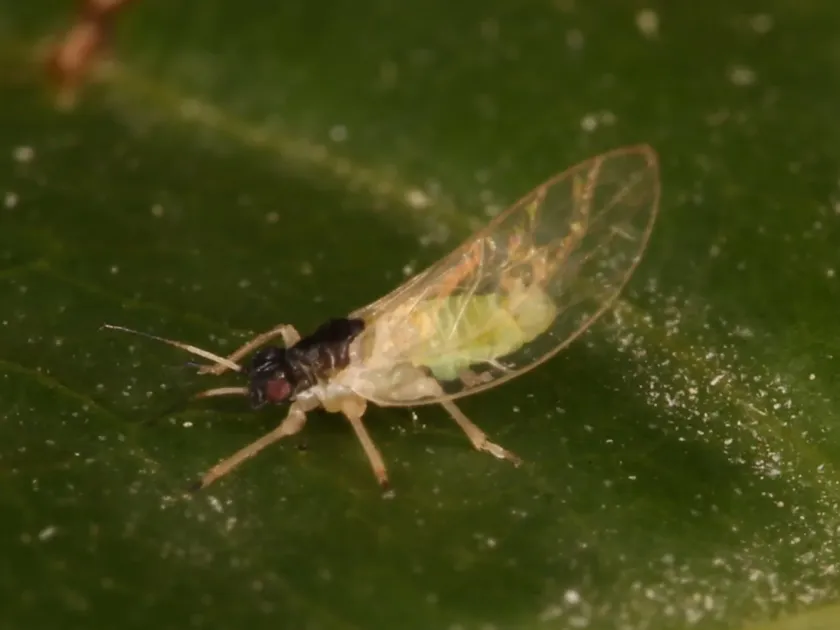
The Heterotrioza genus belongs to the Hemiptera order and the Triozidae family. These are small, jumping insects that resemble miniature cicadas in appearance.
Adults have well-developed hind legs, allowing them to jump sharply when threatened. The wings are transparent, often with distinct venation, and are held roof-like over the body.
Nymphs are relatively sedentary and often hide within galls or under waxy secretions. Their bodies are typically flattened, with visible wing pads in the later stages of development.
The coloration of adults ranges from light green to brown, which provides camouflage on the leaves and stems of host plants.
Identification of specific species often requires microscopic analysis of the male genitalia and the detailed venation pattern of the forewings.
What it damages
The primary hosts for Heterotrioza psyllids include plants from the Apiaceae and Solanaceae families. Species affecting carrots and parsnips pose the most significant risk.
Psyllids feed by sucking sap from young leaves, stems, and petioles, which disrupts the normal metabolic processes of the host plant.
This pest affects both wild species and commercial vegetable crops, reducing their overall biological resilience against other secondary diseases.
Beyond direct mechanical damage, these insects can act as vectors for phytoplasmas and viruses, drastically reducing the quality and marketability of the harvest.
Damage is most severe during dry periods when plants are already stressed and become highly attractive to mass colonization by the pest.
When it appears
The life cycle begins in early spring when overwintered adults emerge from hiding spots and start feeding on young, tender growth.
Females lay eggs directly onto leaf or stem tissues, often utilizing microscopic surface irregularities for placement.
Throughout the season, the psyllid can produce multiple generations, with reproduction rates being directly dependent on temperature and ambient humidity.
Peak pest activity occurs in late spring and the first half of summer, coinciding with nymph emergence and rapid development.
In autumn, adults migrate to forest edges, perennial weeds, or leaf litter to enter diapause until the next season begins.
Signs of infestation
The primary sign of infestation is leaf curling and deformation, where foliage takes on an unnatural yellow or reddish hue.
Clusters of nymphs can be found on the undersides of leaves, often accompanied by sticky honeydew secretions that promote the growth of sooty mold.
Infected plants exhibit stunted growth of roots or shoots, resulting in decreased produce weight and compromised flavor quality.
Severe infestations lead to the wilting of terminal growth points and premature leaf drop, which is critical for the development of young plants.
- Leaf blade deformation;
- Presence of sticky honeydew;
- Appearance of chlorotic spots;
- Retarded root system development.
Control measures
Effective management begins with cultural practices, including the removal of Apiaceae weeds that serve as reservoirs for the pest during the off-season.
Crop rotation is a critical strategy, as it prevents the continuous cultivation of susceptible host plants in the same area over several years.
Yellow sticky traps are recommended for monitoring pest populations, allowing growers to detect the start of adult migration and initiate timely intervention.
If economic thresholds are exceeded, the application of systemic or contact insecticides approved for specific crops is necessary for control.
Biological control options involve the use of natural enemies, such as lacewing larvae and ladybeetles, which are voracious predators of psyllid nymphs.
Taxonomy
- Latin name
- Heterotrioza
- Order
- Hemiptera (bugs, aphids, leafhoppers)
- Family
- Triozidae
- EPPO code
- HTRISP
Discussion
No discussions yet — be the first.