
Nettle bug
Heterogaster urticae
Description
How to identify
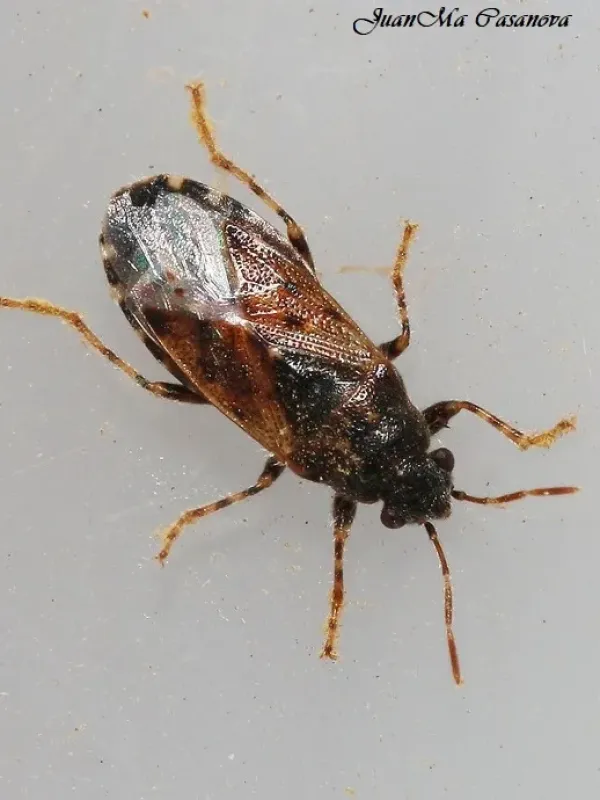
The nettle bug (Heterogaster urticae) belongs to the order Hemiptera, family Oxycarenidae. It is a small insect, typically measuring between 5 and 7 mm in length, with a brownish, elongated body and distinct dark markings on the hemelytra.
The adult bug is characterized by its slender build and relatively long legs. Nymphs, while smaller and wingless, share a similar body plan and color profile, developing through several instars before reaching the adult stage.
What it damages
While the primary host plant is the common nettle (Urtica dioica), this species can act as a pest when it migrates to nearby cultivated crops. It feeds on plant sap using its specialized piercing-sucking mouthparts.
It can affect various garden plants and berry bushes. The feeding process drains nutrients from the plant, which often leads to reduced vigor, stunted growth, and in severe cases, the wilting of foliage.
When it appears
The Heterogaster urticae life cycle is univoltine, meaning there is only one generation per year. Adults overwinter in sheltered locations such as leaf litter, bark crevices, or under debris.
Activity resumes in the spring when temperatures rise. Mating and egg-laying occur during the early summer months, and the resulting nymphs feed actively throughout the summer, reaching adulthood by late autumn.
Signs of infestation
Damage symptoms usually manifest as chlorotic spots or necrotic lesions on the leaves where the bugs have been feeding. Over time, these spots can enlarge, leading to yellowing or premature senescence of the leaf tissue.
Infestations are often spotted by the presence of clusters of nymphs or adults on the undersides of leaves or along stems. Heavy feeding can cause noticeable curling or distortion of young, tender growth.
Control measures
Cultural control is the most effective approach; this involves the eradication of nettles and other host weeds from the perimeter of fields, gardens, and orchard borders.
Regular mowing and habitat management help reduce overwintering sites. If chemical intervention is necessary, targeted application of appropriate insecticides during the peak of the nymphal stage can manage populations effectively.
Taxonomy
- Latin name
- Heterogaster urticae
- Order
- Hemiptera (bugs, aphids, leafhoppers)
- Family
- Lygaeidae
- EPPO code
- HTRGUR
Discussion
No discussions yet — be the first.