
Heterogaster
Heterogaster
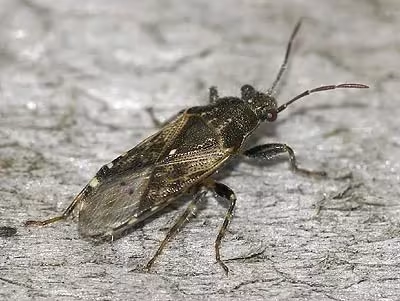
Description
How to identify
Heterogaster is a genus of insects belonging to the family Oxycarenidae, within the order Hemiptera. These are small insects that share common morphological traits with other members of the superfamily Lygaeoidea.
Adult Heterogaster typically have an elongated body, usually measuring between 4 to 7 millimeters in length. Their coloration is often cryptic, ranging from grayish-brown to dark brown, which helps them blend into soil surfaces and plant debris.
The head is well-developed, featuring a piercing-sucking mouthpart known as a rostrum. The eyes are prominent, and the antennae consist of four segments, a key taxonomic feature used by specialists to identify the specific species accurately.
The body surface is often covered with short hairs, giving it a dull or matte appearance. The wings are folded flat against the back, with the forewings (hemelytra) showing a distinct division between a leathery basal section and a transparent apical membrane.
Nymphs resemble smaller versions of the adults but lack fully developed wings. Their coloration may change as they progress through different developmental stages, often becoming darker and more intense as they reach maturity.
What it damages
The primary damage is caused by both adults and nymphs, which feed on plant sap. While they primarily prefer wild weeds, they can migrate to cultivated crops during population outbreaks, significantly impacting plant productivity.
The host range includes plants from families such as Lamiaceae (mints) and certain cereal crops. These bugs often congregate on stems and leaves, using their mouthparts to pierce the tissue and extract vital nutrients from the plant.
Significant damage is often observed when young shoots and inflorescences are attacked. The physical destruction of plant tissues leads to water and nutrient deficiency, which stunts growth and impairs overall plant development.
Physiological stress poses a particular danger to the crop. Damaged tissue serves as a gateway for secondary infections, including fungal and bacterial pathogens, which exploit the weakened state of the plant to spread more rapidly.
In intensive agriculture, Heterogaster is generally considered a secondary pest; however, in favorable seasons, their population can surge, necessitating vigilant monitoring and timely intervention by agronomists to protect the yield.
When it appears
The life cycle of Heterogaster is closely tied to regional climatic conditions. As a rule, adults overwinter by seeking shelter under fallen leaves, in crop residues, or within the top layer of the soil where temperatures remain relatively stable.
In the spring, as temperatures consistently rise above freezing, the bugs emerge from their overwintering sites. This period is marked by active feeding and mating, after which females begin laying eggs on host plants or near the base of the plant.
Development from egg to adult takes several weeks, and the number of generations per season depends heavily on the length of the warm period. Peak activity often occurs in mid-summer when the new generation of adults reaches its maximum numbers.
During the autumn, with the arrival of cooler weather, adults enter a state of diapause. The search for overwintering sites becomes the primary behavior as they seek protected areas in the field to survive the winter frost.
Agricultural practices performed at the end of the season, such as plowing and clearing fields, significantly impact the survival of overwintering populations by destroying their preferred habitats and exposing them to the elements.
Signs of infestation
One of the earliest signs of Heterogaster infestation is the presence of small light-colored spots or speckles on the leaves, caused by the piercing of tissues. This is the result of chlorophyll degradation as the bugs extract fluids.
Visual inspection often reveals the insects themselves, which prefer to hide in leaf axils or on the undersides of leaves. When disturbed, they typically scurry into the vegetation or take flight over short distances to escape.
Curling or deformation of young leaves can also serve as an indicator of pest presence. These physiological disturbances cause the plant to appear stunted, lose turgor pressure, and develop a yellowish or chlorotic tint.
On inflorescences and seeds, damage manifests as premature drying or malformation of the fruit. This reduces the market value of the crop and, in the case of seed crops, significantly degrades the germination quality of the harvested material.
The presence of frass (excrement) on the leaf surface, appearing as tiny dark dots, is another indirect sign of bug activity. Detecting this requires immediate scouting to assess the density of the colony and the extent of the infestation.
Control measures
Agronomic practices form the foundation of effective pest control. Crop rotation and the timely removal of weeds, which often serve as early-season reservoirs for the pest, are critical to managing population growth.
Deep autumn plowing helps reduce the number of overwintering adults by disrupting their hibernation sites in the soil and surface debris. This simple but effective method significantly lowers the pest pressure for the following season.
During periods of mass outbreaks, insecticides with contact or systemic action may be employed. The choice of product should be based on the economic threshold and the specific crop stage to ensure cost-effective protection.
The use of biological control agents, including natural entomophagous predators, provides sustainable results. These natural enemies help regulate population densities in organic or integrated pest management systems without relying on chemical inputs.
Regular monitoring using pheromone or sticky traps allows for the early detection of migratory behavior. This enables producers to implement control measures before the pests reach a density that causes economically significant damage to the crop.
Taxonomy
- Latin name
- Heterogaster
- Order
- Hemiptera (bugs, aphids, leafhoppers)
- Family
- Lygaeidae
- EPPO code
- HTRGSP
Discussion
No discussions yet — be the first.