
Scarce Copper
Heodes virgaureae
Description
How to identify
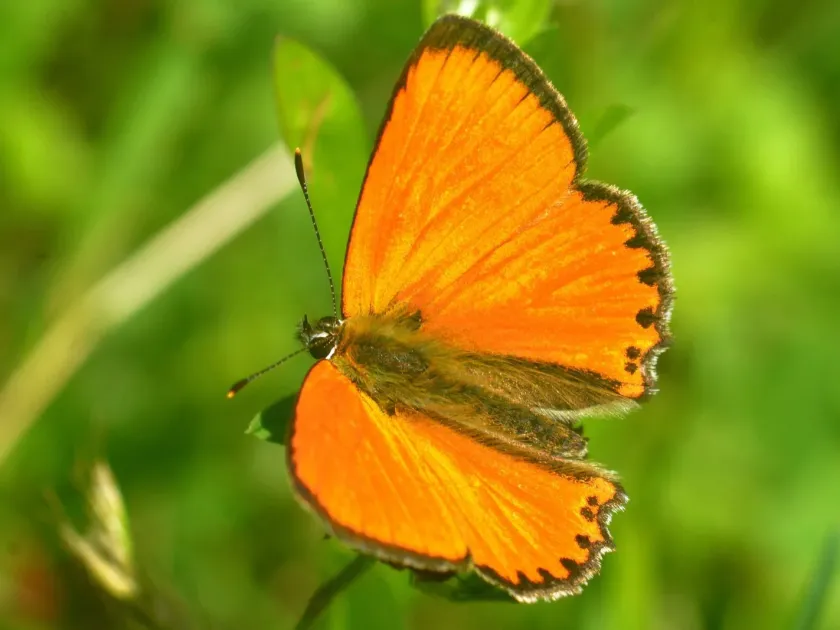
The Scarce Copper (Heodes virgaureae) is a diurnal butterfly belonging to the Lycaenidae family (gossamer-winged butterflies) within the order Lepidoptera. Adults are known for their bright, metallic copper-colored wings with small black spots, making them distinct in garden habitats.
The larvae, or caterpillars, are green with lighter longitudinal stripes, providing excellent camouflage against the foliage of their host plants. The development of this species follows a complete metamorphosis: egg, larva, pupa, and adult.
Adult butterflies are active during sunny days, feeding on the nectar of various flowering plants. Their flight period typically occurs in mid-summer, during which mating and egg-laying take place.
The species overwinters primarily in the egg or early larval stage, securely attached to stems or plant debris. This life strategy allows them to survive the cold temperatures of the temperate climate.
While not usually classified as a major agricultural pest, their presence can be significant in areas where specific host plants like Sorrel are grown as a commercial crop.
What it damages
The primary host plants for the Scarce Copper larvae are species of the genus Rumex (Sorrel). Consequently, these caterpillars can cause damage to sorrel crops cultivated for culinary or commercial purposes.
The damage is characterized by the larvae consuming the leaf blades, creating ragged holes or skeletonizing the leaves entirely. This significantly impacts the marketability of the product.
Heavy infestation leads to a reduction in the photosynthetic capacity of the plant, which hampers growth and reduces overall yields during the harvesting season.
For large-scale sorrel production, such feeding activity can lead to economic losses, as damaged leaves are often discarded during grading and packing processes.
Persistent infestations over several cycles can weaken perennial sorrel plants, making them more susceptible to subsequent environmental stress or secondary pathogen infections.
When it appears
The life cycle of the Scarce Copper is strictly aligned with seasonal changes. The main flight activity of adults occurs between July and August, marking the primary period for reproduction.
Eggs are deposited by females on the undersides of leaves or along the stems of host plants. Embryonic development lasts several weeks before the emergence of the larvae.
The peak feeding activity of the larvae, which poses the most significant threat to vegetation, occurs from late summer through early autumn as they prepare for hibernation.
In spring, as temperatures rise, overwintering larvae emerge to feed, coinciding with the early growth stages of the season's first crop harvest.
Pupation typically takes place in late spring, often at the base of the plant or within surface vegetation, completing the cycle before the emergence of the new generation of adults.
Signs of infestation
The primary sign of infestation is the presence of damaged leaves with ragged, bitten edges. Such symptoms are often the first indicator for growers during field scouting.
Finding the larvae themselves on the underside of leaves confirms the presence of the pest. They are usually well-hidden and are best observed during the cooler parts of the day.
The accumulation of frass (caterpillar excrement) on the leaf surface or the soil beneath the plants is a clear marker of active feeding by a pest population.
Adult butterflies seen in the vicinity of host plants during sunny intervals serve as an early warning that egg-laying is likely occurring, warranting closer inspection of the crops.
Yellowing or wilting of individual leaves can indicate that the feeding has damaged the vascular integrity of the plant, especially if the infestation density is high.
Control measures
Effective management begins with cultural practices. Removing wild Rumex species from field borders and surrounding areas is the most critical step in reducing the local pest population.
Regular weeding within the crop rows prevents the larvae from successfully establishing themselves on the commercial product.
On small plots, hand-picking the larvae during the early morning hours can be a highly effective and environmentally friendly way to control the population.
- Utilize biological insecticides containing Bacillus thuringiensis, which are specific to caterpillars and safe for other beneficial insects.
- Deploy protective row covers during the adult flight period to prevent females from accessing plants to lay eggs.
- Maintain spatial isolation between commercial production sites and unmanaged areas with dense wild host vegetation.
Chemical intervention should be considered only as a last resort, ensuring that any chosen pesticide is approved for use on edible greens and that harvest intervals are strictly observed.
Taxonomy
- Latin name
- Heodes virgaureae
- Order
- Lepidoptera (butterflies)
- Family
- Lycaenidae
- EPPO code
- HEODVI
Discussion
No discussions yet — be the first.