
Scarce Copper
Heodes tityrus
Description
How to identify
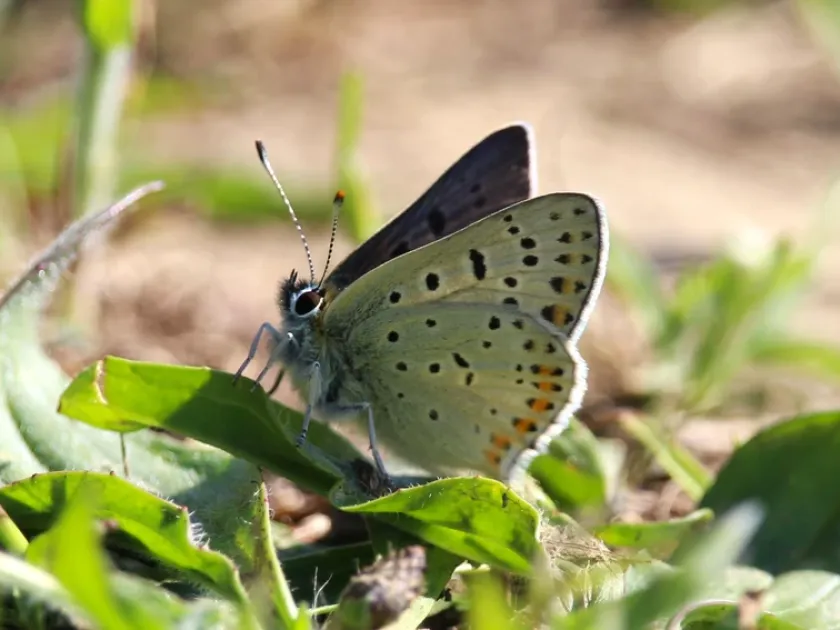
The Scarce Copper (Heodes tityrus) is a butterfly belonging to the family Lycaenidae, within the order Lepidoptera.
Adult butterflies exhibit sexual dimorphism, with males having dark brown wings featuring a metallic copper sheen and black spots, while females show orange fields.
The larvae, or caterpillars, are approximately 20 mm long, featuring a bright green color with subtle stripes, providing excellent camouflage against host plants.
Pupae of this species are often found attached to plant stems or lower leaves, characterized by a mottled yellowish-brown color that mimics dead tissue.
The species is widely distributed across Europe and parts of Asia, typically occupying meadow ecosystems and agricultural fields containing its host plants.
What it damages
The primary host plant for Scarce Copper larvae is the sorrel (Rumex), making it a significant pest for commercial sorrel growers.
Caterpillars feed on the leaves, creating irregular holes and consuming large portions of the leaf blade during their growth stages.
Severe infestations can lead to the total defoliation of sorrel plants, rendering the crop unmarketable due to reduced yield and poor quality.
Secondary damage can occur on related plant species within the Polygonaceae family, which are often found as weeds in or near agricultural plots.
While the economic impact may vary, consistent feeding pressure often leads to stunted growth and lower harvests in multi-harvest sorrel systems.
When it appears
The Scarce Copper butterfly completes two generations per year, which extends the period of potential crop damage throughout the growing season.
The first generation of adults emerges in late spring, while the second generation is active during the mid-summer months, typically July and August.
Eggs are laid on the underside of host leaves, quickly hatching into hungry larvae that begin damaging the crop shortly thereafter.
Overwintering occurs at the larval stage, with the caterpillars seeking refuge in plant debris or the soil at the base of the host plants.
Warm spring weather promotes early activity, and a prolonged autumn can lead to later-than-usual damage from the second generation larvae.
Signs of infestation
The most recognizable sign of infestation is the presence of ragged holes on the sorrel leaves caused by larval feeding activity.
Close inspection of the underside of leaves may reveal small, yellow eggs placed singly or in small clusters, indicating an upcoming outbreak.
The presence of small, dark granular frass (excrement) on the leaf surface is a reliable indicator that caterpillars are currently feeding on the plant.
In cases of heavy infestation, plants may show symptoms of wilting or leaf deformation due to the loss of tissue surface area required for photosynthesis.
Observing the presence of the green caterpillars themselves on the leaves during the early morning or evening hours is a definitive sign of activity.
Control measures
Effective management begins with strict field hygiene, including the removal of wild sorrel and other host weeds that support the pest population.
Mechanical control, such as hand-picking caterpillars, is practical for small-scale garden plots where chemical usage is restricted.
Biological control methods, specifically the application of Bacillus thuringiensis, offer a safe and targeted way to manage larval populations.
Chemical intervention should be considered a last resort, ensuring that any chosen insecticide is registered for use on sorrel and strictly adhering to pre-harvest intervals.
Recommended strategies for preventing infestations include:
- Cultivating the soil deeply after harvest to bury and destroy overwintering larvae.
- Regular monitoring of host plants starting from the first signs of spring growth.
- Using row covers or insect netting to prevent adult butterflies from laying eggs on the crop.
Taxonomy
- Latin name
- Heodes tityrus
- Order
- Lepidoptera (butterflies)
- Family
- Lycaenidae
- EPPO code
- HEODTI
Discussion
No discussions yet — be the first.