
Copper butterfly
Heodes
Description
How to identify
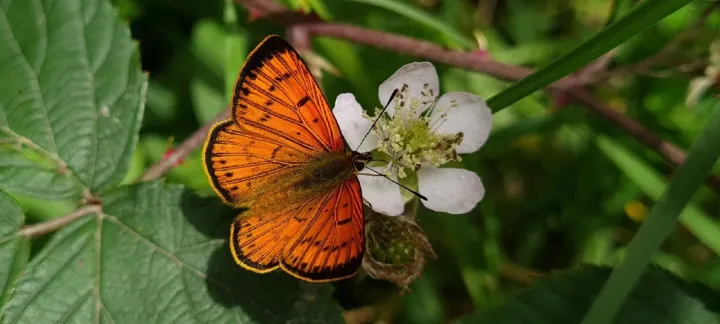
The Copper butterfly, belonging to the Heodes genus within the Lycaenidae family, is a distinct group of small, brightly colored butterflies known for their metallic orange or red wing patterns.
Adult butterflies typically feature a wingspan of 30 to 40 millimeters, with complex black spots on their upper wings, which are surrounded by a darker border that makes them easily identifiable.
The larvae, or caterpillars, are cylindrical in shape and exhibit a vibrant green coloration, providing them with excellent camouflage against the foliage of their primary host plants.
The head of the caterpillar is relatively small and often retracted, while its body is covered in fine, short hairs, which is a key morphological feature for identification.
Pupae are generally found attached to the underside of leaves or plant stems by a silken girdle, often appearing brown or yellowish, which helps them blend into the decaying plant matter.
What it damages
The primary hosts for these butterflies are plants in the Polygonaceae family, with sorrel and rhubarb being the most frequently targeted agricultural crops.
Caterpillars cause damage by feeding on the leaves, starting with the leaf tissue between the veins and progressing to skeletonizing the entire leaf structure.
This feeding behavior reduces the marketability of green leafy crops, as leaves become tattered, spotted with frass, and visually unappealing to consumers.
Severe infestations can lead to stunted plant growth, particularly in young plants that require all their leaf surface area for efficient photosynthesis and development.
The presence of larvae also attracts secondary pests and may create wounds that facilitate the entry of fungal and bacterial pathogens into the plant tissues.
When it appears
Adult butterflies typically emerge in late spring, with the flight period extending through the summer months, during which mating and egg-laying occur.
Eggs are deposited singly, usually on the underside of host leaves, and hatch into larvae that immediately begin feeding on the plant tissue.
The peak feeding activity of larvae usually coincides with the mid-summer growth stage of sorrel, often resulting in synchronized outbreaks if conditions are favorable.
The species survives the winter in the larval or pupal stage, seeking shelter in the plant debris or the upper layer of the soil near the host plant base.
Depending on local climate conditions, the Copper butterfly may complete one or two generations per year, with the second generation often causing more visible damage.
Signs of infestation
The initial signs of an infestation include small, irregular holes on the surface of the leaves, often clustered in areas where the larvae have recently hatched.
Careful inspection of the leaf undersides, especially near the veins, often reveals the camouflaged green caterpillars resting during the day.
Dark granular droppings, or frass, left behind by the larvae on the leaves are a definitive indicator of an active population inhabiting the plant patch.
As the caterpillars mature, the damage becomes more pronounced, resulting in ragged leaf edges and large, open areas where only the main veins remain.
- Irregular holes scattered across the leaf surface.
- Skeletonized leaf structure with missing tissue between veins.
- Presence of tiny dark fecal pellets on the foliage.
Control measures
Cultural control practices, such as consistent weeding to remove alternative host plants like wild dock, are essential in limiting the overall pest population.
Manual removal of caterpillars is highly effective for smaller garden patches and is best performed during the cooler morning hours when larvae are more active.
Biological control using Bacillus thuringiensis (Bt) sprays provides a targeted solution that kills the larvae without negatively impacting the surrounding garden ecology.
Harvesting the greens early and clearing away plant debris at the end of the season helps to disrupt the life cycle of the pest by removing potential overwintering sites.
Chemical intervention should be considered a last resort, requiring strict adherence to pre-harvest intervals to ensure that the produce remains safe for consumption.
Taxonomy
- Latin name
- Heodes
- Order
- Lepidoptera (butterflies)
- Family
- Lycaenidae
- EPPO code
- HEODSP
Discussion
No discussions yet — be the first.