
Helisoma nigricans
Helisoma nigricans
Description
How to identify
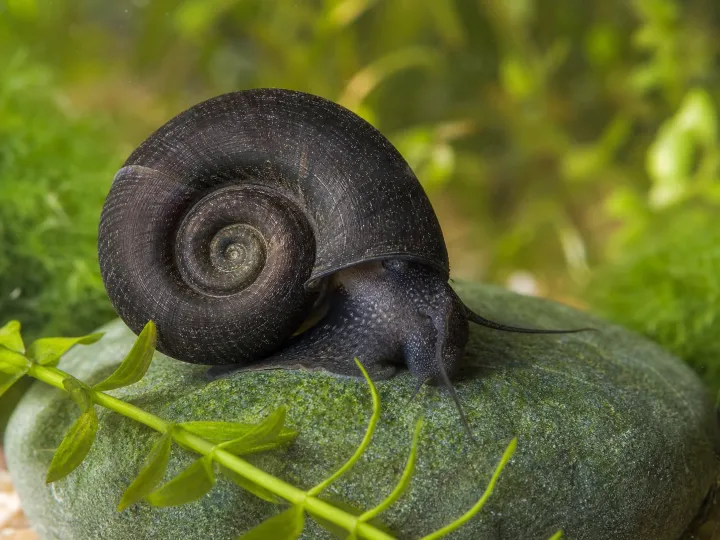
Helisoma nigricans is a species of freshwater snail belonging to the family Planorbidae. It is commonly identified by its flattened, disk-like shell, which is typically coiled in a single plane and exhibits a reddish-brown or dark brown coloration.
Adult individuals generally measure between 10 to 20 millimeters in diameter. The body of the snail is characterized by a dark, almost black pigment, which gives the species its specific name, nigricans. As pulmonate snails, they rely on atmospheric air, which allows them to thrive in various water conditions.
Their shell is durable and displays distinct growth rings. The wide aperture of the shell allows the snail to move efficiently over various aquatic surfaces, including the leaves of water plants. This mobility is key to their success as a colonizing species.
Systematically, this snail is classified within the order Basommatophora. They are known for their high adaptability and resistance to environmental stress, making them a challenging pest to manage in artificial water systems and aquacultures.
It is important to distinguish this species from beneficial snails, as Helisoma nigricans can reach high population densities rapidly, leading to the destruction of aquatic plant life and the degradation of the water quality.
What it damages
Helisoma nigricans is primarily a phytophagous pest, meaning it feeds on a variety of aquatic plants. It exhibits a strong preference for species with soft, delicate leaves, such as Elodea and various pondweeds, which it consumes by scraping away the leaf surface.
In nursery ponds and aquaculture settings, the damage can be significant. By consuming the epidermis and younger shoots, the snails hinder the growth and propagation of valuable aquatic flora, leading to reduced yields and stunted development.
The feeding activity of these snails often leaves leaves skeletonized, which not only looks unsightly but also severely reduces the plant's photosynthetic capacity. This damage weakens the plant, making it more susceptible to secondary infections.
Additionally, the destruction caused by snail feeding often triggers the decay of the plant material. The resulting organic waste increases the nutrient load in the water, which can lead to algal blooms and further deteriorate the environment for other aquatic life.
Beyond direct damage to plants, these snails serve as intermediate hosts for various parasites. This poses a sanitary risk to fish populations, making the control of this snail species a critical component of integrated pest management in aquaculture.
When it appears
The biological activity of Helisoma nigricans is strongly correlated with water temperature. Reproduction and growth rates accelerate significantly during warmer months, specifically when water temperatures remain consistently above 20 degrees Celsius.
In outdoor pond environments, the pest is most problematic during the summer season when the life cycle is shortened. A single individual can produce multiple egg clusters on various substrates, leading to rapid population explosions.
When temperatures drop in autumn and winter, the snails' metabolic processes slow down. They enter a state of reduced activity, often seeking refuge in bottom sediments or among accumulated plant debris to survive the colder conditions.
In controlled environments like greenhouses or heated aquarium systems, seasonality is virtually non-existent. Without constant monitoring and intervention, the snail can reproduce year-round, posing a continuous threat to the health of aquatic crops.
The spring season marks the beginning of increased activity as water temperatures rise. Early detection and management during this period are essential to prevent the pest from reaching damaging levels later in the growing season.
Signs of infestation
The most evident sign of a Helisoma nigricans infestation is the presence of irregular holes and skeletonized leaves in aquatic plant beds. The snails effectively scrape the tissue, leaving behind thin, transparent veins.
Egg clusters, which appear as small, translucent, jelly-like masses, are a reliable indicator of the presence of the pest. These are usually deposited on the undersides of leaves, stems, or any hard surface within the water body.
High concentrations of adult snails gathering on decaying plant matter or areas with high debris buildup are a clear sign of a growing population. They are attracted to food sources and stable, nutrient-rich environments.
Water quality degradation, evidenced by increased turbidity or the accumulation of organic waste on the bottom, often accompanies high snail densities. This reflects the intense feeding and excretion cycle of a large colony.
Plants affected by the snails typically appear yellowed and wilted, with visible growth inhibition. In severe cases, entire sections of a plant may collapse, leading to premature rot and the complete destruction of the crop.
Control measures
Manual removal is the most environmentally safe and effective control method for smaller systems. Regularly collecting the snails and their egg clusters helps to keep the population under control without the need for chemical intervention.
Trapping techniques, such as placing vegetable-based baits (e.g., cucumber or lettuce) in the water overnight, are very efficient. The snails aggregate on the bait, allowing them to be easily removed from the system the following morning.
Managing the water chemistry is also vital. Reducing organic buildup and maintaining stable nutrient levels makes the environment less hospitable for snail reproduction, thereby limiting their growth potential.
Biological control, involving the introduction of molluscivorous fish, can be effective but requires careful consideration of the existing ecosystem to ensure no harm comes to the plants or other beneficial organisms in the water.
- Remove decaying organic debris frequently to limit available food.
- Quarantine all new plant materials before introducing them into a system.
- Conduct regular inspections of plant surfaces for signs of egg clutches.
- Use fine-mesh filtration to prevent the spread of juvenile snails through water circulation.
Taxonomy
- Latin name
- Helisoma nigricans
- Order
- Molluscs
- Family
- Planorbidae
- EPPO code
- HELSNI
Discussion
No discussions yet — be the first.