
Heliconius sara
Heliconius sara
Description
How to identify
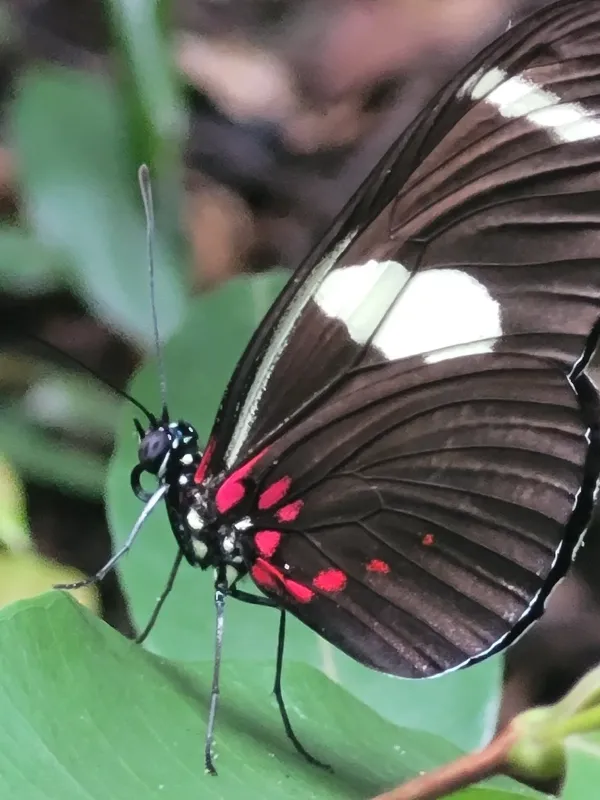
Heliconius sara is a tropical butterfly belonging to the Nymphalidae family, widely recognized for its striking dark wings marked with yellow and blue bands.
The adult butterfly has a wingspan of approximately 55-60 mm, with a body structure typical of the Heliconius genus, adapted for long-distance flight in forest canopies.
The larval stage, or caterpillar, possesses a distinctive appearance with spikes and patterns that serve as a warning to potential predators, reflecting their toxicity.
Their life cycle consists of four distinct stages: egg, larva, pupa, and adult, with the pupal stage being notably resilient and camouflaged as plant matter.
Identification is primarily based on the presence of the adult insects around Passiflora vines, where they prefer to lay their eggs for larval feeding.
What it damages
Heliconius sara caterpillars are specialized feeders that primarily target plants within the Passifloraceae family, especially the Passiflora genus.
The primary damage occurs through larval herbivory, where caterpillars consume leaves, leading to severe defoliation of the host plant in short periods.
Heavy infestations can lead to the destruction of apical buds, which stunts the vertical growth of the vines and affects their long-term health.
The removal of leaf surface area reduces photosynthetic activity, leading to lower vigor and reduced flowering and fruit production in commercial passion fruit crops.
In addition to tissue loss, the presence of frass (caterpillar excrement) can harbor bacteria or fungi that promote secondary tissue decay in the plant.
When it appears
In their native tropical range, Heliconius sara is active year-round, as favorable temperatures allow for continuous generations without a winter diapause.
The highest levels of activity are recorded during the rainy season when host plants provide a lush supply of fresh foliage for the larvae.
Within controlled greenhouse environments, the butterfly can become a persistent pest, with generations overlapping throughout the entire growing season.
Development time from egg to adult is temperature-dependent, typically requiring three to four weeks under optimal tropical greenhouse conditions.
Monitoring should be conducted consistently to detect new egg clusters, as the lack of a distinct dormant season makes population control a continuous task.
Signs of infestation
The most common sign of infestation is the appearance of jagged or notched leaves, indicating that caterpillars have been feeding on the margins.
Small, typically yellow or white egg clusters found on the underside of young, tender leaves are clear indicators of impending larval activity.
The presence of live caterpillars of various instars on the undersides of leaves or along the stems confirms an active population in the area.
Fecal pellets (frass) accumulating on lower leaves or around the base of the plant are a hallmark of significant larval feeding activity.
Plant wilting, despite adequate irrigation, may sometimes be associated with severe stem damage caused by larger larvae in high-density infestations.
Control measures
Manual removal of caterpillars and eggs remains the most practical and chemical-free method for smaller setups or home gardens.
Physical exclusion using fine-mesh netting over greenhouse vents or openings effectively prevents adult butterflies from accessing the crops.
Biological control utilizing Bacillus thuringiensis sprays is highly effective against larvae while being selective and safe for most beneficial insects.
Maintaining a clean cultivation environment by removing secondary host plants or weeds nearby can reduce the overall risk of butterfly colonization.
- Routine inspection of leaf undersides for egg clusters.
- Removal and destruction of highly infested plant segments.
- Use of biological insecticides to manage population surges.
Taxonomy
- Latin name
- Heliconius sara
- Order
- Lepidoptera (butterflies)
- Family
- Nymphalidae
- EPPO code
- HELUSA
Discussion
No discussions yet — be the first.