
Heliconius erato
Heliconius erato
Description
How to identify
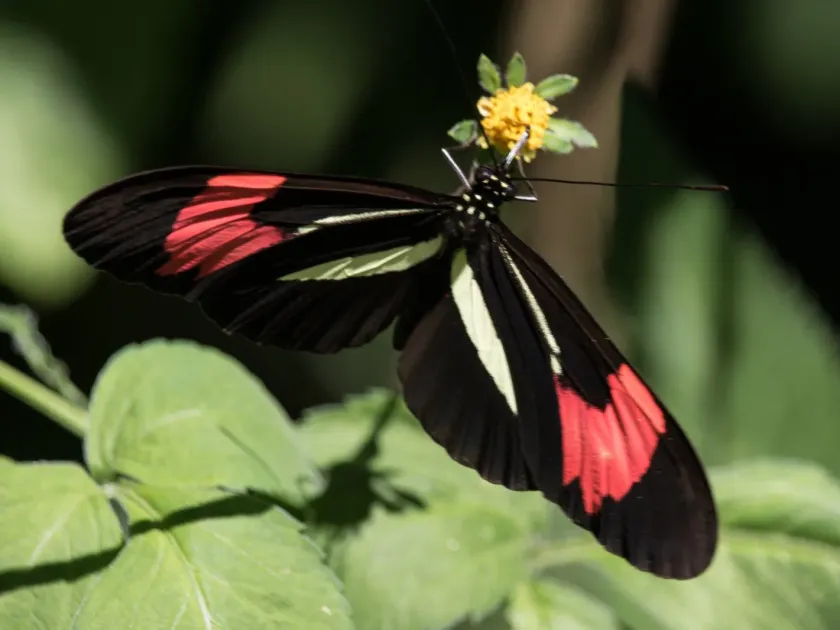
Heliconius erato is a butterfly belonging to the Nymphalidae family, known for its distinctive warning coloration on its wings.
The adult butterfly features a wingspan of approximately 60 mm, with black wings marked by bright red and yellow patterns.
The larvae are characterized by their yellowish-white body covered in small black spots and spines, providing a warning to potential predators.
Eggs are typically laid singly or in small clusters on the underside of leaves of host plants, primarily within the Passiflora genus.
This species is diurnal, showing high activity levels in tropical and subtropical regions during daylight hours.
What it damages
The primary concern regarding Heliconius erato in an agricultural context is its reliance on passion flower (Passiflora) as a host plant.
Larvae consume large quantities of foliage, which can lead to significant defoliation of the passion fruit vines.
Repeated defoliation weakens the plant, reducing its ability to undergo photosynthesis and resulting in smaller, lower-quality fruit yields.
In high-density cultivation, the larvae can strip a vine of its leaves entirely if left unmonitored during the peak growing season.
The cumulative effect of larvae feeding leads to physiological stress, making the plants more susceptible to secondary infections or environmental damage.
When it appears
In tropical climates, Heliconius erato remains active year-round, as temperatures remain sufficient for continuous breeding cycles.
The development time from egg to adult is relatively short, allowing multiple overlapping generations to occur throughout the growing season.
Adult butterflies are most active during the flowering season of host plants, which also serves as a critical period for egg-laying.
Temperature fluctuations directly influence the rate of development, with optimal growth occurring between 24°C and 28°C.
Peak infestation periods typically align with periods of rapid vegetative growth, providing abundant food for the larvae.
Signs of infestation
Irregular holes in leaves and chewed leaf margins are the most immediate visual indicators of larval activity.
Presence of larvae on the underside of leaves or on tender shoots confirms active infestation in the area.
Small deposits of frass (larval excrement) on the leaf surfaces or the ground beneath the plants are reliable signs of their presence.
The presence of adult butterflies hovering around the crops indicates active egg-laying sites requiring immediate attention.
Wilting or yellowing of foliage in isolated patches often occurs as a result of the damage caused by high concentrations of larvae.
Control measures
Effective management of Heliconius erato requires a combination of vigilance and targeted pest control measures.
Manual removal of egg clusters and larvae is highly effective in small-scale cultivation to prevent population outbreaks.
The application of biological controls, specifically B. thuringiensis based products, provides an eco-friendly solution for managing larval populations.
Encouraging natural predators such as predatory wasps and spiders can significantly reduce the pressure from these caterpillars.
- Regular field monitoring for egg clusters.
- Manual collection of larvae during early morning.
- Use of microbial insecticides targeting larval stages.
Taxonomy
- Latin name
- Heliconius erato
- Order
- Lepidoptera (butterflies)
- Family
- Nymphalidae
- EPPO code
- HELUER
Discussion
No discussions yet — be the first.