
Helicodonta obvoluta
Helicodonta obvoluta
Description
How to identify
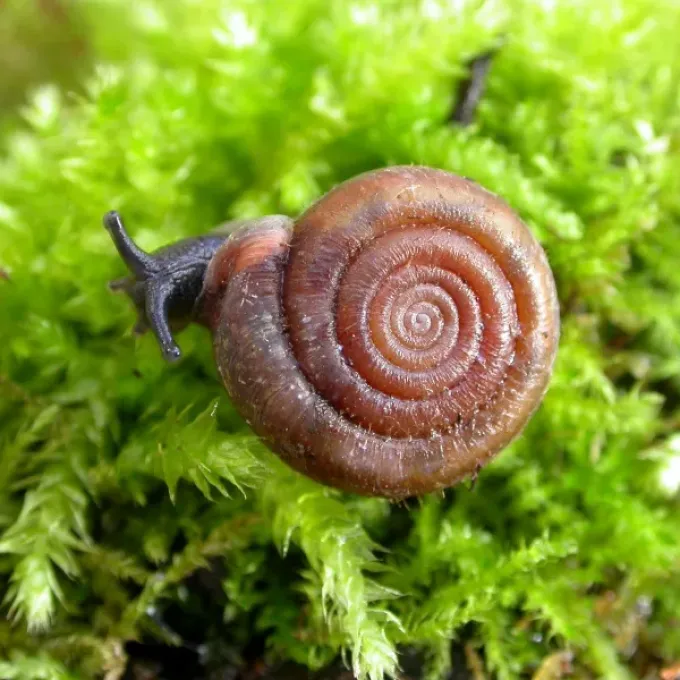
Helicodonta obvoluta is a species of terrestrial pulmonate gastropod mollusc in the family Bradybaenidae. It is distinct due to its flattened, disk-shaped shell, which is covered in fine, hair-like structures, serving as a key diagnostic feature for identification.
The adult shell typically measures 12–15 mm in diameter and exhibits a brownish or horn-like coloration. These snails thrive in humid environments such as woodlands, undergrowth, and dense vegetation, often migrating into agricultural areas when conditions are favorable.
The biological cycle of this snail is highly dependent on humidity levels. During arid periods, the snails seek refuge deep within the soil or under organic debris to avoid desiccation, becoming dormant until moisture returns.
Reproduction involves laying eggs in moist soil substrates. Young snails emerge and begin feeding on tender plant tissues immediately, undergoing several developmental stages throughout the growing season.
As hermaphroditic organisms, they exhibit high reproductive potential, allowing populations to grow rapidly in irrigation-supported fields or during exceptionally wet agricultural seasons.
What it damages
Helicodonta obvoluta acts as a polyphagous pest capable of damaging a wide variety of cultivated plants, including vegetables, strawberries, and young ornamental seedlings.
The primary damage consists of irregular holes eaten through leaf laminas, which can lead to complete defoliation of young plants. They are particularly attracted to succulent tissues and budding growth points.
Fruit damage is significant in low-growing crops like strawberries, where the snails create deep cavities, rendering the produce unmarketable and susceptible to rot.
Infestations are usually most severe in dense, poorly ventilated plantings where high humidity is maintained, providing the ideal habitat for snail development and feeding.
Besides physical destruction, the mucous trails left by the snails can facilitate the spread of secondary bacterial and fungal infections across the crop canopy.
When it appears
The peak activity of Helicodonta obvoluta occurs throughout the spring and summer months, corresponding with the active growth phases of agricultural crops.
Activity is highly correlated with rainfall and dew events. They are most active during the night and early morning hours when evaporation rates are low and moisture levels are high.
During dry summer intervals, they retreat to cool, dark shelters, showing minimal movement until the next rainfall or irrigation event triggers a new wave of feeding.
The most vulnerable crop stage is the seedling and establishment phase, where even minor snail damage can compromise plant survival and reduce crop yield potential.
As temperatures drop in autumn, the snails begin their hibernation process, retreating into the soil or under deep litter layers to survive the winter period in diapause.
Signs of infestation
The most recognizable sign of infestation is the presence of irregular, ragged-edged holes appearing in the middle or along the margins of leaves.
Dried, shimmering mucus trails on stems and soil surfaces indicate recent movement and the presence of snail populations within the immediate vicinity of the crop.
Direct sightings of the snails can be confirmed by checking the underside of foliage or the base of stems during damp conditions or late evening hours.
- Irregular chewing damage to foliage.
- Glistening mucous trails.
- Presence of damaged fruits with deep cavities.
- Discovery of snail shells in mulched or damp soil areas.
Early detection through regular scouting of low-lying vegetation and moist garden corners is essential for preventing major outbreaks of this pest.
Control measures
Management of Helicodonta obvoluta requires an integrated approach focusing on habitat modification and cultural control measures to reduce snail pressure.
Removing garden debris, weeds, and heavy mulch near vulnerable crops reduces available shelter, effectively forcing the snails into exposed areas where they cannot survive.
Physical barriers such as copper tape, crushed eggshells, or gravel can deter snail movement toward sensitive plants by creating unpleasant or dry navigation zones.
If population levels exceed economic thresholds, molluscicides containing iron phosphate are often recommended as they are safer for the environment than traditional metaldehyde baits.
Encouraging the presence of natural predators like ground beetles, hedgehogs, and toads can provide significant biological control, keeping snail numbers in check without chemical intervention.
Taxonomy
- Latin name
- Helicodonta obvoluta
- Order
- Molluscs
- Family
- Hygromiidae
- EPPO code
- HLDNOB
Discussion
No discussions yet — be the first.