
Helicella itala
Helicella itala
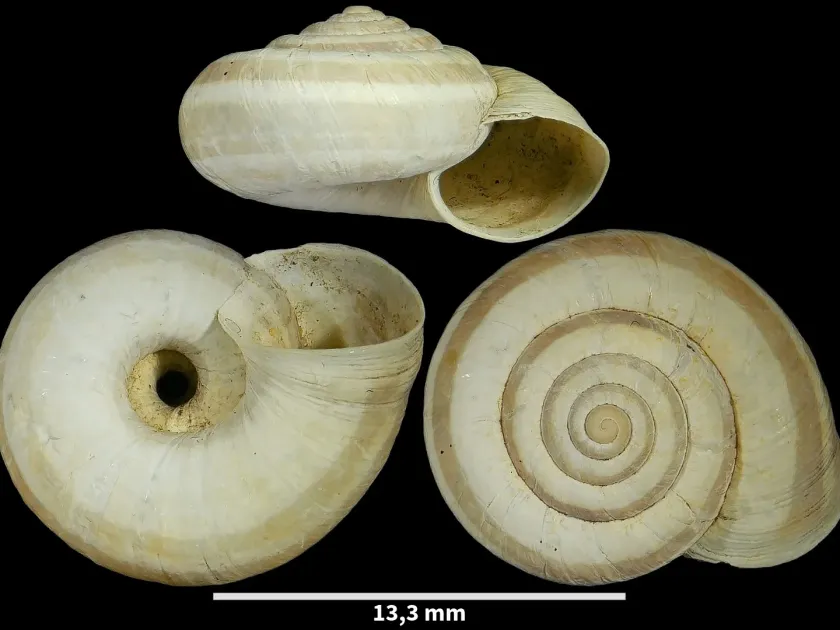
Description
How to identify
Helicella itala belongs to the order Stylommatophora and the family Helicidae. It is a terrestrial gastropod mollusc characterized by a spiral shell that is typically yellowish-white with darker brown bands.
The adult shell size usually ranges from 10 to 15 mm in diameter. The body of the snail is generally greyish or beige, allowing it to blend well into the soil and organic debris environment.
The biology of this species is heavily reliant on moisture. They are primarily nocturnal or active during overcast, humid weather, as direct exposure to sunlight can lead to rapid dehydration and death.
Reproduction involves laying eggs in moist soil or under thick plant cover. The life cycle progresses through embryonic, juvenile, and adult stages, with adults being capable of cross-fertilization.
As hermaphrodites, these snails can increase their population numbers rapidly in favorable conditions, making them a persistent pest in gardens and agricultural fields with high humidity.
What it damages
This mollusc is a polyphagous pest that causes significant damage to a wide range of agricultural crops, including vegetables, seedlings, and various ornamental plants.
The snails feed on the aerial parts of plants, consuming leaves, young stems, and seedlings. This feeding behavior can lead to stunted growth, severe deformation, or the complete destruction of young crops.
Damage is often localized but can spread rapidly when environmental conditions favor the snail population, potentially leading to severe economic losses in vegetable farming.
In addition to physical damage, the presence of snails and their slimy secretions reduces the aesthetic and commercial value of crops, making them unsuitable for market distribution.
They can also contaminate harvested produce if they remain hidden within the foliage, further increasing the risk of post-harvest quality issues and potential decay.
When it appears
The activity of Helicella itala is strictly dictated by meteorological factors, especially rainfall patterns and soil moisture content, with spring and autumn being the peak periods.
In the spring, as temperatures rise and the soil remains damp, snails emerge from overwintering to feed on newly germinated crops and tender green shoots.
During the summer, when temperatures are high and the soil dries out, they enter a period of aestivation, retreating into deeper soil layers or dense vegetation to survive.
Autumn brings renewed activity as rainfall increases. During this period, they feed intensively to build up energy reserves before entering the overwintering phase in the soil.
Due to this cycle, monitoring for the presence of snails should be carried out consistently throughout the growing season, particularly after rainy weather events.
Signs of infestation
The most common sign of a snail infestation is the presence of irregular, ragged holes in the foliage of affected plants, often leaving only the toughest vascular veins intact.
- Visible trails of dried mucus on plant stems and soil surfaces.
- Seedlings that have been chewed at the base or had their growth points destroyed.
- Discovery of the snails themselves tucked away in soil crevices or under foliage.
- Accumulations of empty, bleached snail shells in garden corners or field edges.
Silvery, shimmering trails left behind by the snails are a reliable indicator of their movement patterns and presence in the area, usually most visible in the early morning hours.
Affected plants often display signs of general weakness and chlorosis because the continuous grazing by the snails prevents the plant from maintaining its necessary physiological health.
Control measures
Effective management of Helicella itala requires an integrated approach that utilizes both cultural practices and chemical interventions to minimize population impact.
Cultural control measures, such as deep autumn plowing, are highly effective as they disrupt the snails' overwintering sites and destroy egg clusters deposited in the soil.
Maintaining clean fields by removing weeds and debris is crucial, as these areas provide the shade and humidity that snails require to survive during hot, dry days.
Chemical control, specifically the use of molluscicide baits containing metaldehyde, can be applied around the perimeter of fields or in high-infestation areas to reduce population density.
Improved irrigation management should be considered to avoid unnecessary surface moisture, which helps limit the environment that is conducive to snail proliferation.
Taxonomy
- Latin name
- Helicella itala
- Order
- Molluscs
- Family
- Hygromiidae
- EPPO code
- HELLIT
Discussion
No discussions yet — be the first.