
Fall field cricket
Gryllus pennsylvanicus
Description
How to identify
The Fall field cricket (Gryllus pennsylvanicus) is a common insect belonging to the family Gryllidae, widely distributed across North America.
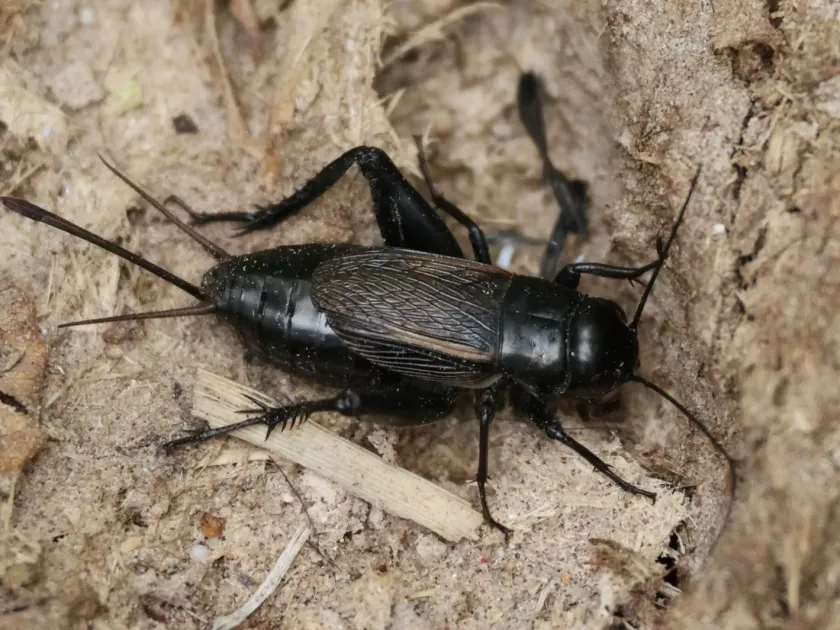
Adult crickets are characterized by their robust, shiny black body, which typically measures between 20 mm and 25 mm in length.
They possess long, thread-like antennae and well-developed hind legs that allow them to jump effectively when disturbed.
These insects are primarily nocturnal, preferring dark and moist environments such as soil crevices, dense grass, or debris piles.
The males are well-known for their distinct, rhythmic chirping sound, produced by rubbing their wings together to attract females.
What it damages
As omnivorous insects, Fall field crickets can cause significant damage to agricultural crops and home gardens by feeding on various plant parts.
They are particularly destructive to newly emerged seedlings, often biting through the stem and causing the young plant to wither and die.
Crickets frequently consume ripening fruits and vegetables that touch the ground, such as strawberries, tomatoes, and melons, leaving noticeable holes.
In addition to leafy greens, they can feed on sprouting seeds in the soil, potentially reducing crop density and overall yield.
During periods of drought, their feeding activity on succulent stems and leaves may increase as they seek moisture from garden plants.
When it appears
The life cycle of the Fall field cricket is typically univoltine, meaning there is one generation produced per year.
Eggs are deposited in the soil in late summer and autumn, serving as the overwintering stage of the population.
Nymphs emerge in the spring and undergo several molting stages, gradually growing and developing their characteristic adult features.
The adult stage is most active from late summer through the autumn months, which is why they are commonly referred to as "Fall" field crickets.
Cooler temperatures eventually lead to the decline of the adult population, marking the end of their peak activity period for the season.
Signs of infestation
The most immediate sign of an infestation is the persistent, loud chirping sound emanating from the garden during the evening and night.
Evidence of feeding includes jagged holes in leaves, severed seedling stems, and hollowed-out sections of ripening produce near the soil surface.
Small circular burrows or tunnels in the soil, often near the base of plants or under mulch, indicate the presence of cricket nests.
One may also observe crickets under landscape rocks, woodpiles, or heavy mulch layers, especially during the daytime.
Reduced germination rates in direct-seeded crops can sometimes be attributed to crickets feeding on the seeds soon after planting.
Control measures
Sanitation is a primary control strategy; removing debris, woodpiles, and tall weeds eliminates the essential shelter crickets require.
Deep cultivation of the soil in the autumn can disturb or destroy the overwintering egg clusters, significantly reducing next year's population.
Physical barriers and light traps can be employed to protect smaller garden plots or greenhouses from cricket damage.
- Maintain short grass around garden perimeters.
- Use physical traps such as containers filled with molasses or beer.
- Encourage the presence of birds and other natural predators.
If necessary, approved insecticides can be applied as a bait or contact spray, though cultural controls should always be prioritized.
Taxonomy
- Latin name
- Gryllus pennsylvanicus
- Order
- Orthoptera (locusts)
- Family
- Gryllidae
- EPPO code
- ACHTPE
Discussion
No discussions yet — be the first.